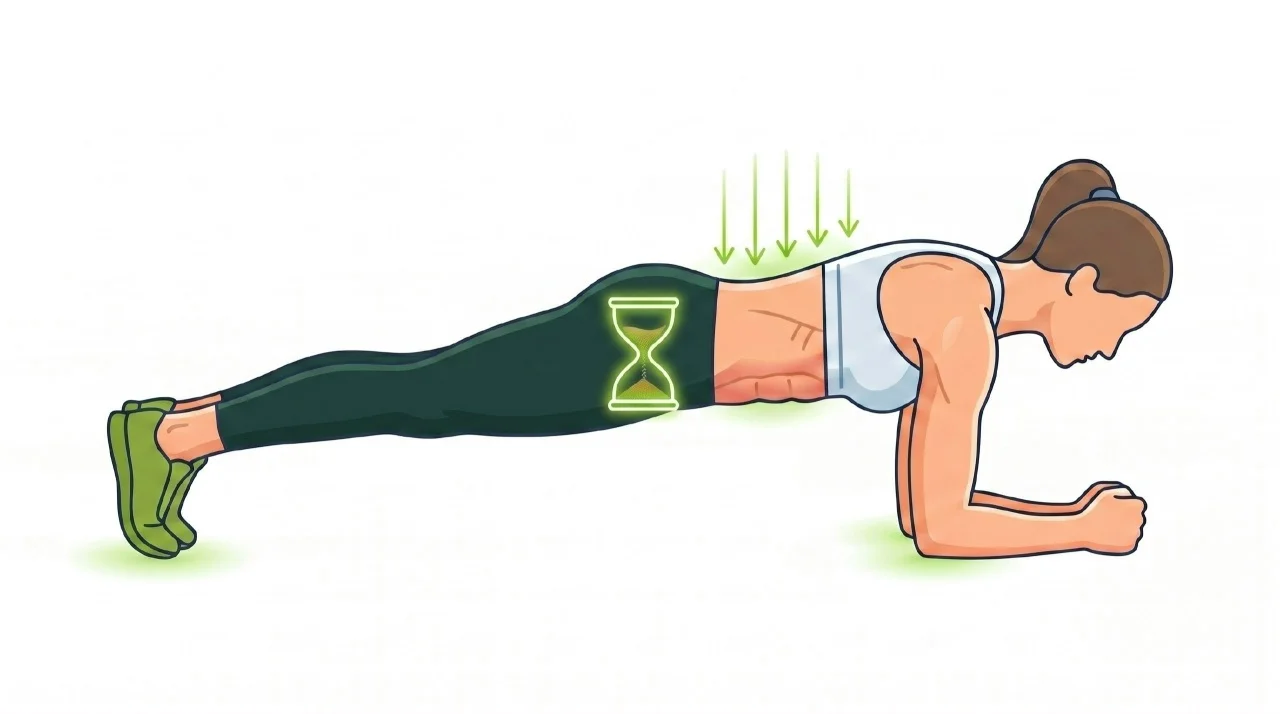

Ultimate No-Equipment Workout Guide
Last updated: 08/05/2026
Author: Emma Jonson
Medically reviewed by Maria Vasquez, NASM Certified Personal Trainer and Sports Nutrition Coach with expertise in Functional Training and Running Coaching. CPR/AED certified for safe, effective workouts. Dedicated to helping you achieve strength, endurance, and optimal health.
Let's be honest about something right up front because the fitness industry has spent decades convincing you that a serious workout requires a monthly membership and a garage full of machines you cannot afford. The truth is a lot simpler and it has been sitting right under your nose the whole time waiting for you to notice it. Your own body is the most accessible and effective piece of equipment you will ever own and it does not require a commute or a single dollar to get started with today.
The fitness landscape has shifted dramatically in recent years as more people discovered that effective training does not need to happen inside a commercial gym. Full body workouts without equipment remove every single barrier that typically stops someone from starting and they provide a genuinely powerful vehicle for personal change that fits into whatever life you are currently living. This guide will help clear up the confusion and misinformation floating around about exercising at home so you can stop second guessing yourself and start actually doing the work that builds real muscle and real confidence.
The fitness landscape has shifted dramatically in recent years as more people discovered that effective training does not need to happen inside a commercial gym. Full body workouts without equipment remove every single barrier that typically stops someone from starting and they provide a genuinely powerful vehicle for personal change that fits into whatever life you are currently living. This guide will help clear up the confusion and misinformation floating around about exercising at home so you can stop second guessing yourself and start actually doing the work that builds real muscle and real confidence.
table of contents
The Science Behind Bodyweight Training
Physiological Principles
Bodyweight workouts bring a surprising number of benefits to the table and they have proven themselves to be far more than just a consolation prize for people who cannot access a gym. They completely eliminate the financial cost and the logistical nightmare of driving somewhere and waiting for equipment while giving you back hours of your week that you previously lost to commuting and locker rooms and small talk with strangers. The flexibility of rolling out of bed and straight into your training session without any obstacles between you and your workout makes consistency almost automatic rather than something you have to fight for every single day.
There is another advantage here that does not get talked about nearly enough and it involves the reduced risk of injury that comes with mastering your own body before you start loading it with external weight. A guy who can control his body through thirty perfect push ups has built a foundation of joint stability and tendon strength that a barbell simply cannot replicate for a beginner who has never trained before. Bodyweight training follows natural movement patterns that your joints were designed for and you can easily modify the intensity up or down based on where you are on any given day rather than feeling pressured to lift numbers that your connective tissue is not ready to handle. Most importantly these workouts prioritize functional fitness which means the strength you build actually translates to real life activities like carrying your kids or moving furniture or just feeling capable and strong in your own skin throughout the day. [1]
There is another advantage here that does not get talked about nearly enough and it involves the reduced risk of injury that comes with mastering your own body before you start loading it with external weight. A guy who can control his body through thirty perfect push ups has built a foundation of joint stability and tendon strength that a barbell simply cannot replicate for a beginner who has never trained before. Bodyweight training follows natural movement patterns that your joints were designed for and you can easily modify the intensity up or down based on where you are on any given day rather than feeling pressured to lift numbers that your connective tissue is not ready to handle. Most importantly these workouts prioritize functional fitness which means the strength you build actually translates to real life activities like carrying your kids or moving furniture or just feeling capable and strong in your own skin throughout the day. [1]
Principle
Description
Muscle Activation
Engaging muscles through bodyweight resistance
Resistance
Using body weight to induce overload
Adaptation
Neurological and physiological response to training
Metabolism
Boosting energy burn during and post-exercise
Strength
Increasing the ability to produce force
Benefits of No-Equipment Workouts
Successful bodyweight training does require a thoughtful strategy because random push ups and squats thrown together without a plan will only take you so far before you hit that plateau that everyone worries about. The key is understanding how to structure your training so that you are constantly giving your muscles a reason to adapt and grow rather than just going through the motions with the same movements and the same rep counts week after week. When you learn how to manipulate tempo and rest periods and leverage through different angles you unlock the ability to make bodyweight exercises brutally effective even for people who have been training for years.
Some of the most impressive physiques you will ever see belong to people who exclusively train with their own bodyweight and minimal equipment because they figured out that progressive overload is not just about adding more weight to a barbell. You can overload a push up by slowing down the lowering phase until each rep takes five seconds of controlled tension and that intensity will light up your chest in ways that a heavy bench press sometimes fails to do. You can take a basic squat and turn it into a pistol squat progression that challenges your legs and your balance and your core all at once while requiring absolutely zero equipment beyond a door frame for support as you learn the movement. The possibilities open up exponentially once you stop viewing bodyweight training as a beginner phase and start seeing it as a legitimate discipline with endless room for progression and mastery.
Some of the most impressive physiques you will ever see belong to people who exclusively train with their own bodyweight and minimal equipment because they figured out that progressive overload is not just about adding more weight to a barbell. You can overload a push up by slowing down the lowering phase until each rep takes five seconds of controlled tension and that intensity will light up your chest in ways that a heavy bench press sometimes fails to do. You can take a basic squat and turn it into a pistol squat progression that challenges your legs and your balance and your core all at once while requiring absolutely zero equipment beyond a door frame for support as you learn the movement. The possibilities open up exponentially once you stop viewing bodyweight training as a beginner phase and start seeing it as a legitimate discipline with endless room for progression and mastery.
Comprehensive Workout Categorization
People who have been in the trenches with home training will tell you that the only real enemy is the voice in your head that says you are not doing enough because you are not under a barbell. That voice is wrong and the proof is in the thousands of people who have built lean and muscular physiques using nothing but their body and a patch of floor space and the discipline to show up consistently without excuses. Your body does not know the difference between the resistance coming from a metal plate or from gravity pulling against your own mass because tension is tension and muscles respond to being challenged regardless of where that challenge originates. The moment you truly internalize this fact is the moment your training takes off because you stop wishing for equipment you do not have and start maximizing the tool you walk around in every single day.
Successful bodyweight training requires a thoughtful strategy in exercise selection and program structure. Here, we explore how different types of workouts with no equipment can benefit you practically.
Successful bodyweight training requires a thoughtful strategy in exercise selection and program structure. Here, we explore how different types of workouts with no equipment can benefit you practically.
Essential Elements of Full Body Workouts
Full body workouts serve as the foundation for effective bodyweight training. Their strength lies in their use of compound movements that activate multiple muscle groups at a time. This combination not only maximizes calorie burn and fosters overall muscle growth but also improves coordination between muscle groups and enhances functional movement patterns. Careful planning of full body workout no equipment order and inclusion of varied movement patterns is crucial for optimizing whole-body activation and reducing the likelihood of overuse injuries. [2]
Targeting Muscle Groups
While full body workout with no equipment are beneficial, focused routines can target specific fitness goals. Strategies for upper body emphasis ensure muscle recruitment. Approaches for lower body enhancement and core activation improve overall strength. Remember to include cardiovascular exercises for balanced fitness.
Muscle Group
Exercise Examples
Upper Body
Push-ups, dips, handstand push-ups
Lower Body
Lunges, squats, calf raises
Core
Plank, Russian twists, leg raises
Cardio
Burpees, jumping jacks, running
Workout Intensity Levels
Workouts for Beginners
For those just starting out the most important thing you can do is park your ego at the door and focus entirely on learning the basic movement patterns that will serve as the foundation for everything else that comes later. A solid base of strength and stability built through incline push ups and bodyweight squats and planks will protect your joints while teaching your nervous system how to move efficiently under load. The lifters who actually succeed long term are the ones who obsess over correct form in every single repetition because they understand that quality movement patterns ingrained early will pay dividends for years while sloppy reps just lead to injury and frustration.
The beauty of bodyweight training is that the level of challenge can be adapted instantly based on how you feel on any given day without the pressure of a loaded barbell staring you down. As you grow stronger and more confident in your abilities you can gradually progress to more demanding variations like shifting from incline push ups against the kitchen counter to standard push ups on the floor and eventually to decline push ups with your feet elevated on the couch. This natural progression keeps your muscles adapting and growing while your connective tissue has time to toughen up alongside your strength so you never find yourself in that awful situation where your muscles can handle a load that your tendons are not ready for yet.
The beauty of bodyweight training is that the level of challenge can be adapted instantly based on how you feel on any given day without the pressure of a loaded barbell staring you down. As you grow stronger and more confident in your abilities you can gradually progress to more demanding variations like shifting from incline push ups against the kitchen counter to standard push ups on the floor and eventually to decline push ups with your feet elevated on the couch. This natural progression keeps your muscles adapting and growing while your connective tissue has time to toughen up alongside your strength so you never find yourself in that awful situation where your muscles can handle a load that your tendons are not ready for yet.
Intermediate Progressions
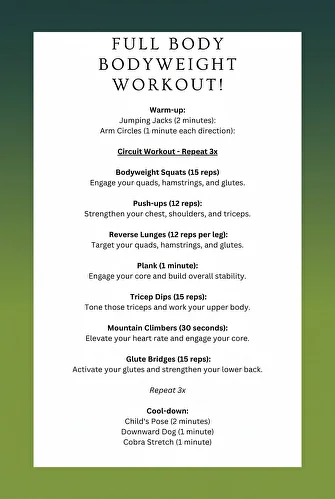
After establishing a strong foundation, intermediate trainees can advance to more complex exercises and higher training volumes. Introduce movements like pistol squats, handstand push-ups, and L-sit holds. Amplify time under tension (TUT) to further engage muscle fibers. Look into advanced bodyweight techniques such as plyometrics and isometric holds. Grasping the principles of metabolic stress, including adjusting rest intervals and using supersets, can significantly boost muscle growth and strength gains. [3]
Advanced Bodyweight Training
For advanced athletes, the focus should shift to incorporating explosive movements, improving complex skills, and utilizing high-intensity training methods. Exercises like muscle-ups, one-arm pull-ups, and planche push-ups demand substantial strength and control. Incorporate plyometric variations of traditional exercises to build power and intensity. Optimize performance through thoughtful programming and effective recovery practices.
Intermediate Challenges
The problem with most home workout advice is that it treats bodyweight training like a single bland tool when it is actually an entire toolbox waiting for you to learn how to use each piece properly. A guy stuck on his living room floor with no plan will default to mindless push ups and wonder why his back and legs are getting completely ignored while his chest stalls out from lack of progression.
The solution is understanding that bodyweight training provides a range of brutally effective options aimed at specific muscle groups once you know how to position your body and manipulate leverage to target exactly what you want to hit. An upper body session built around deficit push ups for chest and inverted rows under a sturdy table for back will leave you more wrecked than most gym machines ever could. A lower body routine centered on Bulgarian split squats with a pause at the bottom will humble even the guys who thought they had strong legs from heavy barbell work. Core training moves beyond pointless crunches into exercises like hollow body holds and side planks that actually build the kind of deep trunk strength that carries over to every other movement you do.
This section lays out the routines that solve the scattered approach problem and give you a clear map for building your upper body and lower body and core in a way that feels intentional and complete rather than random and half finished.
The solution is understanding that bodyweight training provides a range of brutally effective options aimed at specific muscle groups once you know how to position your body and manipulate leverage to target exactly what you want to hit. An upper body session built around deficit push ups for chest and inverted rows under a sturdy table for back will leave you more wrecked than most gym machines ever could. A lower body routine centered on Bulgarian split squats with a pause at the bottom will humble even the guys who thought they had strong legs from heavy barbell work. Core training moves beyond pointless crunches into exercises like hollow body holds and side planks that actually build the kind of deep trunk strength that carries over to every other movement you do.
This section lays out the routines that solve the scattered approach problem and give you a clear map for building your upper body and lower body and core in a way that feels intentional and complete rather than random and half finished.
Upper Body Focus
Achieve a balanced and robust upper body by integrating upper body workout no equipment that engage the chest, back, shoulders, and arms. Movements like push-ups, dips, and handstand push-ups are excellent for developing the chest and triceps. Pull-ups, rows, and inverted rows work the back and biceps effectively. Additionally, variations of handstands and pike push-ups strengthen shoulder stability and power. It's essential to focus on both pushing and pulling no equipment upper body workout to ensure comprehensive growth.
Lower Body Development
Develop strong, functional legs and glutes through targeted bodyweight movements. Squats, lunges, and glute bridges form the core of leg workout no equipment and can be advanced to more difficult forms. Pistol squats, shrimp squats, and single-leg glute bridges improve unilateral strength and stability. Emphasize leg workout no equipment movement patterns that enhance athletic performance and everyday activities.
Core Strength and Stability
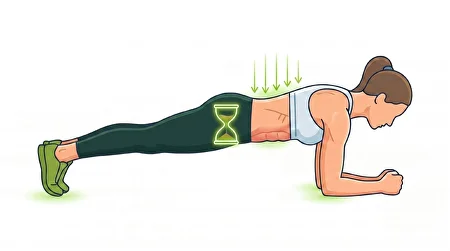
A well-developed core is crucial for maintaining stability, posture, and enhancing athletic performance. Exercises like plank variations, hollow body holds, and Russian twists specifically engage the abdominal muscles. Anti-rotation movements, including pallof presses and renegade rows, bolster core stability and help to avoid injuries. Additionally, dynamic core workouts such as mountain climbers and wood chops contribute to improved functional strength and power.
Cardio and Fat Loss Strategies
Cardio exercises at home no equipment is a powerful method for boosting heart health and encouraging fat reduction. Engaging in basic exercises such as jumping jacks, high knees, and burpees can effectively elevate heart rate, thereby enhancing cardiovascular health. These activities are adaptable for individuals of all fitness levels and can be seamlessly integrated into daily life. Regular practice results in improved endurance, increased caloric expenditure, and an enhanced sense of overall wellness. It is essential to prioritize a warm-up prior to exercise and a cool-down afterward to prevent the risk of injury and optimize workout efficacy. Even brief periods of high-intensity at home full body workout no equipment can produce notable health benefits over time.
High-Intensity Interval Training
HIIT sessions consist of short, intense workout intervals followed by brief rest periods. This cardio exercises at home no equipment style optimizes calorie expenditure and heightens metabolism, facilitating greater fat loss. Exercises like burpees, jumping jacks, mountain climbers, and sprint intervals can be mixed to form potent at home full body workout no equipment routines. Tailor work-to-rest ratios according to personal fitness levels.
Our expert online trainers can help you achieve your fitness objectives through personalized at home full body workout no equipment training programs. Mywowfit programs are designed to build muscle and enhance recovery without requiring any gym equipment. You can conveniently schedule sessions at your preferred time and location using our online booking system, eliminating the need for a gym membership. Your dedicated trainer will create a tailored workout plan based on your individual fitness level and goals, optimizing both training and recovery for optimal results. Each 60-minute session is conducted via Zoom, providing focused support and guidance in the comfort of your own home.
Our expert online trainers can help you achieve your fitness objectives through personalized at home full body workout no equipment training programs. Mywowfit programs are designed to build muscle and enhance recovery without requiring any gym equipment. You can conveniently schedule sessions at your preferred time and location using our online booking system, eliminating the need for a gym membership. Your dedicated trainer will create a tailored workout plan based on your individual fitness level and goals, optimizing both training and recovery for optimal results. Each 60-minute session is conducted via Zoom, providing focused support and guidance in the comfort of your own home.
1-on-1 Workouts & Custom Fitness Plans with Online Personal Trainer
★★★★★ 4.8 out of 5 across 600+ reviews
Endurance Building
Endurance training emphasizes continuous, lower-intensity activities to foster cardiovascular health and stamina. Bodyweight circuits, jogging, and brisk walking are practical choices. Gradually extending the duration and intensity of workouts will improve your energy systems and recovery abilities.
Specialized Workout Programs
This comprehensive guide offers techniques for achieving fitness objectives with bodyweight exercises. It explores the physiological principles underlying these exercises, presents various workout routines, and addresses common challenges.
You discover how to enhance your physical form utilizing own body weight.
You discover how to enhance your physical form utilizing own body weight.
Level
Focus
Sample Exercises
Beginner
Core Strength
Squats, Push-ups, Plank
Intermediate
Higher Intensity
Pistol Squats, Decline Push-ups, L-sit Hold
Advanced
Performance Boost
Handstand Push-ups, Muscle-ups, Planche Push-ups
Goal-Specific Routines
Adapt your exercises to align with your specific aims. Whether your goal is weight loss, muscle gain, endurance enhancement, or athletic improvement, specialized routines provide concentrated training.
Weight Loss: Achieving weight loss hinges on establishing a caloric deficit, expending more calories than consumed. Effective methodologies include: High-Intensity Interval Training (HIIT), which employs brief periods of vigorous exertion interspersed with short recovery intervals to elevate metabolic rate; prolonged moderate-intensity workouts, such as sustained bodyweight circuits or jogging; and integrated strength and cardiovascular training to maximize calorie expenditure and muscle building.
Muscle Gain: To promote muscle growth, progressive overload is paramount. This involves gradually increasing repetitions and sets, reducing rest periods between sets, progressing to more demanding exercise variations, and incorporating resistance tools like bands or weighted vests, with a focus on compound movements such as squats and push-ups.
Endurance Enhancement: Enhancing endurance requires longer duration workouts at lower intensities, coupled with circuit training utilizing minimal rest intervals. Incorporating bodyweight cardiovascular exercises like jogging and swimming is also beneficial.
Athletic Improvement: Tailoring training regimens to specific sport requirements is essential. This involves incorporating sport-specific exercises that reproduce plyometric training to develop intensity, flexibility and mobility work to decrease injury risk and improve performance.
Weight Loss: Achieving weight loss hinges on establishing a caloric deficit, expending more calories than consumed. Effective methodologies include: High-Intensity Interval Training (HIIT), which employs brief periods of vigorous exertion interspersed with short recovery intervals to elevate metabolic rate; prolonged moderate-intensity workouts, such as sustained bodyweight circuits or jogging; and integrated strength and cardiovascular training to maximize calorie expenditure and muscle building.
Muscle Gain: To promote muscle growth, progressive overload is paramount. This involves gradually increasing repetitions and sets, reducing rest periods between sets, progressing to more demanding exercise variations, and incorporating resistance tools like bands or weighted vests, with a focus on compound movements such as squats and push-ups.
Endurance Enhancement: Enhancing endurance requires longer duration workouts at lower intensities, coupled with circuit training utilizing minimal rest intervals. Incorporating bodyweight cardiovascular exercises like jogging and swimming is also beneficial.
Athletic Improvement: Tailoring training regimens to specific sport requirements is essential. This involves incorporating sport-specific exercises that reproduce plyometric training to develop intensity, flexibility and mobility work to decrease injury risk and improve performance.
Nutrition and Recovery
Nutritional Support
To maximize the effectiveness of bodyweight training and attain fitness objectives, proper nutrition is paramount. This involves understanding your individual caloric needs based on factors such as physical activity levels, desired body composition changes (weight loss, maintenance, or muscle gain), and basal metabolic rate. [4]
A balanced macronutrient intake comprising appropriate ratios of protein, carbohydrates, and fats is essential. Protein facilitates muscle repair and growth, carbohydrates provide energy for workouts, and healthy fats support hormone function and overall well-being. [5]
Furthermore, the timing of meals can strategically enhance training outcomes. Consuming a balanced meal containing both carbohydrates and protein within a few hours before exercise provides sustained energy. Post-workout nutrition, ideally with a similar macronutrient composition, replenishes glycogen stores and promotes muscle recovery. [6]
While certain supplements may contribute to performance enhancement and recovery, they should not be considered a substitute for a comprehensive and nutritious diet. Creatine, for example, can improve strength and power output, while protein powder can be a convenient way to increase protein intake. Branched-chain amino acids (BCAAs) may help mitigate muscle soreness. [7]
However, it is imperative to consult with a healthcare professional or registered dietitian before incorporating any supplements into one's regimen, as individual requirements and potential interactions vary. They can assist in determining the appropriateness of supplementation and provide guidance on safe and effective usage.
A balanced macronutrient intake comprising appropriate ratios of protein, carbohydrates, and fats is essential. Protein facilitates muscle repair and growth, carbohydrates provide energy for workouts, and healthy fats support hormone function and overall well-being. [5]
Furthermore, the timing of meals can strategically enhance training outcomes. Consuming a balanced meal containing both carbohydrates and protein within a few hours before exercise provides sustained energy. Post-workout nutrition, ideally with a similar macronutrient composition, replenishes glycogen stores and promotes muscle recovery. [6]
While certain supplements may contribute to performance enhancement and recovery, they should not be considered a substitute for a comprehensive and nutritious diet. Creatine, for example, can improve strength and power output, while protein powder can be a convenient way to increase protein intake. Branched-chain amino acids (BCAAs) may help mitigate muscle soreness. [7]
However, it is imperative to consult with a healthcare professional or registered dietitian before incorporating any supplements into one's regimen, as individual requirements and potential interactions vary. They can assist in determining the appropriateness of supplementation and provide guidance on safe and effective usage.
Recovery Optimization
Post-workout recovery is an essential element of any effective fitness program. It plays a crucial role in enhancing performance and minimizing the risk of injury. Recovery involves various strategies that work together to help the body repair and rebuild after intense physical activity.
Plenty of time to sleep is paramount for muscle repair and rebuilding; individuals should strive for 7-9 hours of high-quality sleep nightly. Incorporating active recovery strategies such as light physical activity like walking, swimming, or yoga can enhance blood circulation, alleviate muscle soreness, and improve flexibility without placing undue stress on the body. [8]
Furthermore, managing stress through practices such as meditation or deep breathing exercises is crucial, and mindfulness practices are essential because high stress levels can impede healing and make athletes more prone to overtraining. Chronic stress leads to increased production of cortisol, a hormone that breaks down muscle tissue and weakens the immune system. By regulating cortisol levels, stress management techniques create a hormonal balance conducive to recovery. [9]
Therefore, it is paramount to listen attentively to your body's signals. Scheduled rest days are indispensable for allowing complete recovery and preventing fatigue. Recognizing signs of fatigue, muscle soreness, or declining performance enables you to modify your training regimen as needed and avoid potential harm. By implementing a well-rounded recovery plan that encompasses sleep, active recovery, stress management, nutrition, and adequate rest, individuals can significantly improve their fitness progress and achieve optimal outcomes.
Plenty of time to sleep is paramount for muscle repair and rebuilding; individuals should strive for 7-9 hours of high-quality sleep nightly. Incorporating active recovery strategies such as light physical activity like walking, swimming, or yoga can enhance blood circulation, alleviate muscle soreness, and improve flexibility without placing undue stress on the body. [8]
Furthermore, managing stress through practices such as meditation or deep breathing exercises is crucial, and mindfulness practices are essential because high stress levels can impede healing and make athletes more prone to overtraining. Chronic stress leads to increased production of cortisol, a hormone that breaks down muscle tissue and weakens the immune system. By regulating cortisol levels, stress management techniques create a hormonal balance conducive to recovery. [9]
Therefore, it is paramount to listen attentively to your body's signals. Scheduled rest days are indispensable for allowing complete recovery and preventing fatigue. Recognizing signs of fatigue, muscle soreness, or declining performance enables you to modify your training regimen as needed and avoid potential harm. By implementing a well-rounded recovery plan that encompasses sleep, active recovery, stress management, nutrition, and adequate rest, individuals can significantly improve their fitness progress and achieve optimal outcomes.
Equipment Alternatives and Improvisation
Enhance your exercise space by creatively using items from around the home. Robust chairs can serve as props for incline push-ups, tricep dips, and step-ups. Water bottles, when filled with sand or liquid, can provide added resistance for squats, lunges, and bicep curls. Towels can act as sliders for exercises that test core stability and enhance flexibility. With a bit of cretivity, you can effectively work different muscle groups without the need for specialized gear.
Minimal Equipment Integration
Smart incorporating minimal equipment can greatly improve bodyweight training sessions. Resistance bands are an adaptable and cost-effective option that introduces varying resistance to workouts, intensifying exercises. They are especially beneficial for banded squats, glute bridges, and bicep curls. Suspension trainers utilize your body weight along with gravity to deliver a comprehensive workout that engages core muscles and enhances stability.
Mental Preparation and Motivation
Mental preparation is crucial for achieving fitness goals. Overcoming mental blocks often involves setting realistic, achievable goals. Tracking your progress, whether through a fitness journal or an app, provides tangible evidence of your accomplishments and boosts motivation. Developing consistent workout habits and scheduling them into your routine fosters long-term commitment and decreases the chances of neglecting workouts.
Common Challenges and Solutions
The frustration of stalled progress has made plenty of dedicated athletes walk away from training entirely because they could not figure out why their hard work stopped paying off. The fix is not about doing more of the same thing that already stopped working but about shaking up the variables your muscles have grown far too comfortable with over time. Adding extra sets and reps can wake up sleepy muscle fibers that your usual routine stopped challenging weeks ago. Progressing to harder variations like taking your push ups from the kitchen counter down to the floor forces your body to adapt to a new level of demand that it cannot dodge with the same old adaptations. Throwing unfamiliar movements into the mix confuses muscles that have gotten lazy and efficient and this fresh stimulus kicks growth back into gear when everything else has flatlined.
Staying motivated over the long haul requires more than just willpower because willpower burns out fast when you are juggling work deadlines and family obligations and the constant exhaustion of a packed schedule. Setting goals that are specific and measurable gives your brain a clear target to chase instead of the vague hope of getting in better shape someday. Tracking your progress week after week shows you small wins that your mirror might miss and these little victories stack up into the proof that you are not spinning your wheels after all. The real challenge with home training is not the exercises themselves but the art of weaving them into a life that already feels stretched to its absolute limits and this demands honest planning around rest and recovery instead of pretending you can run on empty forever.
Staying motivated over the long haul requires more than just willpower because willpower burns out fast when you are juggling work deadlines and family obligations and the constant exhaustion of a packed schedule. Setting goals that are specific and measurable gives your brain a clear target to chase instead of the vague hope of getting in better shape someday. Tracking your progress week after week shows you small wins that your mirror might miss and these little victories stack up into the proof that you are not spinning your wheels after all. The real challenge with home training is not the exercises themselves but the art of weaving them into a life that already feels stretched to its absolute limits and this demands honest planning around rest and recovery instead of pretending you can run on empty forever.

Swati, Yoga Teacher, Mywowfit
To ensure you start your yoga practice safely and effectively, consider the benefits of personalized instruction. Ramashna, a certified Mywowfit trainer, provides expert guidance and support, helping you build a strong foundation and progress at your own pace. Book a session to learn more and begin your journey today.
Limited space considerations: Bodyweight training can be effectively adapted to confined spaces by selecting exercises with minimal movement requirements, utilizing vertical space through exercises like wall sits or handstand holds, and exploring outdoor training options such as parks or playgrounds when indoor space is restricted.
Time management: Consistent training necessitates efficient time management. This involves scheduling workouts as non-negotiable appointments, opting for shorter, high-intensity sessions when time is limited, and incorporating movement into daily activities, such as taking the stairs or walking during breaks.
Performance optimization: Optimizing performance requires attention to key factors. Maintaining correct exercise technique ensures optimal muscle activation and injury prevention. Progressive overload, achieved by gradually increasing workout challenge over time, promotes continuous improvement. Prioritizing adequate rest and recovery allows for muscle repair and growth.
Time management: Consistent training necessitates efficient time management. This involves scheduling workouts as non-negotiable appointments, opting for shorter, high-intensity sessions when time is limited, and incorporating movement into daily activities, such as taking the stairs or walking during breaks.
Performance optimization: Optimizing performance requires attention to key factors. Maintaining correct exercise technique ensures optimal muscle activation and injury prevention. Progressive overload, achieved by gradually increasing workout challenge over time, promotes continuous improvement. Prioritizing adequate rest and recovery allows for muscle repair and growth.
Summary
The fitness industry has spent decades marketing the idea that a proper workout requires a proper gym and that lie has kept countless people from ever taking the first step toward a stronger version of themselves. Effective training is absolutely achievable using nothing but your own bodyweight and the proof is in the thousands of people who have built lean and muscular physiques on a patch of bedroom floor with zero equipment and zero excuses. Strength improves when you consistently challenge your muscles through a full range of motion and flexibility improves when you move your joints the way they were designed to move and endurance builds naturally when you stop resting three minutes between sets and start treating your workout like the heart pounding challenge it is supposed to be.
Bodyweight training offers a versatile and effective way to transform both your body and your mind regardless of your location or the constraints on your time and this is not just motivational fluff but a reality backed by countless people who have walked this exact path before you. Personal growth becomes not just a distant possibility but an attainable reality when you combine dedication with the ingenuity to figure things out as you go rather than waiting for someone to hand you a perfect plan on a silver platter.
Mywowfit offers a personalized online fitness solution built for people who want convenient and effective training without the commute and the crowds and the monthly fees that drain your wallet while you barely use the membership. You stay in complete control of your fitness journey because flexible scheduling means you train when it actually fits your life and a personalized approach means your program is built around your goals and your equipment and your current fitness level rather than some generic template pulled off the internet. Certified professionals create custom workout plans adaptable to any location from a fully equipped home gym to a hotel room floor where your bodyweight is the only tool you have available and you need something you can actually do right now without overthinking it. Private Zoom sessions provide a comfortable and focused training environment where you receive the real time feedback and guidance needed to dial in your form and stay accountable week after week. Mywowfit adaptable programs empower you to prioritize your health and your fitness no matter what your lifestyle throws at you because the goal is not to force your life around some rigid workout schedule but to build a sustainable routine that fits seamlessly into the cracks of your already busy day.
Bodyweight training offers a versatile and effective way to transform both your body and your mind regardless of your location or the constraints on your time and this is not just motivational fluff but a reality backed by countless people who have walked this exact path before you. Personal growth becomes not just a distant possibility but an attainable reality when you combine dedication with the ingenuity to figure things out as you go rather than waiting for someone to hand you a perfect plan on a silver platter.
Mywowfit offers a personalized online fitness solution built for people who want convenient and effective training without the commute and the crowds and the monthly fees that drain your wallet while you barely use the membership. You stay in complete control of your fitness journey because flexible scheduling means you train when it actually fits your life and a personalized approach means your program is built around your goals and your equipment and your current fitness level rather than some generic template pulled off the internet. Certified professionals create custom workout plans adaptable to any location from a fully equipped home gym to a hotel room floor where your bodyweight is the only tool you have available and you need something you can actually do right now without overthinking it. Private Zoom sessions provide a comfortable and focused training environment where you receive the real time feedback and guidance needed to dial in your form and stay accountable week after week. Mywowfit adaptable programs empower you to prioritize your health and your fitness no matter what your lifestyle throws at you because the goal is not to force your life around some rigid workout schedule but to build a sustainable routine that fits seamlessly into the cracks of your already busy day.
ai fitness apps
In-person trainer
from $24
/session
from $90
/session
from $50
/month
Yes
still training
6 a.m. or 9 p.m. — your call
Limited hours
No real-time support
Arthritis, menopause, post-op, burnout
Trainer live on Zoom
Change times weekly via app
Home, hotel, office
97%
83%
Only 7%


Train online from anywhere
Flexible scheduling
Real accountability
Certified for special conditions
24/7 in your time zone
6-month consistency
HSA/FSA Eligible
Pricing
Frequently Asked Questions (FAQs)
This section provides answers to commonly asked questions regarding bodyweight training.
Can I Build Muscle Without Equipment? Yes, bodyweight training can effectively build muscle. Utilizing principles of progressive overload and targeting different muscle groups through varied exercises stimulates muscle hypertrophy.
How Often Should I Train? Training frequency depends on individual factors like fitness level and goals. Generally, aiming for 3-5 sessions per week is recommended, allowing for adequate rest and recovery.
Progression Strategies: Progression in bodyweight training involves gradually increasing the difficulty of exercises. This can be achieved by increasing repetitions, sets, or progressing to more challenging variations.
Nutrition Considerations: Nutrition plays a crucial role in supporting bodyweight training. A balanced diet that provides adequate protein, carbohydrates, and healthy fats is essential for muscle growth and recovery.
Age-Related: Adaptations Bodyweight training can be adapted to suit individuals of all ages. Modifications may be necessary for older adults or those with pre-existing conditions. Consulting with a healthcare professional or certified trainer is recommended to develop a safe and effective program.
Can I Build Muscle Without Equipment? Yes, bodyweight training can effectively build muscle. Utilizing principles of progressive overload and targeting different muscle groups through varied exercises stimulates muscle hypertrophy.
How Often Should I Train? Training frequency depends on individual factors like fitness level and goals. Generally, aiming for 3-5 sessions per week is recommended, allowing for adequate rest and recovery.
Progression Strategies: Progression in bodyweight training involves gradually increasing the difficulty of exercises. This can be achieved by increasing repetitions, sets, or progressing to more challenging variations.
Nutrition Considerations: Nutrition plays a crucial role in supporting bodyweight training. A balanced diet that provides adequate protein, carbohydrates, and healthy fats is essential for muscle growth and recovery.
Age-Related: Adaptations Bodyweight training can be adapted to suit individuals of all ages. Modifications may be necessary for older adults or those with pre-existing conditions. Consulting with a healthcare professional or certified trainer is recommended to develop a safe and effective program.
1-on-1 Workouts & Custom Fitness Plans with Online Personal Trainer
★★★★★ 4.8 out of 5 across 600+ reviews
Sources:
Photo links:
- National Institutes of Health (NIH) - PubMed: PubMed. (n.d.). pubmed.ncbi.nlm.nih.gov
- Journal of Strength and Conditioning Research (JSCR): Journal of Strength and Conditioning Research. (n.d.). nsca-jscr
- National Strength and Conditioning Association (NSCA): National Strength and Conditioning Association (n.d.) nsca.com
Photo links:
- https://pin.it/1XVrMPYUK
- https://pin.it/4RD9fuXaw
Responses (4)
Michael
Cool tips to get back into routinr
donald
helpful... especially on vacation
JJ
At home workouts is the only way for me, thank you Mywowfit :)
Liam Henning
I cant stand gyms, gonna start working out at home
You may also be interested
Home workouts
Meet some of our trainers
Filters
Shashi
🏋 TYPES OF TRAINING
🧍 ORTHOPEDIC FOCUS
📃 CERTIFIED
Leidon
🏋 TYPES OF TRAINING Functional, Strength, Bodybuilding, Weight & Fat Loss, Rehabilitation, Injuries Recovery, Corrective Exercise +11 more 🧍 ORTHOPEDIC FOCUS Back Pain, Elbow Pain, Shoulder Pain +5 more 📃 CERTIFIED Fundamentals of Fitness Coaching (FEA) Sports Nutrition (FitMe) +5 more
Owen
🏋 TYPES OF TRAINING
🧍 ORTHOPEDIC FOCUS
📃 CERTIFIED

© 2021-2025 Together with Online Fitness Technologies Inc.
All rights reserved
All rights reserved


About
How it Works
Trainers
Pricing
Blog
FAQ
Gift Certificate
Referral Program
Work with Us
Affiliate Program
How it Works
Trainers
Pricing
Blog
FAQ
Gift Certificate
Referral Program
Work with Us
Affiliate Program
Useful Links
Privacy Policy
Terms of Service
Code of Conduct
Disclaimer of Medical Advice
Cancellation, Refund, Referral Policy
Services
Terms of Service
Code of Conduct
Disclaimer of Medical Advice
Cancellation, Refund, Referral Policy
Services
Documentation


Contact Us
Headquarters:
USA, 1111B S Governors Ave #6047 Dover, DE 19904, Online Fitness Technologies INC
USA, 1111B S Governors Ave #6047 Dover, DE 19904, Online Fitness Technologies INC
Locations
Headquarters:
EU and UK: MYWOWFIT OU, Estonia, Harju maakond, Tallinn, Kesklinna linnaosa, Tornimäe tn 3 // 5 // 7, 10145
EU and UK: MYWOWFIT OU, Estonia, Harju maakond, Tallinn, Kesklinna linnaosa, Tornimäe tn 3 // 5 // 7, 10145





5.0
4.9
Share via