
Share via

Safe Postpartum Ab Workouts: Your Complete Week-by-Week Recovery Guide

4
Last updated: 10/06/2026
  • Author: Zoe Patler
    Medically reviewed by Maria Vasquez, NASM Certified Personal Trainer and Sports Nutrition Coach with expertise in Functional Training and Running Coaching. CPR/AED certified for safe, effective workouts. Dedicated to helping you achieve strength, endurance, and optimal health.
Bringing a baby into the world is one of the most incredible things your body will ever do. But once the excitement of birth settles and life with your newborn begins, many women start wondering about their own recovery. Questions about exercise, core strength and getting back to feeling like yourself again often come up surprisingly quickly. You may notice that your core feels weaker than before, your posture has changed or simple movements like getting out of bed suddenly feel different. This is completely normal. Pregnancy and childbirth place enormous demands on the abdominal muscles, pelvic floor, back and hips. Recovery takes time and despite what social media might suggest, there is no deadline for “bouncing back.”

Don't worry, rebuilding your core safely is absolutely possible! The key is knowing when to start, which exercises to choose, and how to progress without putting unnecessary stress on your body. The strongest postpartum recoveries usually begin with patience, not intensity. In this guide, we’ll walk through a realistic week-by-week approach to postpartum abdominal recovery. You’ll learn how to reconnect with your core, strengthen your pelvic floor, manage diastasis recti and gradually return to full-body exercise in a way that supports long-term health and strength.

table of contents

Medical Disclaimer
postpartum

This article is intended for educational purposes only and should not replace medical advice. Before beginning any postpartum exercise program, consult your doctor, midwife, pelvic floor physical therapist or another qualified healthcare professional. Every recovery is different. Factors such as vaginal birth, c-section, diastasis recti, pelvic floor dysfunction, birth complications and pre-pregnancy fitness levels can all influence how quickly you return to exercise. Professional guidance can help ensure your recovery plan matches your individual needs.

Understanding Postpartum Recovery

Before starting any postpartum workout routine, it’s important to understand what your body has been through. Pregnancy and childbirth place significant demands on your muscles, joints, connective tissues, and pelvic floor. Whether you had a vaginal birth or a C-section, recovery takes time and every woman’s journey will look a little different. The key is muscle engagement and building your way up for progressive loading.

  • Physical Changes: Think hormonal shifts , uterine involution (your uterus shrinking back to size), and changes in your core and pelvic floor muscles. Knowing that you are getting help for your pelvic floor recovery is crucial. [1]
  • Recovery Milestones: These include the lochia (postpartum bleeding) gradually decreasing, your perineum healing (if you had a vaginal birth) and your C-section incision closing up. All this alludes to postpartum healing. [2]
  • Signs of Readiness: You should be able to walk without pain, manage basic daily activities comfortably, and feel like your energy levels are slowly returning. If you’re unsure, seek guidance from the Academy of Pelvic Health Physical Therapy.

At the same time, it’s important to be aware of warning signs. Increased bleeding, pelvic pain, dizziness, unusual swelling, fever, or signs of infection should never be ignored. If you experience any of these symptoms, stop exercising and contact your healthcare provider. Postpartum recovery is not about rushing back to your old routine. It’s about rebuilding strength gradually, improving core and pelvic floor function, while supporting your body as it heals. With patience, consistency and the right approach, you can safely return to exercise while laying the foundation for long-term strength and health.

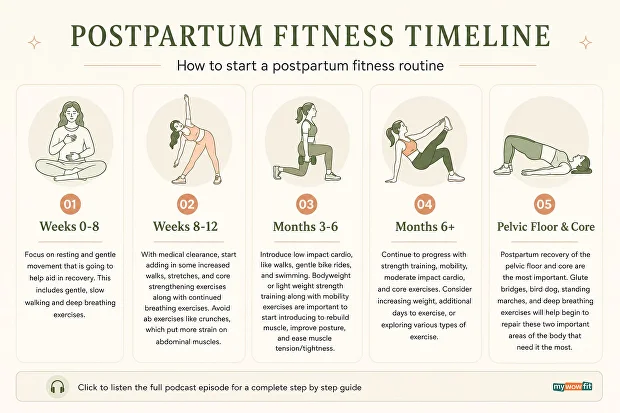
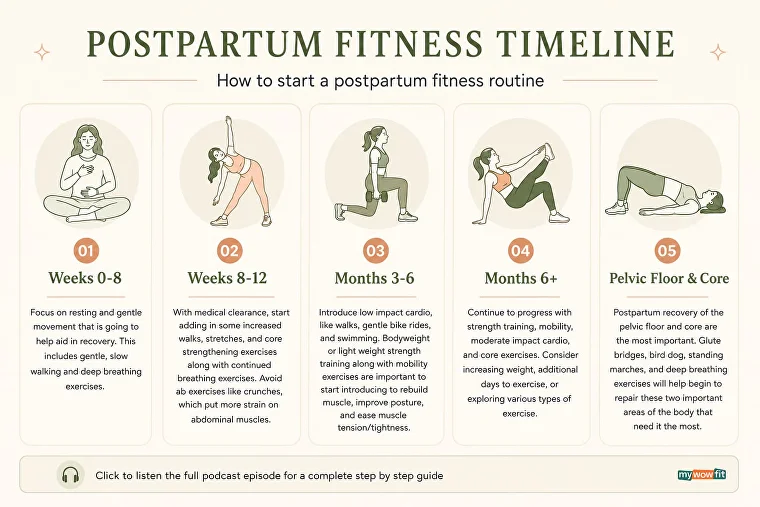
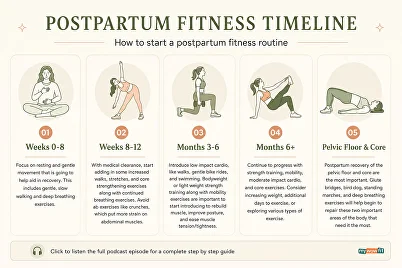
Foundation Exercises: Weeks 0-6
exercises postpartum

"Regular physical activity in all phases of life, including pregnancy, promotes health benefits." - says The American College of OBGYN. The first six weeks after birth are all about recovery, not performance. While it can be tempting to jump straight into workouts, this early stage is focused on healing, reconnecting with your body and building a strong foundation for future exercise. Many new mothers feel pressure to “bounce back” quickly, but postpartum recovery doesn’t work on a strict timeline. During these first weeks, your body is still repairing muscles, tissues and connective structures that were stretched or stressed during pregnancy and childbirth. The goal isn’t to burn calories or flatten your stomach. It’s to restore function, improve awareness, and support healing. We’re talking baby steps (pun intended!), not Olympic sprints. Best part is that even small amounts of gentle movement can make a meaningful difference. Learning how to breathe properly, reconnect with your pelvic floor and activate your deep core muscles lays the groundwork for everything that comes later. Remember, it’s all about the postpartum exercises that are best for you right now. [4]

Breathing Techniques

Breathing may not sound like exercise, but it is one of the most important parts of postpartum recovery. During pregnancy, the growing baby changes the way the diaphragm, abdominal muscles and pelvic floor work together. After birth, many women need time to rebuild this connection. Deep breathing exercises can help reactivate the core, reduce tension, improve posture, and support pelvic floor recovery.

Diaphragmatic Breathing

Start by lying comfortably on your back with your knees bent or sitting in a supported position. Take a slow breath in through your nose and allow your rib cage and belly to gently expand. As you exhale through your mouth, imagine drawing your belly button slightly toward your spine without forcing the movement. The goal isn’t to suck your stomach in as hard as possible. You should focus on creating a gentle connection between your breathing and your deep core muscles. Practicing diaphragmatic breathing for just a few minutes each day can help restore core awareness and create a sense of calm during a busy and often exhausting postpartum period.

Connection Breathing

Once diaphragmatic breathing feels comfortable, you can begin adding gentle pelvic floor engagement. As you exhale, lightly contract your pelvic floor muscles as though you are stopping the flow of urine. Then fully relax as you inhale again. This exercise helps rebuild coordination between the pelvic floor and deep abdominal muscles, which work together to support the spine, pelvis and internal organs.
Remember that relaxation is just as important as contraction. A healthy pelvic floor needs to be able to both engage and release.

PELVIC FLOOR RECOVERY

The pelvic floor plays a major role in postpartum recovery. These muscles support the bladder, bowel, uterus and core, as they undergo significant strain during pregnancy and delivery. Many women are familiar with Kegels, but recovery is about more than repeatedly squeezing the pelvic floor. The first step is simply becoming aware of these muscles again. Begin with light contractions that feel comfortable and controlled. Hold for a few seconds before fully releasing. There should be no pain, straining or breath-holding. Think quality rather than quantity. If you’re experiencing symptoms such as pelvic pressure, heaviness, pain or urinary leakage, working with a pelvic floor physical therapist can provide valuable guidance and support.

WALKING AND GENTLE MOVEMENT

For many women, walking becomes the first form of postpartum exercise. Short, comfortable walks can help improve circulation, boost energy levels and support recovery without placing excessive strain on the body. Some days that may mean five minutes around the block. Other days it may mean a longer walk with the stroller. The key is listening to your body rather than following a strict schedule. Gentle stretching and mobility exercises can also be helpful during this phase, especially for the neck, shoulders and hips, which often become tight from carrying and caring for a newborn.

C-SECTION CONSIDERATIONS

If you delivered by C-section, recovery may take additional time. A C-section is major abdominal surgery and protecting the incision site should be a priority during the first several weeks. Focus on breathing exercises, walking and gentle movement until your healthcare provider clears you for more structured exercise. Avoid exercises that create pulling, strain or pressure around the incision. As healing progresses, gradual core activation can help restore strength and confidence without overwhelming the body.

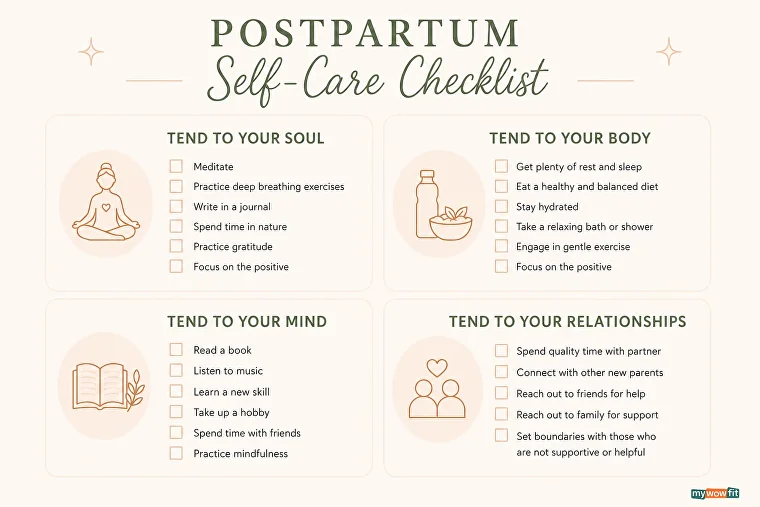
Above all, be patient with yourself. Recovery is not about doing more, you need to be doing the right things at the right time. Every deep breath, every short walk and every gentle movement is helping your body heal and move forward.

Core Recovery Program: Weeks 6-12

By the time you reach the six-week mark, you may start feeling more like yourself again. Daily movements become easier, your energy begins to return and you may be eager to do more. While this is often the stage when women receive medical clearance to exercise, it’s important to remember that clearance doesn’t necessarily mean you’re ready to jump back into your pre-pregnancy workouts. Instead, this phase is about rebuilding strength gradually. Your core muscles, pelvic floor are still adapting, and a thoughtful approach will help you create lasting strength without setbacks. The goal during weeks 6–12 is to improve core stability, restore muscle function and begin preparing your body for more challenging movements.

RECONNECTING WITH YOUR DEEP CORE

One of the most important muscles during postpartum recovery is the transverse abdominis (TVA), often called the body’s natural corset. This deep core muscle wraps around the abdomen and helps stabilize the spine and pelvis. Pregnancy can weaken this connection, which is why many women feel less stable through their midsection after birth.

To activate you TVA, start by lying on your back with your knees bent and feet flat on the floor. Take a deep breath in. As you exhale, gently draw your lower abdomen inward, imagining your belly button moving toward your spine. The movement should feel subtle rather than forceful. Hold for a few seconds while breathing normally, then relax and repeat. This exercise helps retrain the deep core muscles that support posture, balance, and everyday movement. [3]

Pelvic tilts are a simple but highly effective exercise during this stage of recovery. While lying on your back with your knees bent, gently tilt your pelvis so your lower back presses into the floor. Then slowly return to a neutral position. This movement improves awareness of the pelvis and lower back while encouraging gentle core activation. It can also help relieve tension that often develops from feeding, carrying and caring for a newborn.

Bridges introduce slightly more strength work while still keeping the movement controlled and safe. Begin lying on your back with your knees bent and feet hip-width apart. Slowly lift your hips toward the ceiling while squeezing your glutes. Pause briefly at the top before lowering back down with control. Bridges strengthen the glutes, hamstrings and deep core muscles while improving pelvic stability. As you become stronger, you can gradually progress to more challenging variations under the guidance of a qualified professional.

UNDERSTANDING DIASTASIS RECTI

Many women experience diastasis recti after pregnancy, which is a separation of the abdominal muscles along the midline of the abdomen. A small separation is common and often improves naturally over time, especially when combined with appropriate exercise and core rehabilitation. However, certain exercises can place excessive pressure on the abdominal wall and may worsen symptoms. During this phase, it is generally best to avoid traditional crunches, sit-ups and aggressive abdominal exercises that cause the stomach to bulge outward. Instead, focus on movements that strengthen the deep core and improve overall stability.

A simple self-check can provide a general idea of whether abdominal separation is present. Lie on your back with your knees bent. Place your fingers just above your belly button and gently lift your head and shoulders slightly off the floor. You may be able to feel the gap between the abdominal muscles. However, a self-check doesn’t tell the full story. Many pelvic floor specialists now focus less on the width of the gap and more on how well the abdominal wall functions and creates tension. If you have concerns, a pelvic health physical therapist can provide a more accurate assessment.

But where do you find expert guidance and support that fits into your crazy-busy mom life? With Mywowfit , you can access personalized training programs designed specifically for postpartum recovery, all from the comfort of your own home. Access the best ab exercises postpartum! Connect with certified trainers via the Mywowfit app or schedule live, interactive 1-on-1 Zoom sessions. Get customized exercise plans, receive feedback on your form and stay motivated throughout your journey.

C-SECTION RECOVERY DURING THIS PHASE

Women recovering from a C-section may begin adding gentle core exercises during this period, provided they have medical clearance and the incision is healing well. It’s important to progress gradually and pay attention to any discomfort around the scar area. Gentle core activation, walking, pelvic tilts and bridges are often well tolerated before moving on to more demanding exercises.

Remember that abdominal healing after surgery takes time. Building strength slowly is far more effective than rushing the process.

  • Truly personalized, human coaching
  • Flexible, anytime-anywhere training
  • Lifelong consistency: no burnout, no injuries

1-on-1 Workouts & Custom Fitness Plans with Online Personal Trainer

★★★★★ 4.8 out of 5 across 600+ reviews

Full-Body Strengthening: 12+ Weeks

By this stage of your recovery, you’ve built a strong foundation and can begin gradually reintroducing full-body strength training. While it may be tempting to jump straight back into your pre-pregnancy workouts, continuing to progress slowly is one of the best things you can do for your body. Remember that postpartum fitness is not about rushing to “get your body back.” It’s about rebuilding strength, confidence and function in a way that feels sustainable. The strongest recoveries happen when you focus on quality movement, consistency and listening to your body’s signals.

Resistance Training

By this stage of your recovery, you’ve built a strong foundation and can begin gradually reintroducing full-body strength training. While it may be tempting to jump straight back into your pre-pregnancy workouts, continuing to progress slowly is one of the best things you can do for your body. Remember that postpartum fitness is not about rushing to “get your body back.” It’s about rebuilding strength, confidence and function in a way that feels sustainable. The strongest recoveries happen when you focus on quality movement, consistency and listening to your body’s signals.

Cardio Progression

Cardiovascular exercise can also become more challenging during this phase. Walking may progress to brisk walking, jogging, swimming, cycling or other activities you enjoy. The goal is not simply to burn calories but to improve cardiovascular fitness, energy levels and overall health. Choose activities that feel good and fit naturally into your lifestyle.

Functional Movement

As a new parent, you perform functional movements every day. Lifting your baby, carrying a car seat and bending down repeatedly all require strength and stability. Including exercises that mimic these everyday movements can help improve posture, reduce discomfort and make daily tasks feel easier. Functional training is often one of the most valuable forms of postpartum exercise because it directly supports real life.
A balanced routine typically includes both resistance training and cardiovascular exercise. Strength training helps rebuild muscle and core stability, while cardio supports heart health and endurance.
You don’t need long or complicated workouts to see progress. A simple routine performed consistently is often more effective than an ambitious plan that is difficult to maintain. At this stage, proper form remains more important than intensity. Continue paying attention to core engagement, breathing and posture during every exercise.

Choose activities that you genuinely enjoy. The best workout plan is one that fits your lifestyle and keeps you moving regularly. Recovery and fitness should feel supportive, not overwhelming. Most importantly, be patient with yourself. Building strength after pregnancy takes time, but every workout, walk and small improvement adds up.

Safety and Form Guidelines

No matter where you are in your postpartum recovery journey, proper form and safety should always come first. Whether you’re practicing gentle breathing exercises, rebuilding your core or progressing to full-body strength training, moving with control is far more important than moving quickly. Remember that recovery is not about pushing through discomfort. It’s about working with your body, respecting its limits and gradually rebuilding strength over time. Taking a slower approach now can help prevent setbacks and support long-term progress.

Focus on Your Breathing

Breathing is one of the most important tools in postpartum exercise. Proper breathing helps activate the deep core muscles, supports the pelvic floor, and improves overall movement quality. As a general rule, exhale during the effort phase of an exercise, so when you’re lifting, pushing, standing or engaging your muscles. Inhale during the easier phase as you return to the starting position. This simple technique can help improve core stability while reducing unnecessary pressure on the abdominal wall and pelvic floor.

Next up: Alignment Cues!

Imagine you’re a majestic tree, rooted firmly in the ground with a long, strong trunk. You also are setting yourself up with the best postpartum exercises out there! Maintaining proper body alignment throughout each exercise is key to avoiding injury and maximizing effectiveness. We’re talking a long spine (no slouching, girlfriend!), an engaged core (gently pulling your belly button towards your spine), and relaxed shoulders (no tension party happening up there).

Know the Warning Signs

Exercise should never cause pain or make postpartum symptoms worse. Stop exercising and contact your healthcare provider if you experience:

  • Increased postpartum bleeding
  • Sharp or unusual pain
  • Dizziness or lightheadedness
  • Pelvic pressure or heaviness
  • Shortness of breath that feels unusual
  • Signs of infection, such as fever, redness or swelling

These symptoms may indicate that your body needs more time to recover or that a medical evaluation is needed.

When to Stop Exercising?

One of the most valuable skills during postpartum recovery is learning to listen to your body. Some days you’ll have more energy than others and that’s completely normal! If you’re feeling overly fatigued, sore or unwell, it’s okay to shorten a workout or take a rest day. Recovery is not about doing more every day, it's doing what your body is ready for.

With Mywowfit, you can connect with experienced trainers who specialize in postpartum recovery, including C-section specific exercises. Choose from a range of training options, from personalized programs within the Mywowfit app to live or interactive Zoom sessions. Access expert advice, track your progress and stay motivated on your journey to a stronger, healthier you. Mywowfit puts the power of postpartum fitness in your hands, no matter how busy you are.

  • Truly personalized, human coaching
  • Flexible, anytime-anywhere training
  • Lifelong consistency: no burnout, no injuries

1-on-1 Workouts & Custom Fitness Plans with Online Personal Trainer

★★★★★ 4.8 out of 5 across 600+ reviews
Fernanda, Functional Training, Mywowfit
After all that information, it’s understandable to feel like you need the right guidance. We all want to be supported and taken care of in the process. While finding all those best postpartum exercises it is important to keep this in mind! That’s why Fernanda is the coach for you!
Fernanda brings a wealth of knowledge and experience to her coaching, understanding the delicate balance between pushing yourself and respecting your body’s limits. She recognizes that everyone’s journey is unique, and she is committed to creating a supportive and empowering environment where you can thrive. By recognizing all that, you can truly find what are the best ab exercises postpartum! Ready to take the next step on your postpartum fitness journey? Connect with Fernanda on Mywowfit today and discover the transformative power of personalized support. She’s ready to help you feel strong, confident, and empowered as you navigate this incredible chapter of your life.

Conclusion

Postpartum recovery is not about returning to who you were before pregnancy. It is about building strength for the next chapter of your life. Your body has done something remarkable, and it deserves time, patience and care as it heals. Whether you are recovering from a vaginal birth or a C-section, the process will look different for everyone. Progress may feel slow at times, but every small step forward matters. The most successful postpartum fitness journeys are built on consistency, not perfection. Focus on reconnecting with your body, strengthening your core gradually, and celebrating the milestones along the way.

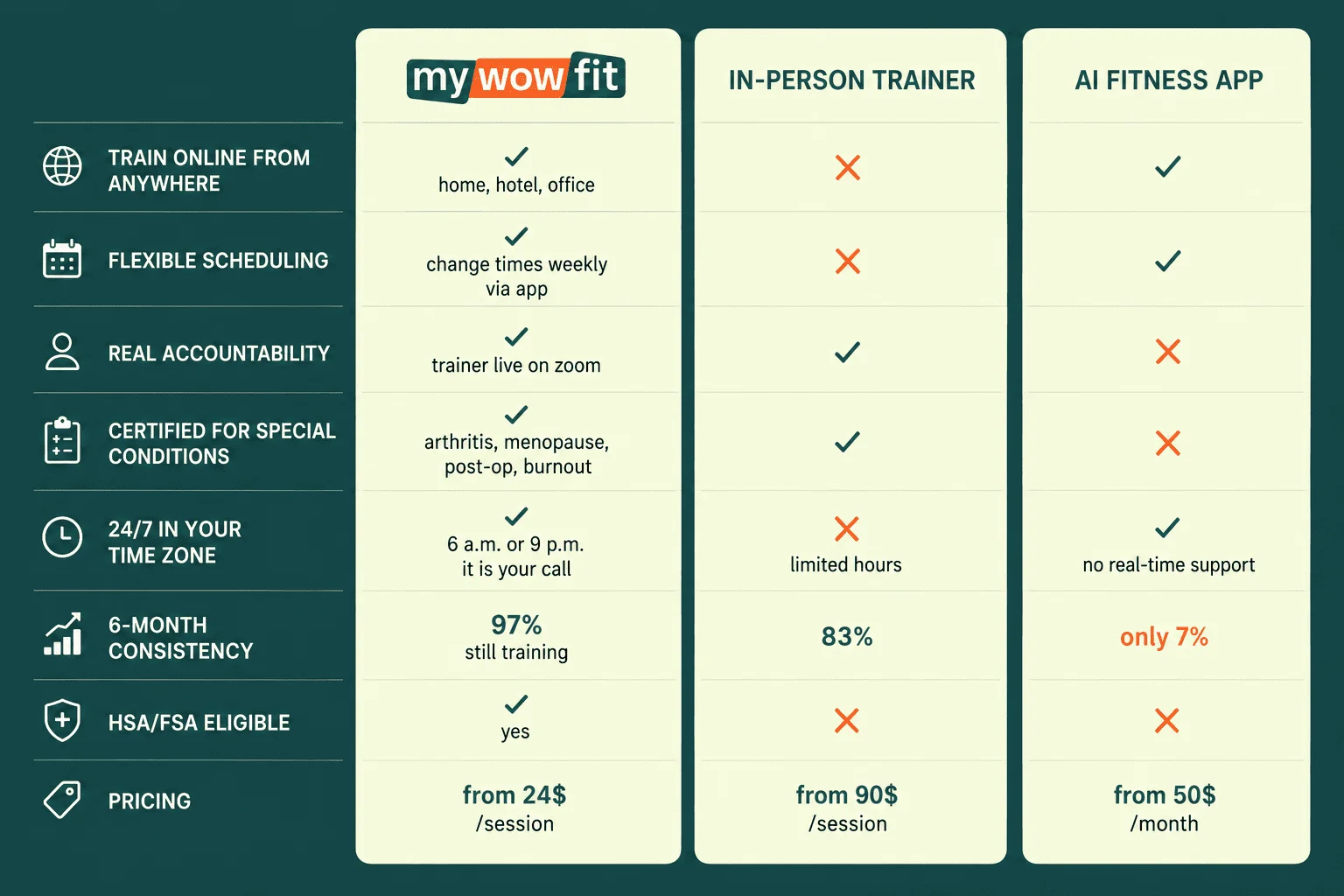
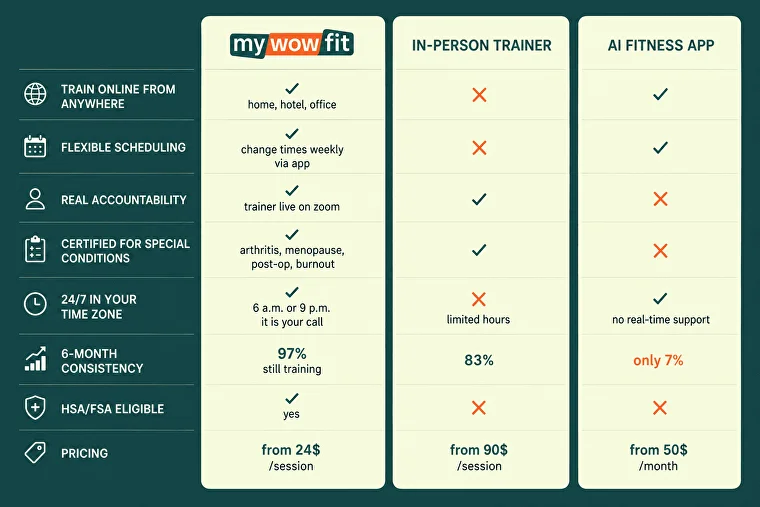
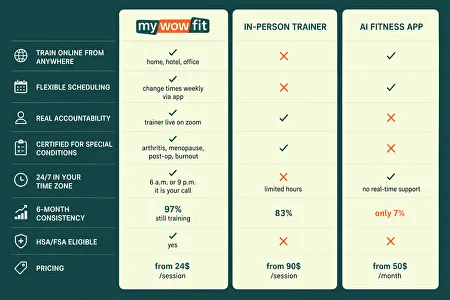
Above all, let go of the pressure to “bounce back.” Recovery is not a race. With the right approach, you can build a strong, healthy and resilient body that supports you well beyond the postpartum period. If you’re looking for extra guidance, working with a qualified trainer who understands postpartum recovery can help you progress safely and confidently. Mywowfit offers personalized training programs and one-on-one coaching designed to support women through every stage of their postpartum fitness journey. Here is how it compares to other options:
FAQ Section
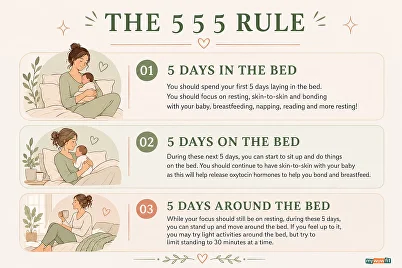
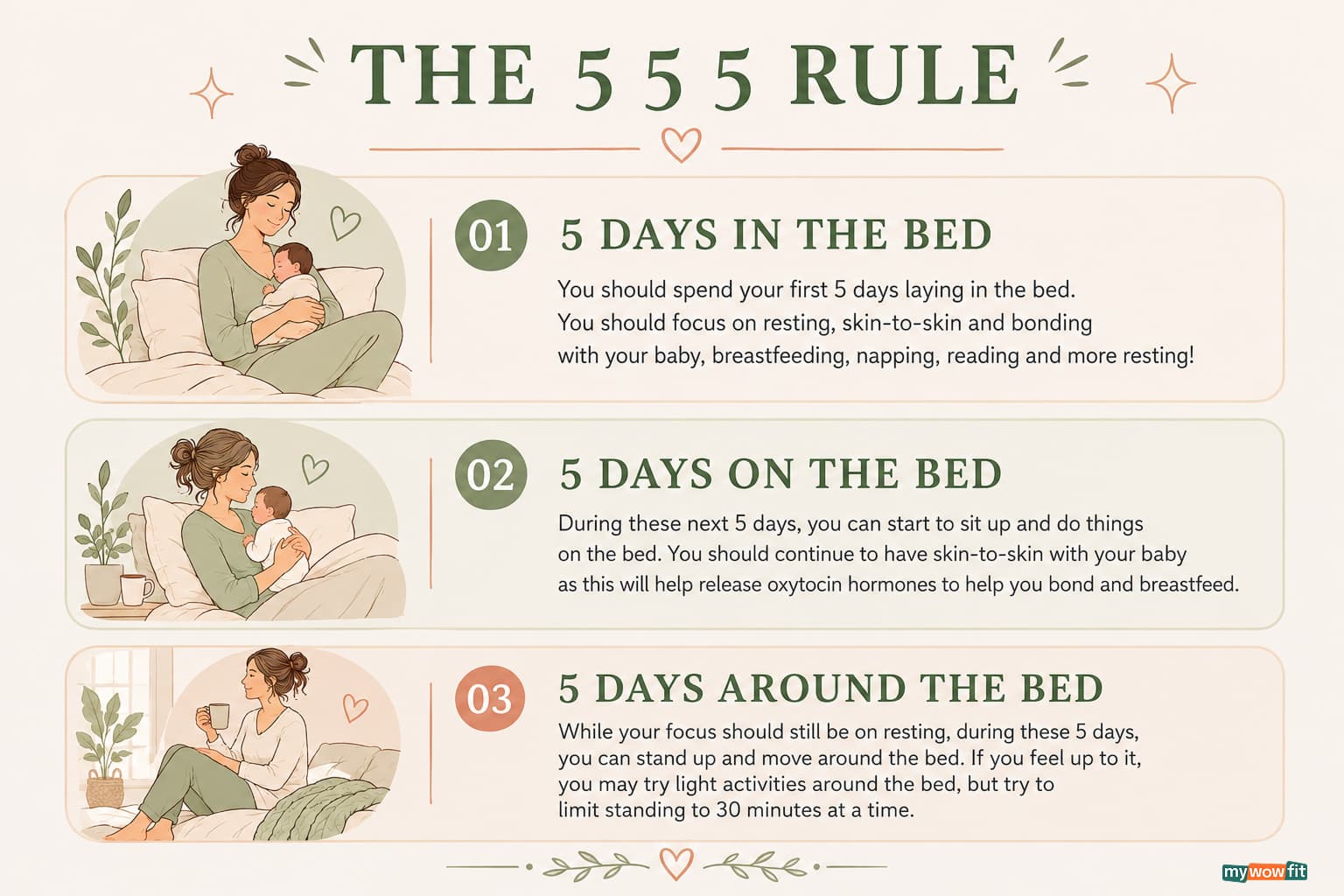
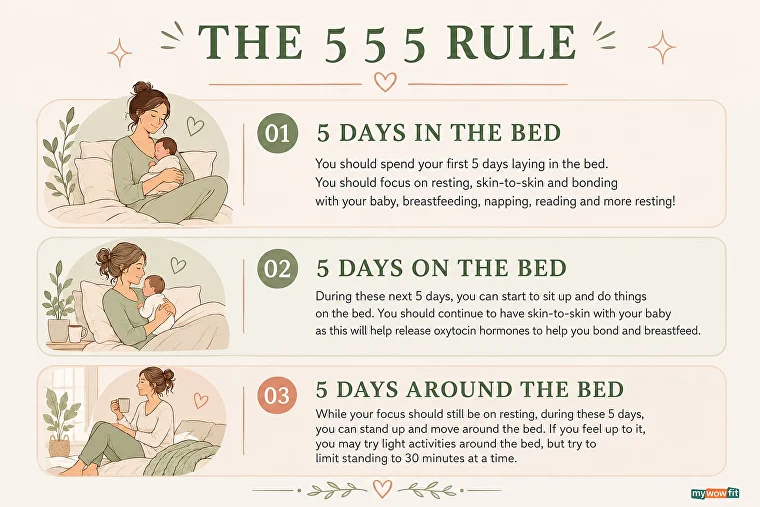
the 5 5 5 rule
  • What is the best exercise after giving birth? The best exercise is gentle walking in the first few weeks, followed by core and pelvic floor exercises (as approved by the World Health Organization (WHO).
  • What is the 5 5 5 rule postpartum? The 5-5-5 rule is a helpful suggestion for new moms as they recover after childbirth. It encourages them to take it easy for the first five days, keeping visitors limited so they can focus on themselves and their newborn. This allows moms to heal properly and bond with their baby during those important early days. You may talk to the International Confederation of Midwives for guidance.
  • How to quickly get back in shape after pregnancy? There’s no magic bullet, but a combination of healthy eating, regular exercise, and patience is key. The best postpartum exercises are a way of life!
  • How can I tone my stomach after having a baby? Focus on core exercises, particularly those that address diastasis recti. Seek expert advice from the Academy of Pelvic Health Physical Therapy. These tips will show the best ab exercises postpartum.

  • Truly personalized, human coaching
  • Flexible, anytime-anywhere training
  • Lifelong consistency: no burnout, no injuries

1-on-1 Workouts & Custom Fitness Plans with Online Personal Trainer

★★★★★ 4.8 out of 5 across 600+ reviews

Key Takeaways

Alright, let’s boil it down to the essentials, shall we? Your postpartum brain is already overloaded, so here’s the short version:
  • Disclaimer First: Always, always, always consult your doctor before starting any new exercise program after giving birth. No exceptions! Check to see if they can help with muscle engagement. The next step is to find a good way to start those gentle movements.
  • Slow and Steady Wins the Race: Postpartum recovery is a marathon, not a sprint. Be patient with yourself and listen to your body. You can also always ask around to find out about the American Physical Therapy Association (APTA) for some guidance!
  • Core is King: Focus on gentle core exercises to rebuild strength and address diastasis recti. You can do this, thanks to all the best postpartum exercises.
  • Pelvic Floor Love: Don’t neglect your pelvic floor! Regular contractions and relaxation techniques are essential for bladder control and overall pelvic health. Now, you will get those best postpartum pelvic floor exercises right away!
  • Know Your Limits: Be aware of red flags and stop exercising immediately if you experience any pain or discomfort. Those body alignment exercises are needed to make you feel all safe and secure.
So, there you have it. It’s about what you want and what you can achieve. And I think that best ab exercises postpartum is the best way to describe it! Now go forth and reclaim your body with confidence, compassion, and a healthy dose of humor!

  • Truly personalized, human coaching
  • Flexible, anytime-anywhere training
  • Lifelong consistency: no burnout, no injuries

1-on-1 Workouts & Custom Fitness Plans with Online Personal Trainer

★★★★★ 4.8 out of 5 across 600+ reviews
References / Sources
  1. How pregnancy changes your pelvic floor - realignhealthclinic.com.au
  2. Lochia: Is Postpartum Bleeding Normal? - in.pampers.com
  3. 7 Exercises to Strengthen Your Deep Core & Pelvic Floor - theoriginway.com
  4. Postpartum Recovery - americanpregnancy.org
  5. Physical Activity and Exercise During Pregnancy and the Postpartum Period - acog.org

Responses (4)

  • elena
    I just had my baby 8 weeks ago and honestly felt lost about what’s safe to do. This article explained it in such a clear way — especially the breathing and pelvic floor exercises. I tried the diaphragmatic breathing and it actually helped me relax during a stressful day with the baby. Grateful for this resource
  • christine
    Love how this reminds us to be patient with ourselves 💕
  • pauline
    The breathing section is so underrated. Totally changes how I feel during workouts.
  • cat_V
    Exactly the kind of gentle guidance new moms need. Thank you!

You may also be interested

    Meet some of our trainers