
What are Somatic Exercises? A Guide for Beginners

table of contents
- Primary Focus
- Benefits
- Suitable For
- Sensory Motor Amnesia (SMA)
- Pandiculation
- Slow Movement
- Internal Focus
Basic Somatic Movements for Beginners
A free somatic routine
Somatic Stretching Techniques
Creating Your Somatic Workout Plan
Conclusion
Key takeaways
FAQ
Understanding Somatic Exercise

In a traditional workout, you might focus on completing a certain number of repetitions or reaching a specific fitness goal. In somatic movement, the focus shifts inward. You pay attention to how your muscles feel, how your joints move, and how your body responds throughout the exercise.
This approach helps improve neuromuscular awareness, meaning the communication between your brain and muscles. Over time, many people discover movement patterns and areas of tension they didn’t even realize they were carrying. Rather than forcing flexibility or strength, somatic exercises encourage your body to release unnecessary tension naturally. This often leads to easier movement, improved posture and reduced discomfort. [1]
Primary Focus
Think about how often you catch yourself clenching your jaw, shrugging your shoulders or tensing your lower back without realizing it. Over time, these unconscious habits can become your body’s default setting. Somatic movement helps bring awareness back to those patterns so you can gradually change them. Many people describe the experience as learning how to relax muscles they didn’t know were tense.
Benefits
Flexibility: By increasing your awareness of how you move, somatic workouts help release deep-seated tension that limits your range of motion, naturally enhancing your flexibility.
Awareness: Somatic practice enhances the mind-body connection, so you become more aware of the subtle sensations and needs of your physical self. It’s like getting to know your body in a whole new light.
Suitable For
These movements can be especially helpful for people who spend long hours sitting at a desk, deal with chronic stress, experience recurring muscle tightness or want a gentler way to stay active. Athletes often use somatic techniques to improve movement quality and recovery, while older adults may find them useful for maintaining mobility and balance. Because the movements are slow and adaptable, they can usually be modified to suit different fitness levels and physical abilities.
Sensory Motor Amnesia (SMA)
Benefit: By identifying patterns of tension through somatic movement, you can bring awareness to these areas and start to regain control, making a major dent in the pain cycle. It’s like waking up your muscles from a long, sleepy nap.
Pandiculation
Benefit: This action helps reset muscle tension and improve coordination, naturally leading to better muscle memory, releasing chronic tightness and promoting muscle tension release. Pandiculation is way more effective than forcing a static stretch, as it actually addresses muscle memory.
Slow Movement
Benefit: Moving slowly boosts your body sensing, allowing you to notice any tension or awkward movement patterns. It’s like having a microscope on your movements, giving you much more control and precision.
Internal Focus
Benefit: Focusing on inner sensation enhances the body-mind integration, enabling greater control and reducing the risk of injury. It also helps in identifying areas that need more attention and release. It’s like becoming a personal body detective.
1-on-1 Workouts & Custom Fitness Plans with Online Personal Trainer
Getting Started with Somatic Exercises
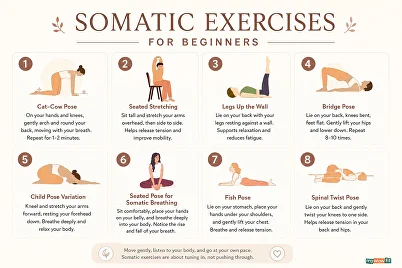
One of the reasons somatic exercises have become so popular is that they are incredibly simple to start. Many of the most effective movements are done lying on the floor or sitting comfortably in a chair. The key is to approach each exercise with curiosity rather than intensity. There is no need to push through discomfort or force your body into a deeper stretch. Instead, move slowly, pay attention to how the movement feels and allow your body to guide the process.
Many beginners are surprised by how subtle somatic exercises can feel. You may not break a sweat or feel your muscles burning, but that doesn’t mean the movements aren’t working. Small, mindful movements often create significant changes in body awareness and muscle tension over time. Before starting any new exercise program, especially if you have chronic pain, injuries, or medical conditions, it’s always a good idea to consult a healthcare professional.
Basic Somatic Movements for Beginners
Arch & Flatten
Duration: 3-5 minutes
This simple exercise helps improve awareness in the lower back and pelvis.
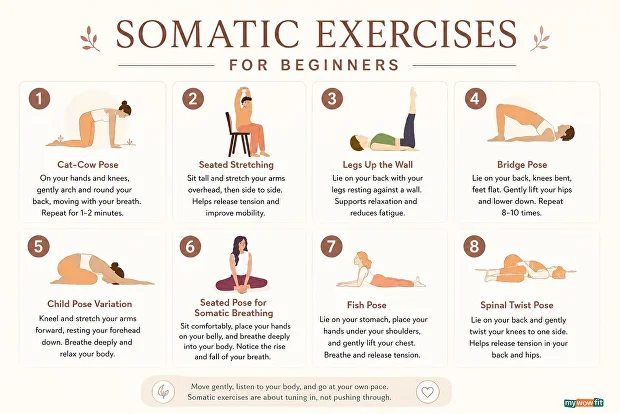
Lie comfortably on your back with your knees bent and your feet flat on the floor. Slowly tilt your pelvis forward, allowing your lower back to arch slightly. Then gently tilt it backward, flattening your lower back toward the floor.
Move slowly between these two positions for several minutes. Focus on how the movement feels rather than how large the movement is. Many people notice that this exercise helps release tension that builds up from sitting for long periods.
Cat Stretch
Focus Area: Spine
Duration: 2-3 minutes
Start on your hands and knees. Slowly round your spine toward the ceiling, then gradually reverse the movement and allow your back to soften in the opposite direction. Coordinate the movement with your breathing. There is no need to rush. The goal is to notice how each part of your spine moves and to encourage gentle mobility throughout the entire back.
Hip Clock
Focus Area: Pelvis
Duration: 5-7 minutes
Lie on your back with your knees bent. Imagine your pelvis is the center of a clock face. Slowly tilt and rotate your pelvis toward different “numbers” on the clock, exploring small circles and gentle shifts in movement. The movement should feel easy and controlled. This exercise helps improve awareness of how the pelvis moves and often reveals areas of tension that may be affecting posture and mobility.
Shoulder Well
Duration: 4-5 minutes
Sit or stand comfortably and slowly roll your shoulders forward, upward, backward and downward in a smooth circular motion. Move slowly enough that you can notice where tension is hiding. After several repetitions, reverse the direction. This simple exercise can help release stiffness in the neck, upper back, and shoulders while improving posture awareness.

a free somatic routine
Morning Routine
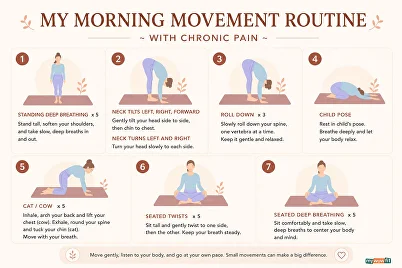
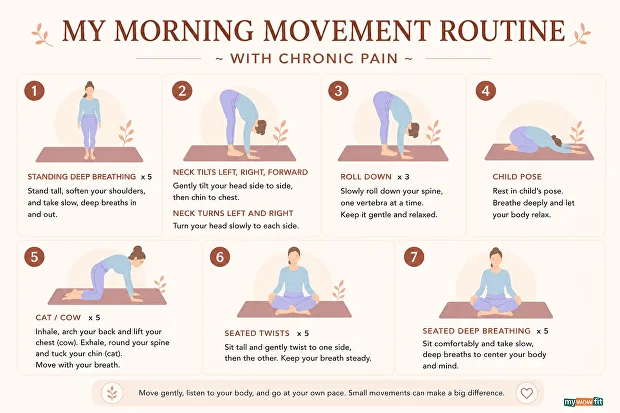
Many people enjoy practicing somatic exercises first thing in the morning. After a night of sleep, muscles and joints can feel stiff, and gentle movement helps prepare the body for the day ahead. Unlike a traditional workout, the goal isn’t to raise your heart rate or burn calories. Instead, it’s about creating awareness, improving mobility, and helping your nervous system ease into the day.
Begin with a few minutes of slow, mindful breathing while lying comfortably on your back. Focus on the natural rhythm of your breath and allow your body to relax. Next, transition into spinal waves for another five minutes, gently swaying your spine from side to side, like a gentle morning stretch. Follow this up with hip releases for five minutes, swaying your legs gently to ease your lower body, promoting movement efficiency. Finish your routine by standing up and exploring a few comfortable full-body movements. Pay attention to how your body feels and notice any changes in posture, tension or ease of movement. In just 15 to 20 minutes, you can set a calmer, more connected tone for the rest of the day while improving body awareness and movement quality. [2]
Somatic Stretching Techniques
A good somatic stretching practice combines gentle movement, mindful breathing and body awareness. Rather than concentrating on how a stretch looks, you focus on how it feels. This helps you recognize areas of tightness and gradually teach your muscles to relax. Over time, this approach can lead to lasting improvements in flexibility, posture and movement efficiency. Many people find that somatic stretching feels less like exercise and more like a conversation with their body and one that helps them move with greater ease and less tension throughout the day.
Active Release
Duration: 30-60 seconds
Method: Gently contract the muscle you’re about to stretch, hold for a few seconds, and then slowly release into the stretch. This little trick creates a signal in the brain and muscle, making it way easier for the muscle to relax. It’s like turning on a “release” switch in your muscles, utilizing muscle memory.
Passive Hold
Duration: 1-2 minutes
Method: Gently move into a comfortable stretch and hold it without forcing. Use your breath to relax into the stretch. It’s like giving your joints a gentle bath of relaxation. No need to go to the max, chill and relax in the space.
Dynamic Flow
Duration: 3-5 minutes
Method: Move through a series of gentle flowing movements, connecting one to the next. Let your breath guide the movement and allow your body to naturally find its own rhythm. It’s like doing a fluid dance that releases all the tension you hold in the body, a fantastic part of any somatic exercise routine.
Integration
Duration: 2-3 minutes
Method: Combine different somatic stretching techniques to engage multiple systems of your body. This approach is all about giving your body the best release experience, combining everything we’ve covered so far, leading to great body-mind integration.
Creating Your Somatic Workout Plan
A simple weekly plan might include short daily sessions focused on body awareness, mobility, and relaxation. On days when you feel more tension or stress, you may choose to spend extra time on breathing exercises and gentle movements. Consistency matters far more than intensity. A few minutes of mindful movement practiced regularly will often produce better results than occasional long sessions. As you gain experience, you’ll begin to notice which movements help your body feel its best. Over time, your practice can evolve to address your unique needs, whether that’s reducing tension or simply moving more comfortably.
1-on-1 Workouts & Custom Fitness Plans with Online Personal Trainer
Conclusion
The beauty of somatic movement is its accessibility. You don’t need special equipment, advanced fitness skills or hours of free time. All you need is a willingness to move slowly, listen to your body and approach the process with curiosity. Whether you’re dealing with chronic tension or looking for a gentler form of working out, somatic exercises can be a valuable addition to your wellness routine. Small movements practiced consistently can lead to meaningful changes, helping you feel stronger and more connected to your body every day.
Key takeaways
Slow and Steady: Moving slowly and deliberately is crucial for developing body sensing and awareness. Quality over quantity is the key.
Consistency is Key: A little bit of somatic movement practice every day is more effective than occasional hardcore sessions.
Explore the Free Resources: There are plenty of free somatic exercises at home and online, allowing you to start this journey at any time.
Body-Mind Integration: Somatic workouts foster a deeper body-mind integration, leading to better overall well-being.
FAQ
A somatic workout is a mind-body movement practice that helps you tune into your body’s sensations, gently release tension, and improve your overall movement patterns, enhancing neuromuscular awareness. It’s about listening to what your body is telling you and moving in a way that is both easy and enjoyable. Think of it as self-care for your body, not a punishment. You can easily find somatic workouts free and explore the practice.
Do somatic workouts work for weight loss?
While somatic exercise routine aren’t designed primarily for weight loss, they can definitely help you become more active and develop better body sensing, which can support your journey towards weight management. It’s more about getting your body working efficiently and developing a healthier relationship with your physical self, unlike targeted somatic exercises for belly fat. They’re not going to make you sweat buckets like a HIIT class, but they can be a super valuable part of a balanced approach. You can look into a somatic stretching somatic exercises for belly fat if you are unsure of how to start.
What is an example of somatic work?
One example of somatic work could be a simple “body scan.” This is a mindfulness practice where you take a few minutes to bring your attention to various parts of your body, noticing sensations, without judging them, enhancing mind-body connection. You can combine that with slow movements, where you focus on how your body feels as you move, as opposed to just doing the exercise. Another example is pandiculation, which helps reset muscle tension. You’re always focused on internal sensations, which makes them somatic. You can start with free somatic exercises to experience the practice.
Do somatic exercises really release trauma?
While somatic exercises are not a replacement for therapy, they can help you become more aware of how your body holds tension related to past experiences. With that increased neuromuscular awareness and the ability to gently release tension, somatic exercises can be a beneficial part of a holistic trauma recovery approach, focusing on nervous system regulation. They can help you connect to your physical self in a safe and empowered way, but it’s always recommended to work with a qualified professional when dealing with trauma. When considering what is somatic stretching, it’s important to understand that it’s a tool for self-awareness and healing, not a magic bullet. Many resources offer free somatic exercises, allowing you to explore the practice at your own pace. If you’re looking for a structured approach, consider researching a somatic exercise plan, or you could try somatic exercises free.
Responses (2)
Yogajournal: Awaken Your Practice with Breathing Awareness - yogajournal.com
You may also be interested
Meet some of our trainers

All rights reserved


How it Works
Trainers
Pricing
Blog
FAQ
Gift Certificate
Referral Program
Work with Us
Affiliate Program
Terms of Service
Code of Conduct
Disclaimer of Medical Advice
Cancellation, Refund, Referral Policy
Services


USA, 1111B S Governors Ave #6047 Dover, DE 19904, Online Fitness Technologies INC
EU and UK: MYWOWFIT OU, Estonia, Harju maakond, Tallinn, Kesklinna linnaosa, Tornimäe tn 3 // 5 // 7, 10145





Share via