
Gentle Yet Effective: Why Low-Impact Workouts Are Gaining Popularity
3

Last updated: 27/06/2026
Author: Zoe Patler
Medically reviewed by Maria Vasquez, NASM Certified Personal Trainer and Sports Nutrition Coach with expertise in Functional Training and Running Coaching. CPR/AED certified for safe, effective workouts. Dedicated to helping you achieve strength, endurance, and optimal health.
When most people think about getting fit, they picture intense gym sessions, sweaty HIIT workouts or long-distance running. While those types of exercise certainly have their place, they’re not the only way to improve your health. In fact, one of the biggest fitness trends in recent years has been much gentler. Low-impact workouts are becoming increasingly popular because they offer many of the same health benefits as higher-intensity exercise without placing as much stress on your joints. The best part is that “low impact” doesn’t mean “low results.” These workouts can strengthen muscles, improve cardiovascular fitness, increase flexibility and support weight management—all while helping you move comfortably and confidently.
What Is a Low-Impact Workout?
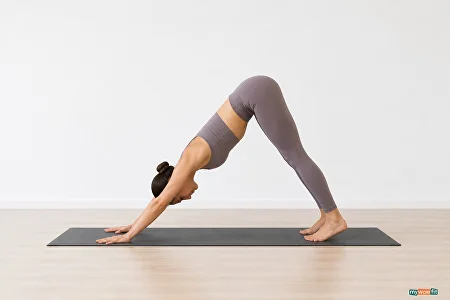
A low-impact workout is any form of exercise where at least one foot stays in contact with the ground or where your joints aren’t exposed to repeated high-impact forces. Unlike activities such as sprinting or jumping training, low-impact exercise uses smooth, controlled movements that reduce stress on your knees, hips and lower back. That makes these workouts ideal for people of all ages and fitness levels. They’re especially helpful for older adults, beginners, people carrying extra weight or anyone recovering from an injury. Even experienced athletes often include low-impact sessions in their weekly routine to support recovery and avoid overtraining. Instead of leaving you exhausted or sore, low-impact exercise helps you build strength and endurance gradually, making it easier to stay consistent over time.
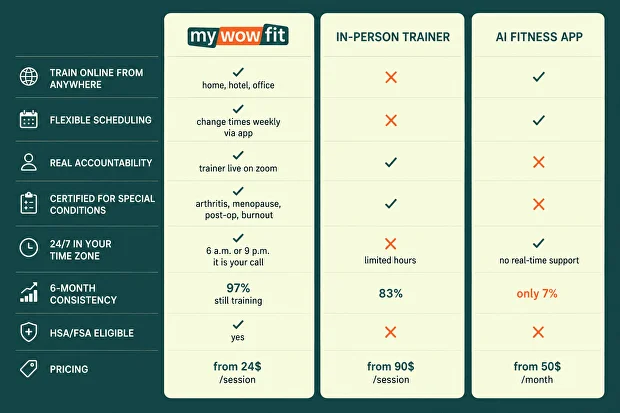
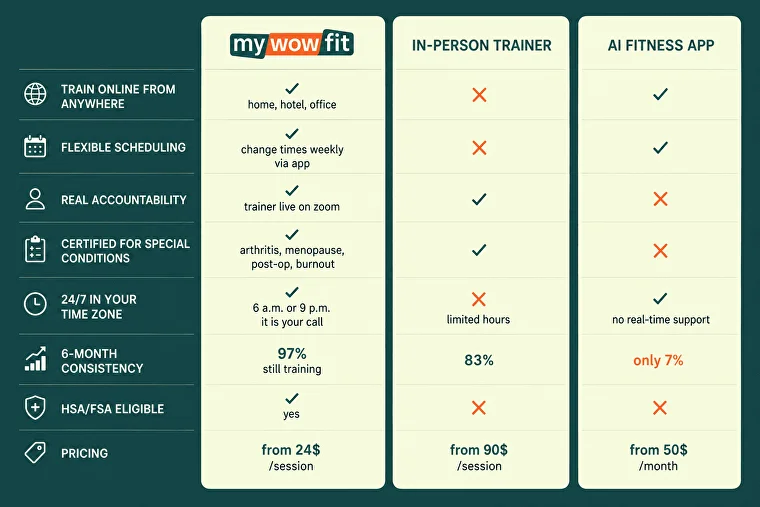
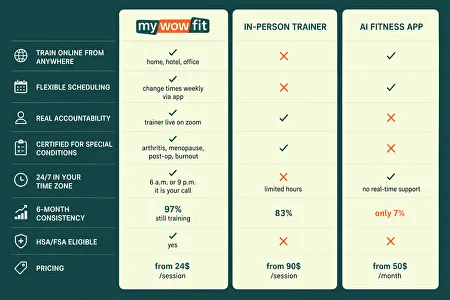
If you want to find the perfect low-impact workout program for you, give Mywowfit a try. Mywowfit can help you find the perfect low-impact workout program. It is a service that will help you create a personalized workout plan and a convenient online format with the possibility to train anywhere. We have a wide selection of low-impact workout plans and trainers specializing in low-impact workouts.
If you want to find the perfect low-impact workout program for you, give Mywowfit a try. Mywowfit can help you find the perfect low-impact workout program. It is a service that will help you create a personalized workout plan and a convenient online format with the possibility to train anywhere. We have a wide selection of low-impact workout plans and trainers specializing in low-impact workouts.
Why Are Low-Impact Workouts So Effective?
One reason low-impact training has become so popular is that it’s easier to stick with. High-intensity workouts can be physically demanding and difficult to maintain, especially if you’re dealing with joint pain or a busy schedule. Low-impact exercise allows you to move regularly without putting unnecessary strain on your body. As we know, consistency is one of the biggest factors in achieving long-term fitness results and choosing enjoyable workouts makes it much easier to build healthy habits. These workouts also offer a surprising number of health benefits.
Regular low-impact exercise can:
Because movements are controlled and gentle, you can often exercise more frequently while giving your body enough time to recover.
Regular low-impact exercise can:
- Improve cardiovascular health
- Strengthen muscles and bones
- Increase flexibility and mobility
- Improve balance and coordination
- Burn calories and support healthy weight management
- Reduce the risk of exercise-related injuries
Because movements are controlled and gentle, you can often exercise more frequently while giving your body enough time to recover.
1-on-1 Workouts & Custom Fitness Plans with Online Personal Trainer
★★★★★ 4.8 out of 5 across 600+ reviews
The Best Types of Low-Impact Exercise
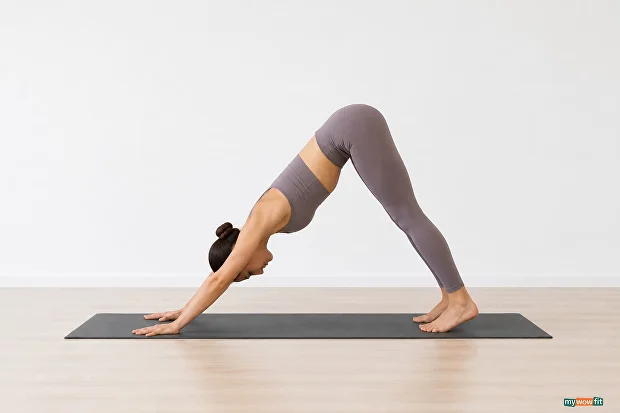
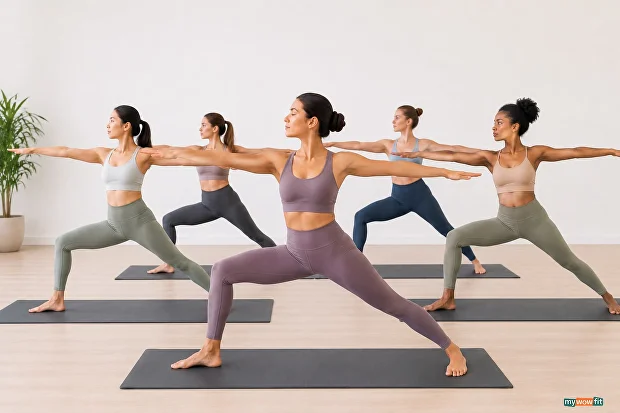
Yoga
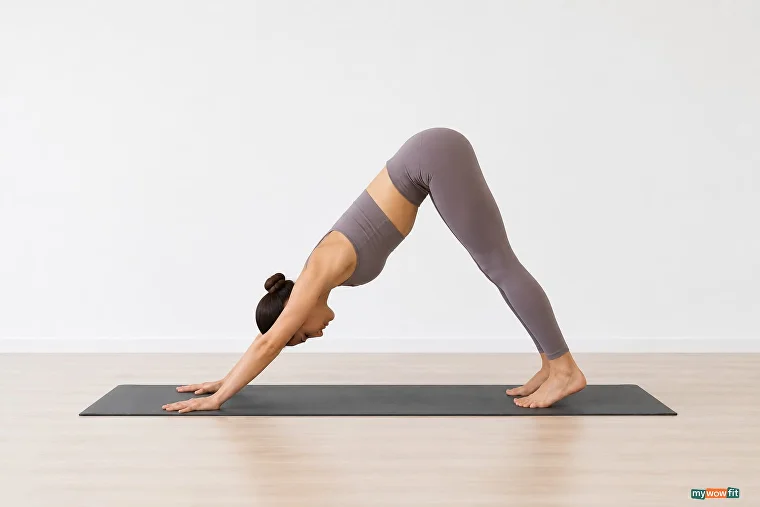
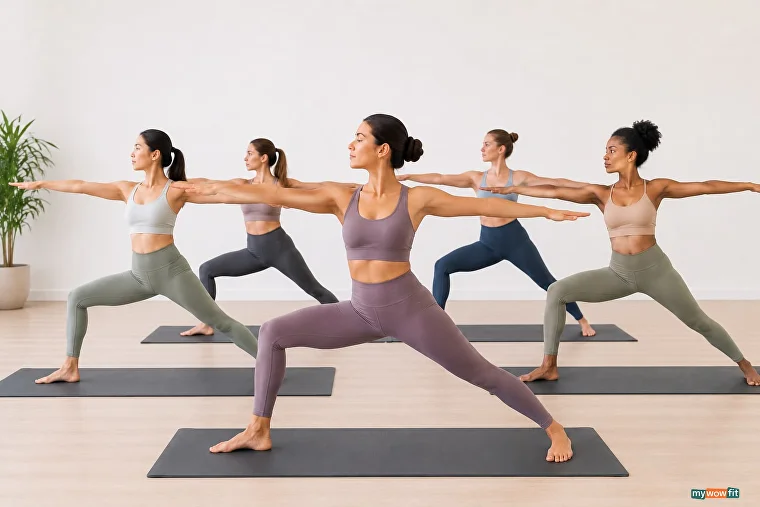
Yoga combines gentle movement with controlled breathing and mindfulness. While many people associate yoga with flexibility, it also improves balance, mobility, posture and muscular endurance.
Regular yoga practice can reduce stiffness, improve joint mobility and help relieve stress. Different styles are available, from slow restorative sessions to more challenging flows, allowing beginners and experienced exercisers to find the right level.
Regular yoga practice can reduce stiffness, improve joint mobility and help relieve stress. Different styles are available, from slow restorative sessions to more challenging flows, allowing beginners and experienced exercisers to find the right level.
pilates
Pilates focuses on strengthening the deep muscles that support your spine and pelvis. Rather than relying on fast movements, each exercise emphasizes control, precision and proper alignment.
A stronger core improves posture, balance and overall movement while also helping reduce back pain. Pilates is particularly popular among people recovering from injuries because many exercises can be adapted to different fitness levels.
A stronger core improves posture, balance and overall movement while also helping reduce back pain. Pilates is particularly popular among people recovering from injuries because many exercises can be adapted to different fitness levels.
walking
Walking remains one of the simplest and most effective forms of exercise. It requires no special equipment, can be done almost anywhere and provides excellent cardiovascular benefits. Even a brisk 30-minute walk most days of the week can improve heart health, increase energy levels, support weight management and boost your mood. Because walking places relatively little stress on the joints, it’s an excellent starting point for beginners.
cycling
Whether outdoors or on a stationary bike, cycling offers an excellent cardio workout without the repeated impact of running. The smooth pedaling motion strengthens the legs while improving endurance and cardiovascular fitness. Since your body weight is supported by the bike, cycling is often recommended for people with knee or hip discomfort.
Swimming and Water Exercise
Water naturally supports your body weight, making swimming one of the most joint-friendly workouts available.
Swimming works almost every major muscle group while improving endurance, strength and flexibility. Water aerobics offers many of the same benefits and is especially popular among older adults and people recovering from injuries.
Swimming works almost every major muscle group while improving endurance, strength and flexibility. Water aerobics offers many of the same benefits and is especially popular among older adults and people recovering from injuries.
How Often Should You Do Low-Impact Workouts?
One of the biggest advantages of low-impact exercise is that it can be done more frequently than many high-impact workouts. Because these activities place less stress on your joints and muscles, they often require less recovery time while still delivering excellent health benefits. If you’re just getting started, aim for 2-3 sessions per week. This gives your body time to adapt while helping you build a consistent routine. As your fitness improves, you can gradually increase your activity level. The general recommendation for adults is at least 150 minutes of moderate physical activity each week, which can easily be achieved through walking, cycling, swimming, pilates, yoga or other low-impact exercises.
Remember that not every workout has to be long or intense. Even 20 to 30 minutes of movement can improve your cardiovascular health, strengthen muscles and boost your mood. Some people also use low-impact workouts as active recovery days between strength training or higher-intensity sessions. For example, you might lift weights twice a week while adding walking or yoga on your recovery days to stay active without overloading your body. The most important factor isn’t how hard you exercise but how consistently you move. Finding a routine you enjoy will make it much easier to stay active for months and years to come.
Remember that not every workout has to be long or intense. Even 20 to 30 minutes of movement can improve your cardiovascular health, strengthen muscles and boost your mood. Some people also use low-impact workouts as active recovery days between strength training or higher-intensity sessions. For example, you might lift weights twice a week while adding walking or yoga on your recovery days to stay active without overloading your body. The most important factor isn’t how hard you exercise but how consistently you move. Finding a routine you enjoy will make it much easier to stay active for months and years to come.
Can Low-Impact Workouts Help You Lose Weight?
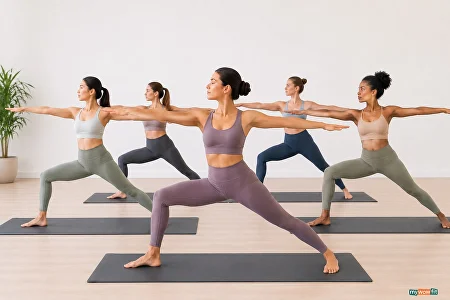
Absolutely. While high-intensity workouts often receive more attention, low-impact exercise can be just as effective for supporting healthy weight loss when combined with a balanced diet and consistent routine. Weight loss ultimately depends on creating a calorie deficit, which means burning more calories than you consume. Activities such as brisk walking, cycling, swimming and low-impact strength training all increase daily energy expenditure while helping preserve or build muscle. Maintaining muscle is especially important because muscle tissue burns more calories than fat, even while you’re resting.
One of the biggest advantages of low-impact workouts is that they’re easier to perform consistently. A workout only works if you keep doing it and many people find gentle exercise much more sustainable than intense training that leaves them exhausted or sore. Exercising regularly throughout the week often leads to better long-term results than occasional high-intensity sessions followed by long breaks.
If your goal is weight loss, combining low-impact cardio with strength training is an excellent approach. Strength exercises help maintain lean muscle, while activities like walking, cycling or swimming improve cardiovascular fitness and increase calorie burn. Together, they create a balanced routine that supports both fitness and long-term weight management. If you’re unsure where to begin, working with a qualified trainer can help you build a personalized plan based on your goals, fitness level, and any physical limitations. At Mywowfit, certified trainers create customized low-impact workout programs that make it easier to stay consistent, exercise safely, and make steady progress over time.
One of the biggest advantages of low-impact workouts is that they’re easier to perform consistently. A workout only works if you keep doing it and many people find gentle exercise much more sustainable than intense training that leaves them exhausted or sore. Exercising regularly throughout the week often leads to better long-term results than occasional high-intensity sessions followed by long breaks.
If your goal is weight loss, combining low-impact cardio with strength training is an excellent approach. Strength exercises help maintain lean muscle, while activities like walking, cycling or swimming improve cardiovascular fitness and increase calorie burn. Together, they create a balanced routine that supports both fitness and long-term weight management. If you’re unsure where to begin, working with a qualified trainer can help you build a personalized plan based on your goals, fitness level, and any physical limitations. At Mywowfit, certified trainers create customized low-impact workout programs that make it easier to stay consistent, exercise safely, and make steady progress over time.
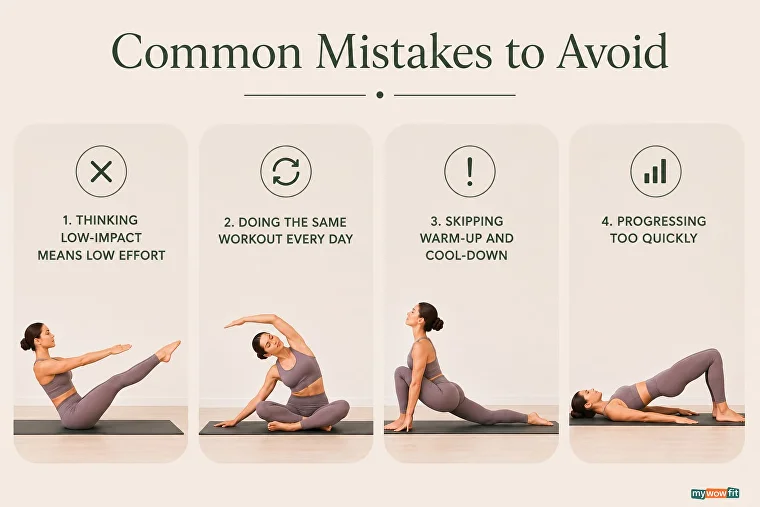
Common Mistakes to Avoid
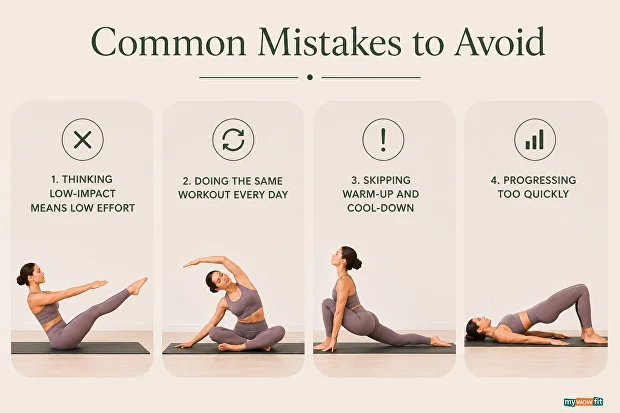
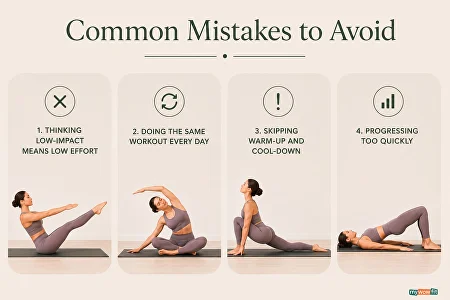
Although low-impact workouts are gentle on the body, there are still a few common mistakes that can reduce their effectiveness. One of the biggest misconceptions is believing that low-impact means low effort. While these workouts avoid excessive stress on the joints, they can still be challenging. A well-designed pilates class or bodyweight strength workout can significantly improve your fitness when performed with good technique and consistency.
Another common mistake is doing the same workout every day. Your body adapts to repeated movement, so adding variety helps you continue making progress. Try combining walking, cycling, yoga or strength training throughout the week to challenge different muscle groups.
Many people also skip the warm-up and cool-down because the exercises feel less intense. However, preparing your muscles before exercise and stretching afterward can improve mobility, reduce stiffness and lower your risk of injury. Finally, avoid progressing too quickly, just because it doesn't feel super intense. Increasing workout time, resistance or difficulty gradually allows your body to adapt safely. Listen to your body, focus on proper form and remember that small improvements over time produce the best long-term results.
Another common mistake is doing the same workout every day. Your body adapts to repeated movement, so adding variety helps you continue making progress. Try combining walking, cycling, yoga or strength training throughout the week to challenge different muscle groups.
Many people also skip the warm-up and cool-down because the exercises feel less intense. However, preparing your muscles before exercise and stretching afterward can improve mobility, reduce stiffness and lower your risk of injury. Finally, avoid progressing too quickly, just because it doesn't feel super intense. Increasing workout time, resistance or difficulty gradually allows your body to adapt safely. Listen to your body, focus on proper form and remember that small improvements over time produce the best long-term results.
Low-Impact Workouts: The Path to Health Without Limits
Although low-impact workouts are often recommended for people with joint problems, they’re suitable for far more than injury recovery. Beginners often find them less intimidating than high-intensity exercise, making it easier to build confidence and consistency. Older adults can maintain strength, balance and mobility without placing excessive stress on aging joints. Pregnant women, depending on medical advice, may also benefit from certain low-impact activities.
Athletes also use low-impact workouts as recovery sessions between more demanding training days. Rather than doing intense exercise every day, they alternate harder workouts with gentler movement to reduce fatigue and lower their risk of injury. In reality, almost anyone can benefit from adding low-impact exercise to their weekly routine. One of the biggest misconceptions about fitness is that every workout needs to leave you completely exhausted. Actually, the best workout is the one you’ll continue doing consistently. Low-impact exercise is sustainable because it fits easily into everyday life. A yoga mat, a comfortable pair of walking shoes or a bicycle may be all you need to stay active.
If you’re unsure where to begin, having professional guidance can make the process much easier. A qualified trainer can recommend exercises that match your fitness level, health conditions, and personal goals while helping you progress safely. At Mywowfit, certified trainers create personalized online workout programs that include low-impact options such as yoga, pilates, mobility training, strength exercises, and walking-based fitness plans. Whether you prefer live 1-on-1 Zoom sessions or flexible trainer-led programs through the app, your workouts are tailored to your body, your schedule, and your goals.
Athletes also use low-impact workouts as recovery sessions between more demanding training days. Rather than doing intense exercise every day, they alternate harder workouts with gentler movement to reduce fatigue and lower their risk of injury. In reality, almost anyone can benefit from adding low-impact exercise to their weekly routine. One of the biggest misconceptions about fitness is that every workout needs to leave you completely exhausted. Actually, the best workout is the one you’ll continue doing consistently. Low-impact exercise is sustainable because it fits easily into everyday life. A yoga mat, a comfortable pair of walking shoes or a bicycle may be all you need to stay active.
If you’re unsure where to begin, having professional guidance can make the process much easier. A qualified trainer can recommend exercises that match your fitness level, health conditions, and personal goals while helping you progress safely. At Mywowfit, certified trainers create personalized online workout programs that include low-impact options such as yoga, pilates, mobility training, strength exercises, and walking-based fitness plans. Whether you prefer live 1-on-1 Zoom sessions or flexible trainer-led programs through the app, your workouts are tailored to your body, your schedule, and your goals.
Final Thoughts
Low-impact workouts prove that effective exercise doesn’t have to be intense to deliver results. Gentle movement can strengthen muscles, improve heart health, increase flexibility and support long-term wellbeing while placing less stress on your joints.
Whether you’re just beginning your fitness journey, returning after an injury or just looking for a more sustainable way to stay active, low-impact exercise offers a safe and effective solution. Choose activities you enjoy, start at a comfortable pace and stay consistent. Over time, those small, steady efforts can lead to lasting improvements in your overall quality of life. Start today, pick whichever activity suits you best!
Whether you’re just beginning your fitness journey, returning after an injury or just looking for a more sustainable way to stay active, low-impact exercise offers a safe and effective solution. Choose activities you enjoy, start at a comfortable pace and stay consistent. Over time, those small, steady efforts can lead to lasting improvements in your overall quality of life. Start today, pick whichever activity suits you best!
FAQ
What is a low-impact workout?
A low-impact workout is a type of exercise that places less stress on your joints by avoiding repetitive jumping or hard landings. Activities like walking, yoga, Pilates, swimming, and cycling are all examples of low-impact exercise.
Are low-impact workouts effective for weight loss?
Yes. Low-impact workouts can help you burn calories, improve cardiovascular fitness, and support weight loss when combined with a balanced diet. The key is staying consistent and choosing activities you enjoy enough to do regularly.
Can beginners do low-impact workouts?
Absolutely. Low-impact exercises are ideal for beginners because they are easier on the body while still building strength, endurance, and confidence. They also reduce the risk of injury as you develop your fitness.
Who should choose low-impact exercise?
Low-impact workouts are suitable for almost everyone, including older adults, beginners, people with arthritis or joint pain, those recovering from injuries, and anyone looking for a sustainable way to stay active. They’re also commonly used by athletes as part of recovery training.
Which low-impact workout is best?
The best low-impact workout is the one you’ll enjoy and stick with consistently. Walking is a great place to start, while yoga and Pilates improve strength and flexibility. Swimming and cycling are excellent choices for improving cardiovascular fitness with minimal joint stress.
Can low-impact workouts build strength?
Yes. Exercises like Pilates, yoga, resistance band workouts, and bodyweight strength training help build muscle, improve balance, and increase overall strength without putting excessive strain on your joints.
A low-impact workout is a type of exercise that places less stress on your joints by avoiding repetitive jumping or hard landings. Activities like walking, yoga, Pilates, swimming, and cycling are all examples of low-impact exercise.
Are low-impact workouts effective for weight loss?
Yes. Low-impact workouts can help you burn calories, improve cardiovascular fitness, and support weight loss when combined with a balanced diet. The key is staying consistent and choosing activities you enjoy enough to do regularly.
Can beginners do low-impact workouts?
Absolutely. Low-impact exercises are ideal for beginners because they are easier on the body while still building strength, endurance, and confidence. They also reduce the risk of injury as you develop your fitness.
Who should choose low-impact exercise?
Low-impact workouts are suitable for almost everyone, including older adults, beginners, people with arthritis or joint pain, those recovering from injuries, and anyone looking for a sustainable way to stay active. They’re also commonly used by athletes as part of recovery training.
Which low-impact workout is best?
The best low-impact workout is the one you’ll enjoy and stick with consistently. Walking is a great place to start, while yoga and Pilates improve strength and flexibility. Swimming and cycling are excellent choices for improving cardiovascular fitness with minimal joint stress.
Can low-impact workouts build strength?
Yes. Exercises like Pilates, yoga, resistance band workouts, and bodyweight strength training help build muscle, improve balance, and increase overall strength without putting excessive strain on your joints.
1-on-1 Workouts & Custom Fitness Plans with Online Personal Trainer
★★★★★ 4.8 out of 5 across 600+ reviews
Sources:
Cleveland Clinic. “Just Keep Swimming: 9 Health Benefits of Water Workouts.” Cleveland Clinic, 15 Aug. 2023, health.clevelandclinic.org/swimming-joint-friendly-and-good-for-the-heart.
Doan, Kent C, and Tomohiro Hamahata. “Lower Back Pain? Free 3-Min Quiz Identifies Causes | Ubie.” Lower Back Pain? Free 3-Min Quiz Identifies Causes | Ubie, Ubie, Inc., 2025, ubiehealth.com/symptoms/low-back-pain. Accessed 27 June 2026.
Mayo Clinic. “Walk Your Way to Fitness.” Mayo Clinic, 12 Mar. 2024, www.mayoclinic.org/healthy-lifestyle/fitness/in-depth/walking/art-20046261.
NHS. “Physical Activity Guidelines for Adults Aged 19 to 64.” NHS, 22 May 2024, www.nhs.uk/live-well/exercise/physical-activity-guidelines-for-adults-aged-19-to-64/.
Oja, P., et al. “Health Benefits of Cycling: A Systematic Review.” Scandinavian Journal of Medicine & Science in Sports, vol. 21, no. 4, 18 Apr. 2011, pp. 496–509, onlinelibrary.wiley.com/doi/abs/10.1111/j.1600-0838.2011.01299.x, https://doi.org/10.1111/j.1600-0838.2011.01299.x.
pbadmin. “What Is a Low Impact Workout?” Purebarre.com, 2025, blog.purebarre.com/what-is-low-impact-workout. Accessed 27 June 2026.
Woodyard, Catherine. “Exploring the Therapeutic Effects of Yoga and Its Ability to Increase Quality of Life.” International Journal of Yoga, vol. 4, no. 2, 2011, pp. 49–54, www.ncbi.nlm.nih.gov/pmc/articles/PMC3193654/, https://doi.org/10.4103/0973-6131.85485.
Cleveland Clinic. “Just Keep Swimming: 9 Health Benefits of Water Workouts.” Cleveland Clinic, 15 Aug. 2023, health.clevelandclinic.org/swimming-joint-friendly-and-good-for-the-heart.
Doan, Kent C, and Tomohiro Hamahata. “Lower Back Pain? Free 3-Min Quiz Identifies Causes | Ubie.” Lower Back Pain? Free 3-Min Quiz Identifies Causes | Ubie, Ubie, Inc., 2025, ubiehealth.com/symptoms/low-back-pain. Accessed 27 June 2026.
Mayo Clinic. “Walk Your Way to Fitness.” Mayo Clinic, 12 Mar. 2024, www.mayoclinic.org/healthy-lifestyle/fitness/in-depth/walking/art-20046261.
NHS. “Physical Activity Guidelines for Adults Aged 19 to 64.” NHS, 22 May 2024, www.nhs.uk/live-well/exercise/physical-activity-guidelines-for-adults-aged-19-to-64/.
Oja, P., et al. “Health Benefits of Cycling: A Systematic Review.” Scandinavian Journal of Medicine & Science in Sports, vol. 21, no. 4, 18 Apr. 2011, pp. 496–509, onlinelibrary.wiley.com/doi/abs/10.1111/j.1600-0838.2011.01299.x, https://doi.org/10.1111/j.1600-0838.2011.01299.x.
pbadmin. “What Is a Low Impact Workout?” Purebarre.com, 2025, blog.purebarre.com/what-is-low-impact-workout. Accessed 27 June 2026.
Woodyard, Catherine. “Exploring the Therapeutic Effects of Yoga and Its Ability to Increase Quality of Life.” International Journal of Yoga, vol. 4, no. 2, 2011, pp. 49–54, www.ncbi.nlm.nih.gov/pmc/articles/PMC3193654/, https://doi.org/10.4103/0973-6131.85485.
Responses (3)
Jennifer
My fave type of fitness now
Kira
I hate HIIT and running, totally get it
Jaclyn
Super helpful :)
You may also be interested
Meet some of our trainers

© 2021-2025 Together with Online Fitness Technologies Inc.
All rights reserved
All rights reserved


About
How it Works
Trainers
Pricing
Blog
FAQ
Gift Certificate
Referral Program
Work with Us
Affiliate Program
How it Works
Trainers
Pricing
Blog
FAQ
Gift Certificate
Referral Program
Work with Us
Affiliate Program
Useful Links
Privacy Policy
Terms of Service
Code of Conduct
Disclaimer of Medical Advice
Cancellation, Refund, Referral Policy
Terms of Service
Code of Conduct
Disclaimer of Medical Advice
Cancellation, Refund, Referral Policy
Documentation


Contact Us
Headquarters:
USA, 1111B S Governors Ave #6047 Dover, DE 19904, Online Fitness Technologies INC
USA, 1111B S Governors Ave #6047 Dover, DE 19904, Online Fitness Technologies INC
Locations
Headquarters:
EU and UK: MYWOWFIT OU, Estonia, Harju maakond, Tallinn, Kesklinna linnaosa, Tornimäe tn 3 // 5 // 7, 10145
EU and UK: MYWOWFIT OU, Estonia, Harju maakond, Tallinn, Kesklinna linnaosa, Tornimäe tn 3 // 5 // 7, 10145





5.0
4.9
Share via