
Pelvic Floor Exercises: How to Strengthen, Relax and Train Safely
2

Last updated: 04/06/2026
Author: Zoe Patler
Medically reviewed by Maria Vasquez, NASM Certified Personal Trainer and Sports Nutrition Coach with expertise in Functional Training and Running Coaching. CPR/AED certified for safe, effective workouts. Dedicated to helping you achieve strength, endurance, and optimal health.
Have you ever noticed a small leak while running, jumping, lifting weights or even sneezing? Maybe you’re returning to exercise after pregnancy and wondering whether your body is ready for higher-impact workouts. Or perhaps you’ve been told to “just do Kegels,” but you’re not sure whether they’re helping. If any of this sounds familiar, you’re not alone. Pelvic floor symptoms are common, especially after childbirth and as we get older, but they shouldn’t automatically be accepted as a normal part of exercise or daily life. While many people assume the solution is simply strengthening the pelvic floor, the reality is often more complex. These muscles need to contract, relax, coordinate with your breathing and respond to pressure during movement.
A well-designed exercise program doesn’t focus only on pelvic floor exercises. It also considers breathing, core control, hip and glute strength, movement technique and gradual progression back to activities like lifting, running or high-impact exercise. Understanding how these pieces work together can help you exercise more confidently while supporting your pelvic floor function.
A well-designed exercise program doesn’t focus only on pelvic floor exercises. It also considers breathing, core control, hip and glute strength, movement technique and gradual progression back to activities like lifting, running or high-impact exercise. Understanding how these pieces work together can help you exercise more confidently while supporting your pelvic floor function.
table of contents
What Is the Pelvic Floor?
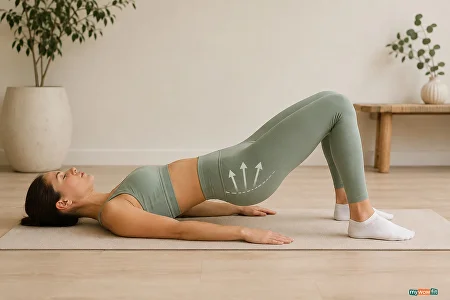
The pelvic floor is a group of muscles and connective tissues located at the base of your pelvis. Rather than working alone, these muscles are part of a larger system that includes your diaphragm, deep abdominal muscles, hips and lower back. Together, they help your body stay stable and manage pressure whenever you move. The pelvic floor has several important jobs. It helps support the bladder, bowel and reproductive organs, contributes to bladder and bowel control and plays a role in sexual function. It also responds automatically when you cough, sneeze, lift something heavy, run or jump by helping your body manage changes in pressure. Because the pelvic floor works as part of your whole body, improving its function often involves more than isolated muscle contractions. Breathing, posture, strength and movement patterns can all influence how these muscles perform during everyday activities and exercise.
Common Signs That the Pelvic Floor May Need Attention
Pelvic floor symptoms can look different from person to person, and they don’t always have the same cause. Some people notice urinary leakage during exercise, while others experience frequent urges to urinate, difficulty emptying the bladder or bowel, pelvic heaviness or pressure, pain in the pelvic area or discomfort during sex. Symptoms may also appear when returning to exercise after pregnancy, particularly during running, jumping, or lifting. While leaking during exercise can be associated with stress urinary incontinence, it’s important not to assume that every symptom is caused by weak muscles alone. In some cases, the issue may involve coordination, muscle tension or another underlying condition. That’s why persistent or worsening symptoms should be evaluated by a qualified healthcare professional rather than managed through generic online exercises alone.
Why “Just Do Kegels” Is Incomplete Advice
When people experience pelvic floor symptoms, the first recommendation they often hear is, “Do Kegels.” Kegel exercises are designed to strengthen the pelvic floor by gently contracting and lifting the muscles that support the bladder, bowel, and pelvic organs. For some people, pelvic floor muscle training can help improve bladder control and support everyday function. However, Kegels are only one piece of the puzzle. The pelvic floor doesn’t simply need to squeeze, it also needs to relax, coordinate with breathing and respond naturally as your body moves. Focusing only on repeated contractions without learning how to fully release the muscles or manage pressure during exercise may not address the underlying problem.
It’s also important to remember that not every pelvic floor symptom has the same cause. Some people may benefit from strengthening exercises, while others may have difficulty relaxing or coordinating the muscles effectively. This is one reason why generic online routines don’t work for everyone. A pelvic floor physical therapist can assess how the muscles are functioning and recommend an approach that matches your individual needs. Rather than asking whether you should do more Kegels, a better question is whether your pelvic floor is working well as part of your whole body during movement.
It’s also important to remember that not every pelvic floor symptom has the same cause. Some people may benefit from strengthening exercises, while others may have difficulty relaxing or coordinating the muscles effectively. This is one reason why generic online routines don’t work for everyone. A pelvic floor physical therapist can assess how the muscles are functioning and recommend an approach that matches your individual needs. Rather than asking whether you should do more Kegels, a better question is whether your pelvic floor is working well as part of your whole body during movement.
Pelvic Floor Exercises and Training Principles
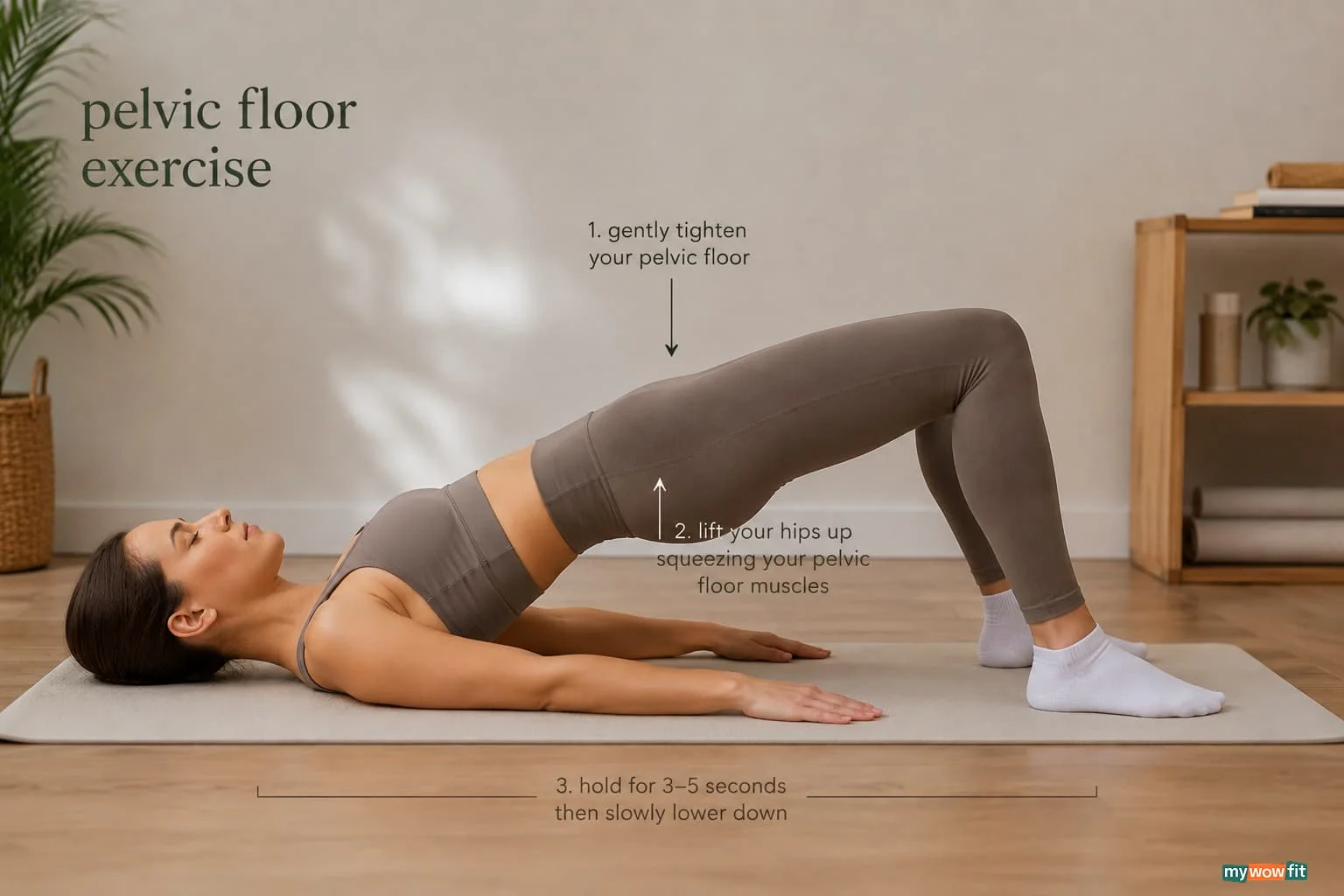
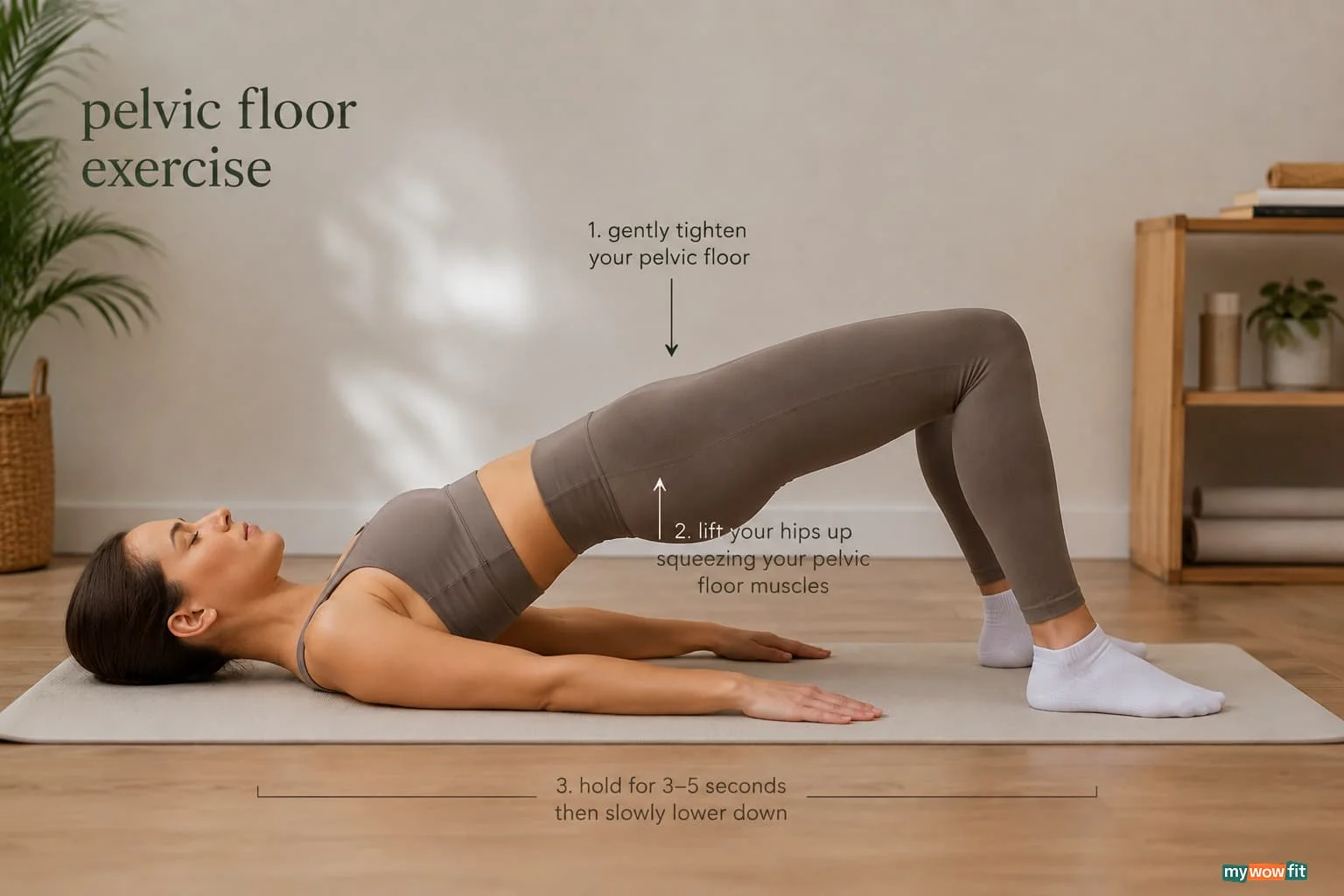
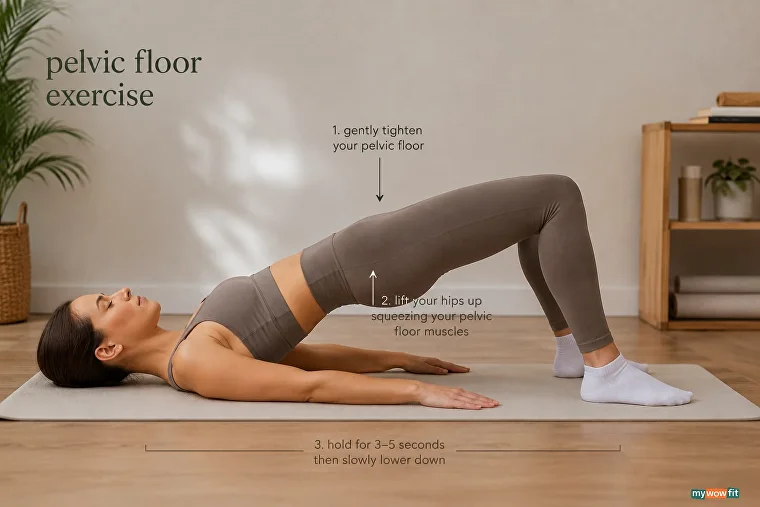
A balanced exercise program supports the pelvic floor through movement, breathing and overall strength, not just isolated muscle contractions. When practising pelvic floor exercises, the goal is usually to gently contract the muscles, fully relax afterward and coordinate the movement with normal breathing. Some exercises involve holding a contraction for several seconds, while others focus on shorter, quicker contractions that prepare the muscles to respond during everyday activities like coughing or lifting. The right approach depends on your symptoms and any recommendations from your healthcare professional, so there isn’t a single routine that works for everyone.
Breathing also plays an important role. Holding your breath during a heavy lift or creating more pressure than your body can comfortably manage may contribute to symptoms such as urinary leakage or pelvic heaviness. Learning to breathe naturally throughout an exercise and coordinating your breathing with the movement can help your body manage pressure more effectively. There isn’t one breathing pattern that’s correct for every exercise, but avoiding unnecessary breath-holding is often a helpful starting point.
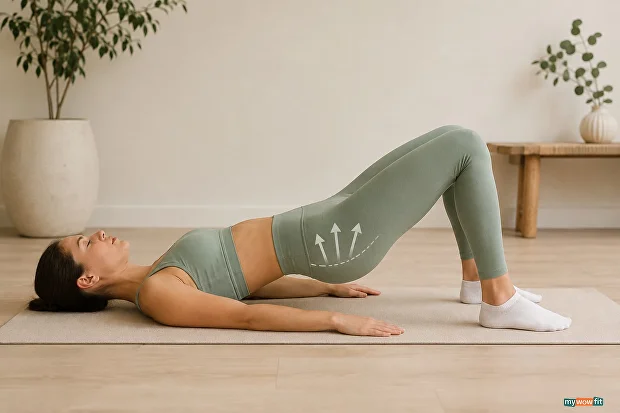
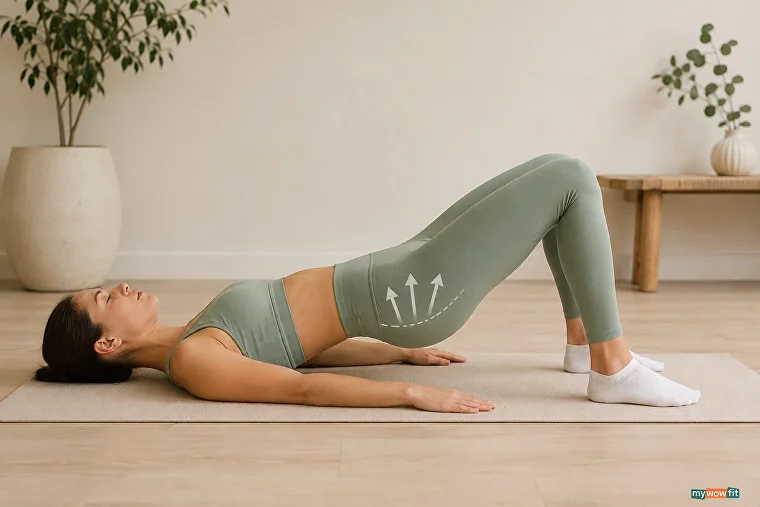
Finally, remember that the pelvic floor doesn’t work in isolation. A gradual return to exercise often includes strengthening the hips, glutes, core, and legs alongside pelvic floor training. Exercises such as bridges, squats or sit-to-stands, step-ups, rows, hip-strengthening movements, balance exercises, and controlled core work can all become part of a well-rounded program. These movements don’t directly treat pelvic floor dysfunction, but they help build the strength, coordination and confidence needed for everyday movement and a safe return to activities like lifting, running, and sport.
Breathing also plays an important role. Holding your breath during a heavy lift or creating more pressure than your body can comfortably manage may contribute to symptoms such as urinary leakage or pelvic heaviness. Learning to breathe naturally throughout an exercise and coordinating your breathing with the movement can help your body manage pressure more effectively. There isn’t one breathing pattern that’s correct for every exercise, but avoiding unnecessary breath-holding is often a helpful starting point.
Finally, remember that the pelvic floor doesn’t work in isolation. A gradual return to exercise often includes strengthening the hips, glutes, core, and legs alongside pelvic floor training. Exercises such as bridges, squats or sit-to-stands, step-ups, rows, hip-strengthening movements, balance exercises, and controlled core work can all become part of a well-rounded program. These movements don’t directly treat pelvic floor dysfunction, but they help build the strength, coordination and confidence needed for everyday movement and a safe return to activities like lifting, running, and sport.
Can You Lift Weights With Pelvic Floor Symptoms?
Experiencing pelvic floor symptoms doesn’t automatically mean you need to stop strength training. In many cases, the goal is to adjust your training rather than avoid it completely. This may involve reducing the weight temporarily, changing an exercise variation, modifying your range of motion or improving your breathing and lifting technique while your body adapts. Pay attention to how your body responds both during and after a workout. If you consistently experience urinary leakage, pelvic heaviness, pressure, bulging or pain when lifting, it’s important to pause increasing your training load and seek guidance from a pelvic floor physical therapist. They can assess your symptoms and recommend an appropriate approach before you return to heavier lifting.
The same principle applies to running, jumping, HIIT and other high-impact activities. Returning to these exercises, especially after pregnancy, should be gradual and based on how your body feels rather than a fixed timeline. If symptoms appear during or after exercise, it may be a sign that your current training load needs to be adjusted.
Common mistakes include assuming every pelvic floor problem is caused by weakness, doing more Kegels without learning to relax the muscles, holding your breath during every challenging movement or returning to high-impact exercise too quickly. Others stop exercising altogether because they’re afraid of making things worse. In reality, many people benefit from continuing to move while adapting their workouts to match their current abilities and any guidance they’ve received from a healthcare professional.
The same principle applies to running, jumping, HIIT and other high-impact activities. Returning to these exercises, especially after pregnancy, should be gradual and based on how your body feels rather than a fixed timeline. If symptoms appear during or after exercise, it may be a sign that your current training load needs to be adjusted.
Common mistakes include assuming every pelvic floor problem is caused by weakness, doing more Kegels without learning to relax the muscles, holding your breath during every challenging movement or returning to high-impact exercise too quickly. Others stop exercising altogether because they’re afraid of making things worse. In reality, many people benefit from continuing to move while adapting their workouts to match their current abilities and any guidance they’ve received from a healthcare professional.

Someone who leaks during lifting doesn’t necessarily need to stop exercising, but they may need a different starting point. Lina can adjust the movement, load, breathing and pace while helping clients rebuild overall strength and confidence. At the same time, Lina's role is to respect any recommendations from a pelvic floor physical therapist. If someone experiences pain, pelvic heaviness, difficulty emptying the bladder or other symptoms that need medical assessment, Lina will always recommend addressing those first before progressing their training. Connect with Lina on Mywowfit today, and discover the power of personalized guidance.
When to See a Pelvic Floor Physical Therapist
Some symptoms require professional assessment rather than self-management. If you experience persistent or worsening symptoms, it’s important to see a pelvic floor physical therapist or another qualified healthcare professional. A pelvic floor physical therapist can assess muscle strength, relaxation, coordination and movement in ways that an online fitness trainer cannot. Their evaluation helps determine the most appropriate treatment and whether any restrictions or modifications are needed before returning to regular exercise.
Return to Training With Live One-on-One Support
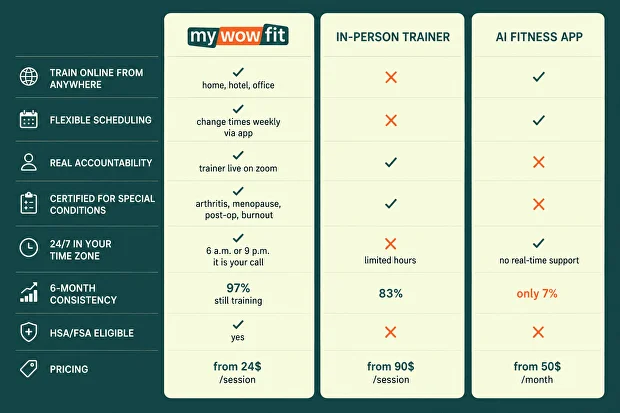
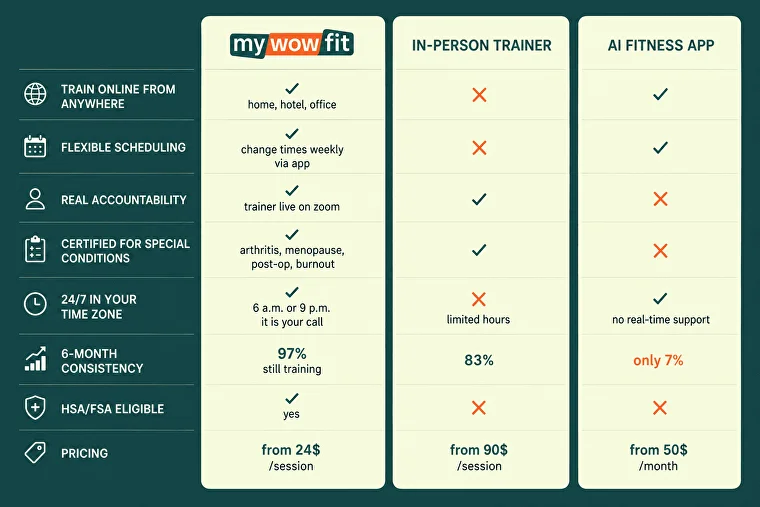
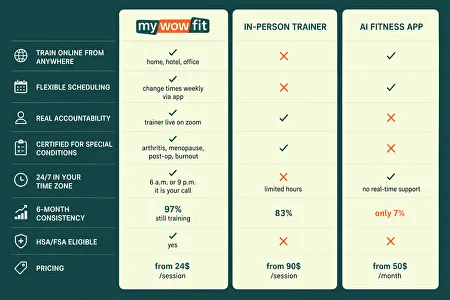
Returning to exercise after pelvic floor symptoms can feel uncertain, especially if you’re unsure which movements are helpful and which might make your symptoms worse. Mywowfit provides live one-on-one training over Zoom, allowing your trainer to watch your movement in real time and adapt your program as you exercise. Your trainer can modify exercises, adjust the training load, range of motion, and pace, and build a program that includes breathing practice, general strength, hip and glute work, core exercises, and gradual progression back to lifting, running, or other activities you enjoy. If you’ve already seen a pelvic floor physical therapist, your trainer can also work within any recommendations or restrictions you’ve been given.
Return to training with live one-on-one guidance. Tell us about your goals, current symptoms, and any recommendations from your pelvic floor physical therapist, and we’ll help you determine whether Mywowfit is the right next step. Book your trial session today!
Return to training with live one-on-one guidance. Tell us about your goals, current symptoms, and any recommendations from your pelvic floor physical therapist, and we’ll help you determine whether Mywowfit is the right next step. Book your trial session today!
FAQ
1. Do pelvic floor exercises help with urinary leakage?
Pelvic floor muscle training may help improve bladder control for some people, particularly when exercises are performed correctly and consistently. However, urinary leakage can have different causes, so persistent or worsening symptoms should be discussed with a doctor or pelvic floor physical therapist.
2. Are Kegel exercises suitable for everyone?
No. Kegel exercises involve contracting the pelvic floor muscles and can be useful for some people, but pelvic floor function also involves relaxation and coordination. If you’re unsure whether you’re performing Kegels correctly or whether they’re appropriate for your symptoms, a pelvic floor physical therapist can provide an individual assessment.
3. Can I lift weights with pelvic floor problems?
Having pelvic floor symptoms doesn’t automatically mean you need to stop strength training. Depending on your situation, you may be able to modify the load, range of motion, exercise variation, pace, or breathing technique. Persistent leakage, heaviness, pressure, bulging, or pain during lifting should be professionally assessed before you continue increasing the load.
4. Why do I leak urine when running or jumping?
Running and jumping increase the pressure and forces your pelvic floor needs to manage. Leakage during these activities can be associated with stress urinary incontinence, but it isn’t possible to determine the cause from the symptom alone. A pelvic floor physical therapist can assess your individual situation and recommend an appropriate approach.
5. When can I return to exercise after childbirth?
There is no single postpartum return-to-exercise timeline that works for everyone. Recovery depends on factors such as the type of delivery, injuries or surgery, current symptoms, general health, and clinical guidance. Returning gradually and monitoring for leakage, pain, heaviness, pressure, or bulging is important, particularly when introducing running or other high-impact activities.
6. Can an online personal trainer treat pelvic floor dysfunction?
No. An online personal trainer can help adapt general fitness training, work within restrictions provided by your healthcare professional, and support a gradual return to strength training or other activities. However, trainers cannot diagnose or treat pelvic floor dysfunction and don’t replace pelvic floor physical therapy.
7. When should I see a pelvic floor physical therapist?
Consider professional assessment if you experience persistent or worsening urinary or bowel leakage, pelvic pain, pain during sex, difficulty emptying your bladder or bowel, pelvic heaviness or bulging, or symptoms that prevent you from returning to normal exercise. A pelvic floor physical therapist can assess strength, relaxation, and coordination and recommend an individualized plan.
Pelvic floor muscle training may help improve bladder control for some people, particularly when exercises are performed correctly and consistently. However, urinary leakage can have different causes, so persistent or worsening symptoms should be discussed with a doctor or pelvic floor physical therapist.
2. Are Kegel exercises suitable for everyone?
No. Kegel exercises involve contracting the pelvic floor muscles and can be useful for some people, but pelvic floor function also involves relaxation and coordination. If you’re unsure whether you’re performing Kegels correctly or whether they’re appropriate for your symptoms, a pelvic floor physical therapist can provide an individual assessment.
3. Can I lift weights with pelvic floor problems?
Having pelvic floor symptoms doesn’t automatically mean you need to stop strength training. Depending on your situation, you may be able to modify the load, range of motion, exercise variation, pace, or breathing technique. Persistent leakage, heaviness, pressure, bulging, or pain during lifting should be professionally assessed before you continue increasing the load.
4. Why do I leak urine when running or jumping?
Running and jumping increase the pressure and forces your pelvic floor needs to manage. Leakage during these activities can be associated with stress urinary incontinence, but it isn’t possible to determine the cause from the symptom alone. A pelvic floor physical therapist can assess your individual situation and recommend an appropriate approach.
5. When can I return to exercise after childbirth?
There is no single postpartum return-to-exercise timeline that works for everyone. Recovery depends on factors such as the type of delivery, injuries or surgery, current symptoms, general health, and clinical guidance. Returning gradually and monitoring for leakage, pain, heaviness, pressure, or bulging is important, particularly when introducing running or other high-impact activities.
6. Can an online personal trainer treat pelvic floor dysfunction?
No. An online personal trainer can help adapt general fitness training, work within restrictions provided by your healthcare professional, and support a gradual return to strength training or other activities. However, trainers cannot diagnose or treat pelvic floor dysfunction and don’t replace pelvic floor physical therapy.
7. When should I see a pelvic floor physical therapist?
Consider professional assessment if you experience persistent or worsening urinary or bowel leakage, pelvic pain, pain during sex, difficulty emptying your bladder or bowel, pelvic heaviness or bulging, or symptoms that prevent you from returning to normal exercise. A pelvic floor physical therapist can assess strength, relaxation, and coordination and recommend an individualized plan.
Responses (2)
Sophie
Slowly getting back to how things were
Maia
Breathing exercises definitely helped
You may also be interested
Meet some of our trainers

© 2021-2025 Together with Online Fitness Technologies Inc.
All rights reserved
All rights reserved


About
How it Works
Trainers
Pricing
Blog
FAQ
Gift Certificate
Referral Program
Work with Us
Affiliate Program
How it Works
Trainers
Pricing
Blog
FAQ
Gift Certificate
Referral Program
Work with Us
Affiliate Program
Useful Links
Privacy Policy
Terms of Service
Code of Conduct
Disclaimer of Medical Advice
Cancellation, Refund, Referral Policy
Terms of Service
Code of Conduct
Disclaimer of Medical Advice
Cancellation, Refund, Referral Policy
Documentation


Contact Us
Headquarters:
USA, 1111B S Governors Ave #6047 Dover, DE 19904, Online Fitness Technologies INC
USA, 1111B S Governors Ave #6047 Dover, DE 19904, Online Fitness Technologies INC
Locations
Headquarters:
EU and UK: MYWOWFIT OU, Estonia, Harju maakond, Tallinn, Kesklinna linnaosa, Tornimäe tn 3 // 5 // 7, 10145
EU and UK: MYWOWFIT OU, Estonia, Harju maakond, Tallinn, Kesklinna linnaosa, Tornimäe tn 3 // 5 // 7, 10145





5.0
4.9
Share via