
How to Increase Bone Density and Help Prevent Osteoporosis
2

Last updated: 04/06/2026
Author: Zoe Patler
Medically reviewed by Maria Vasquez, NASM Certified Personal Trainer and Sports Nutrition Coach with expertise in Functional Training and Running Coaching. CPR/AED certified for safe, effective workouts. Dedicated to helping you achieve strength, endurance, and optimal health.
Many people are told they should “exercise more” to protect their bones. While that’s good advice, it often raises another question: what kind of exercise actually helps? If you’ve been diagnosed with osteopenia, have a family history of osteoporosis, or simply want to stay healthy as you age, knowing where to start can feel overwhelming. Luckily, you don’t need an extreme workout routine to support your bone health. Instead, the goal is to choose exercises that place the right kind of stress on your bones and muscles. Research shows that strength training, weight-bearing activities, impact exercise and balance training each play a different role in maintaining healthy bones and reducing the risk of falls. Together, they form the foundation of a well-rounded exercise routine that can support bone strength over time. It’s also important to understand that no single exercise can guarantee an increase in bone density or prevent osteoporosis on its own. Exercise works best as part of a broader strategy that may also include good nutrition, healthy lifestyle habits, and medical care when needed. The key is finding activities you can perform safely and consistently over months and years, not just for a few weeks.
table of contents
How Exercise Supports Bone Strength
Bones are living tissue that constantly changes throughout your life. As old bone is broken down, new bone is formed to replace it. When we’re younger, this process usually keeps our bones strong. As we age, particularly after menopause, bone loss can happen faster than new bone is created, increasing the risk of osteoporosis and fractures. Exercise helps because bones respond to physical load. During resistance training, your muscles pull on your bones, while weight-bearing and impact activities create force through your skeleton. These forces signal your body to maintain bone tissue and may help support bone mineral density over time. Although exercise cannot reverse osteoporosis or replace medical treatment, it is considered an important part of an osteoporosis-prevention strategy. Regular exercise offers benefits beyond your bones, too. Strength training builds muscle, making everyday activities easier. Balance exercises improve stability and coordination, helping reduce the risk of falls. Better posture, stronger legs and improved confidence in movement can all contribute to staying active and independent as you get older.
The next step is choosing the right exercises. Not every workout challenges your bones in the same way, so understanding the different types of bone-supporting exercise can help you build a routine that matches your fitness level and goals.
The next step is choosing the right exercises. Not every workout challenges your bones in the same way, so understanding the different types of bone-supporting exercise can help you build a routine that matches your fitness level and goals.
Best Exercises for Bone Density
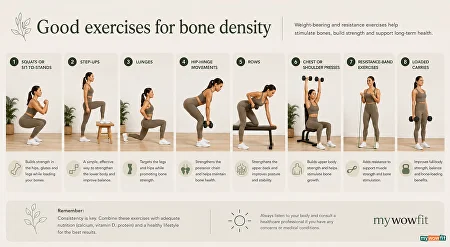
When it comes to how to increase bone density, variety matters. The most effective exercise routine doesn’t rely on a single activity. Instead, it combines strength training, weight-bearing or impact exercise, and balance work to challenge your body in different ways. The right mix will depend on your age, fitness level, medical history and any advice you’ve received from your healthcare provider.
Strength Training
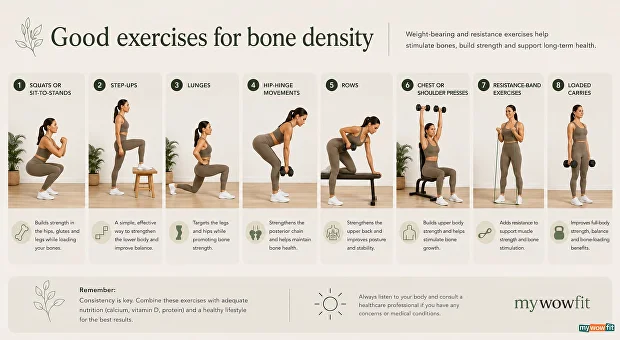
Strength training is one of the best ways to support bone health because it places controlled stress on your bones as your muscles work against resistance. Over time, this stimulus can help maintain bone mineral density while also improving muscle strength, posture and everyday function. Good exercises for bone density include squats or sit-to-stands, step-ups, lunges, hip-hinge movements, rows, chest or shoulder presses, resistance-band exercises and loaded carries. You don’t need a fully equipped gym to get started, bodyweight exercises, resistance bands or a pair of dumbbells can be enough for many beginners.
The most important principle is progressive overload. As your body adapts, the exercises should gradually become more challenging by increasing the resistance, repetitions or difficulty. Continuing to use the same light weights forever may not provide enough stimulus to keep improving strength.
The most important principle is progressive overload. As your body adapts, the exercises should gradually become more challenging by increasing the resistance, repetitions or difficulty. Continuing to use the same light weights forever may not provide enough stimulus to keep improving strength.
Weight-Bearing, Impact and Balance Exercises
Weight-bearing exercises encourage your skeleton to work against gravity while you’re standing. Walking, stair climbing, hiking and dancing are all good examples that fit easily into everyday life. Higher-impact activities, such as jogging, heel drops, jumping or hopping, create greater forces through the bones and may provide additional benefits for some people. However, these exercises are not appropriate for everyone. If you have osteoporosis, previous fractures, joint pain or other medical concerns, it’s important to choose activities that match your abilities and follow professional advice.
Balance training is another essential part of osteoporosis prevention because stronger bones are only one piece of the puzzle. Improving balance can reduce the risk of falls, which are a major cause of fractures in older adults. Simple exercises such as standing on one leg while holding onto a stable surface, heel-to-toe walking, controlled step-ups, tai chi and appropriate yoga or Pilates movements can improve stability over time.
Balance training is another essential part of osteoporosis prevention because stronger bones are only one piece of the puzzle. Improving balance can reduce the risk of falls, which are a major cause of fractures in older adults. Simple exercises such as standing on one leg while holding onto a stable surface, heel-to-toe walking, controlled step-ups, tai chi and appropriate yoga or Pilates movements can improve stability over time.

Lina, Yoga, Mywowfit
Many people know they should start strength training but aren’t sure where to begin. My advice is to focus on learning a few basic movements with good technique rather than trying to do everything at once. Start with a level that feels manageable, then increase the resistance gradually as you become stronger. Every program should reflect your current fitness level, available equipment, mobility, and any exercise restrictions provided by your healthcare professional. Consistency will always produce better results than starting with a routine that’s too difficult to maintain.
Is Walking Enough?
Walking is one of the easiest ways to stay active and it’s an excellent habit for your overall health. Because it’s a weight-bearing exercise, it places some load on your bones while improving cardiovascular fitness, mobility and endurance. For many people, especially those who are new to exercise, walking is a great place to start. However, walking alone is unlikely to provide the progressive challenge needed to support bone health over the long term. As your body adapts, your bones need greater or different forms of loading to continue receiving a stimulus. That’s why experts generally recommend combining regular walking with strength training and balance exercises as part of a complete osteoporosis-prevention strategy.
Swimming and cycling are also excellent forms of exercise, but because they aren’t weight-bearing, they don’t provide the same stimulus for bone tissue. They can still improve cardiovascular health, endurance and general fitness, making them valuable additions to your routine. Yoga and Pilates may also help improve posture, flexibility, core strength and balance, although some movements may need to be modified for people with osteoporosis or an increased risk of spinal fractures. Most adults benefit from strength training two or three times per week, regular weight-bearing activity such as walking or hiking, and balance exercises several times a week. Rather than trying to do everything perfectly, focus on building a routine you can maintain consistently. Bone health develops over months and years, not through a short burst of exercise.
One common mistake is relying only on walking while avoiding resistance training altogether. Others include using the same light weights without progressing, attempting heavy exercises too quickly, following generic online workouts that don’t match your ability, or treating exercise as a replacement for medical care. Good technique, gradual progression, and consistency are far more important than doing the hardest workout possible. After the age of 40, and particularly after menopause, exercise becomes even more important. While no workout can guarantee better DXA scan results or prevent every fracture, regular physical activity can help support bone strength, maintain muscle mass, improve balance and preserve independence as you age. Pairing exercise with a balanced diet that provides enough calcium, protein, and vitamin D, while limiting smoking and excessive alcohol, creates a stronger foundation for lifelong bone health.
Swimming and cycling are also excellent forms of exercise, but because they aren’t weight-bearing, they don’t provide the same stimulus for bone tissue. They can still improve cardiovascular health, endurance and general fitness, making them valuable additions to your routine. Yoga and Pilates may also help improve posture, flexibility, core strength and balance, although some movements may need to be modified for people with osteoporosis or an increased risk of spinal fractures. Most adults benefit from strength training two or three times per week, regular weight-bearing activity such as walking or hiking, and balance exercises several times a week. Rather than trying to do everything perfectly, focus on building a routine you can maintain consistently. Bone health develops over months and years, not through a short burst of exercise.
One common mistake is relying only on walking while avoiding resistance training altogether. Others include using the same light weights without progressing, attempting heavy exercises too quickly, following generic online workouts that don’t match your ability, or treating exercise as a replacement for medical care. Good technique, gradual progression, and consistency are far more important than doing the hardest workout possible. After the age of 40, and particularly after menopause, exercise becomes even more important. While no workout can guarantee better DXA scan results or prevent every fracture, regular physical activity can help support bone strength, maintain muscle mass, improve balance and preserve independence as you age. Pairing exercise with a balanced diet that provides enough calcium, protein, and vitamin D, while limiting smoking and excessive alcohol, creates a stronger foundation for lifelong bone health.
Get Live Guidance With Mywowfit
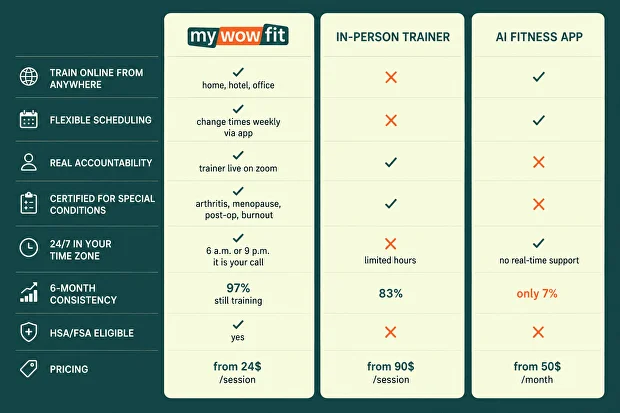
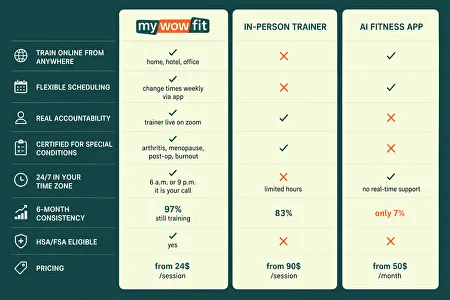
Many people know they should exercise but aren’t confident designing a safe program on their own. Mywowfit helps turn general advice into a structured plan through live one-on-one training sessions over Zoom. Your trainer watches your movements throughout the workout, provides real-time technique feedback and adjusts exercises to match your fitness level, available equipment, mobility and any exercise restrictions you’ve discussed with your healthcare professional. Sessions can include strength training, balance work and appropriate weight-bearing exercises that gradually progress as you become stronger. Because appointments are scheduled in advance, many clients also find it easier to stay consistent. If your needs change, you can switch trainers to find the right fit.
Mywowfit is a fitness service, not medical treatment or physiotherapy. If you have osteoporosis, recent fractures, severe pain or other complex medical conditions, you should seek guidance or clearance from your doctor or physiotherapist before beginning a new exercise program. Build strength with a live one-on-one trainer. Tell us about your goals, available equipment and any exercise restrictions, and we’ll match you with a trainer who can help you exercise safely and confidently. Start today!
Mywowfit is a fitness service, not medical treatment or physiotherapy. If you have osteoporosis, recent fractures, severe pain or other complex medical conditions, you should seek guidance or clearance from your doctor or physiotherapist before beginning a new exercise program. Build strength with a live one-on-one trainer. Tell us about your goals, available equipment and any exercise restrictions, and we’ll match you with a trainer who can help you exercise safely and confidently. Start today!
FAQ
1. Can exercise increase bone density?
Certain types of exercise may help maintain or improve bone mineral density over time. Resistance training and appropriate weight-bearing or impact activities place controlled stress on bones, encouraging them to adapt. Results vary between individuals, and exercise should be considered one part of a broader bone-health strategy.
2. What are the best exercises for bone density?
A well-rounded routine usually combines strength training, weight-bearing activity, and balance exercises. Squats or sit-to-stands, step-ups, rows, presses, resistance-band exercises, walking, stair climbing, and appropriate balance exercises are all useful options. The exercises should match your current fitness level and become gradually more challenging.
3. Is walking enough to help prevent osteoporosis?
Walking is a valuable weight-bearing activity that supports cardiovascular health, mobility, and overall fitness. However, it may not provide the same progressive challenge as resistance training. For a more complete bone-health routine, walking can be combined with strength and balance exercises.
4. Can I do bone-strengthening exercises at home?
Yes. Many bone density exercises at home can be performed using body weight, resistance bands, dumbbells, or other appropriate resistance. Exercises such as sit-to-stands, step-ups, rows, presses, and supported balance work can all be adapted for home training.
5. Should I lift heavy weights if I have osteopenia?
Strength training can be beneficial for people with osteopenia, but “heavy” is relative to the individual. Resistance should match your current ability and increase gradually as you become stronger. If you’ve been diagnosed with osteopenia or osteoporosis, ask your healthcare professional whether you have any specific exercise restrictions before significantly increasing your training load.
6. Can exercise replace osteoporosis medication?
No. Exercise can support bone strength, muscle strength, balance, and overall health, but it should not be considered a replacement for prescribed osteoporosis treatment. If you’ve been diagnosed with osteoporosis or low bone density, decisions about medication and medical treatment should be made with your healthcare provider.
Certain types of exercise may help maintain or improve bone mineral density over time. Resistance training and appropriate weight-bearing or impact activities place controlled stress on bones, encouraging them to adapt. Results vary between individuals, and exercise should be considered one part of a broader bone-health strategy.
2. What are the best exercises for bone density?
A well-rounded routine usually combines strength training, weight-bearing activity, and balance exercises. Squats or sit-to-stands, step-ups, rows, presses, resistance-band exercises, walking, stair climbing, and appropriate balance exercises are all useful options. The exercises should match your current fitness level and become gradually more challenging.
3. Is walking enough to help prevent osteoporosis?
Walking is a valuable weight-bearing activity that supports cardiovascular health, mobility, and overall fitness. However, it may not provide the same progressive challenge as resistance training. For a more complete bone-health routine, walking can be combined with strength and balance exercises.
4. Can I do bone-strengthening exercises at home?
Yes. Many bone density exercises at home can be performed using body weight, resistance bands, dumbbells, or other appropriate resistance. Exercises such as sit-to-stands, step-ups, rows, presses, and supported balance work can all be adapted for home training.
5. Should I lift heavy weights if I have osteopenia?
Strength training can be beneficial for people with osteopenia, but “heavy” is relative to the individual. Resistance should match your current ability and increase gradually as you become stronger. If you’ve been diagnosed with osteopenia or osteoporosis, ask your healthcare professional whether you have any specific exercise restrictions before significantly increasing your training load.
6. Can exercise replace osteoporosis medication?
No. Exercise can support bone strength, muscle strength, balance, and overall health, but it should not be considered a replacement for prescribed osteoporosis treatment. If you’ve been diagnosed with osteoporosis or low bone density, decisions about medication and medical treatment should be made with your healthcare provider.
Responses (2)
Sara
Slowly getting back on track
Maia
This was definitely helpful!
You may also be interested
Meet some of our trainers

© 2021-2025 Together with Online Fitness Technologies Inc.
All rights reserved
All rights reserved


About
How it Works
Trainers
Pricing
Blog
FAQ
Gift Certificate
Referral Program
Work with Us
Affiliate Program
How it Works
Trainers
Pricing
Blog
FAQ
Gift Certificate
Referral Program
Work with Us
Affiliate Program
Useful Links
Privacy Policy
Terms of Service
Code of Conduct
Disclaimer of Medical Advice
Cancellation, Refund, Referral Policy
Terms of Service
Code of Conduct
Disclaimer of Medical Advice
Cancellation, Refund, Referral Policy
Documentation


Contact Us
Headquarters:
USA, 1111B S Governors Ave #6047 Dover, DE 19904, Online Fitness Technologies INC
USA, 1111B S Governors Ave #6047 Dover, DE 19904, Online Fitness Technologies INC
Locations
Headquarters:
EU and UK: MYWOWFIT OU, Estonia, Harju maakond, Tallinn, Kesklinna linnaosa, Tornimäe tn 3 // 5 // 7, 10145
EU and UK: MYWOWFIT OU, Estonia, Harju maakond, Tallinn, Kesklinna linnaosa, Tornimäe tn 3 // 5 // 7, 10145





5.0
4.9
Share via