
How to Return to Exercise After an Ankle Injury
2

Last updated: 04/06/2026
Author: Zoe Patler
Medically reviewed by Maria Vasquez, NASM Certified Personal Trainer and Sports Nutrition Coach with expertise in Functional Training and Running Coaching. CPR/AED certified for safe, effective workouts. Dedicated to helping you achieve strength, endurance, and optimal health.
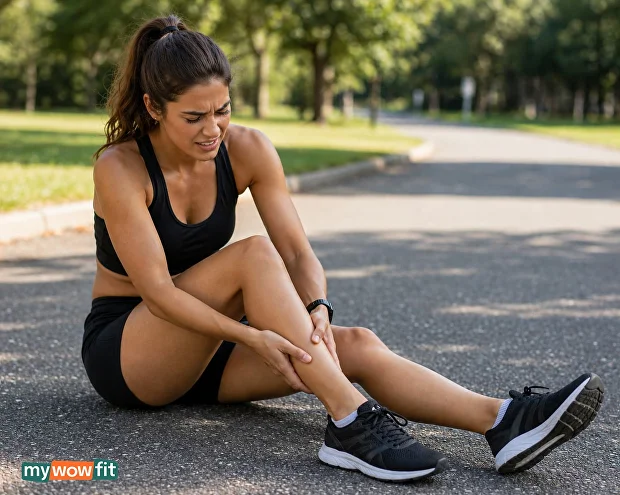
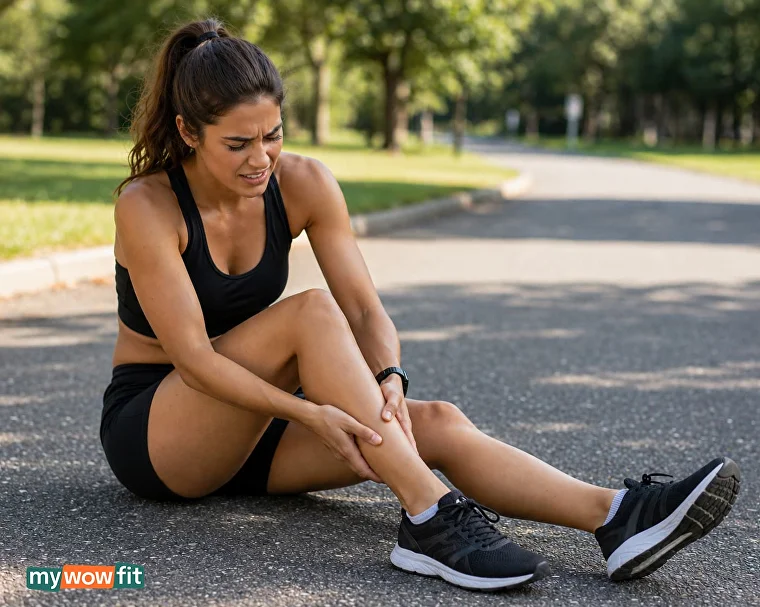
The swelling is gone, and you can walk comfortably again. On paper, you’re ready to exercise, but your ankle doesn’t quite feel the same. Maybe you hesitate when walking down the stairs, feel unsteady on uneven ground or notice that activities make you feel less confident than they did before your injury. This stage of recovery is common. Returning to exercise isn’t simply a choice between resting completely and jumping back into your old routine. Even after you’ve been cleared to train, your body often needs time to get used to more challenging movements again. The goal is to rebuild confidence gradually while improving strength, balance, coordination and mobility in a way that matches your current ability.
A structured return-to-training plan focuses on steady progress rather than rushing back to previous weights, distancesor workout intensity. Small improvements made consistently are often more valuable than trying to do everything at once. This article is intended for people who have already been assessed and cleared to return to exercise. Always follow any instructions or restrictions provided by your doctor or physical therapist, and seek further medical advice if your symptoms return or worsen.
A structured return-to-training plan focuses on steady progress rather than rushing back to previous weights, distancesor workout intensity. Small improvements made consistently are often more valuable than trying to do everything at once. This article is intended for people who have already been assessed and cleared to return to exercise. Always follow any instructions or restrictions provided by your doctor or physical therapist, and seek further medical advice if your symptoms return or worsen.
table of contents
Why the Ankle May Still Feel Different
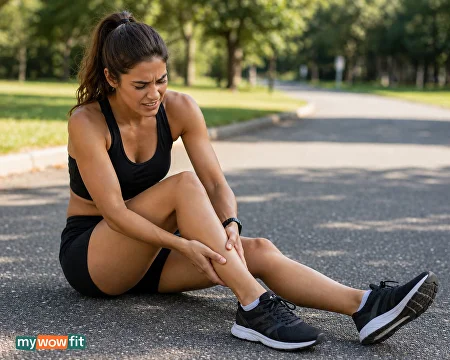
Even after your healthcare professional says it’s safe to exercise, it’s normal for your ankle to feel unfamiliar during more demanding movements. Walking on flat ground may feel comfortable, but balancing on one leg or changing direction quickly can still feel awkward or uncertain. Many people also notice themselves unconsciously protecting the injured side. You might put more weight through your stronger leg, avoid certain movements altogether or slow down whenever you feel unsure. These habits often develop naturally after an injury, even when the ankle is no longer causing significant problems. Confidence also plays an important role. If you’ve experienced pain or instability in the past, it’s understandable to approach movement more cautiously. That doesn’t necessarily mean something is wrong, it simply means your body may need more practice performing those movements again in a controlled and gradual way.
Instead of expecting your ankle to immediately feel exactly as it did before your injury, focus on rebuilding trust through consistent movement. Each successful repetition helps you become more comfortable with activities that may have felt uncertain only a few weeks earlier. The good news is that you don’t have to return to everything at once. Whether your goal is hiking, running, strength training or simply feeling more confident during everyday activities, a gradual approach allows you to increase the challenge step by step. Rather than testing your ankle with the hardest exercises first, you can build a stronger foundation through controlled movement, good technique and regular practice before progressing to more demanding activities.
Instead of expecting your ankle to immediately feel exactly as it did before your injury, focus on rebuilding trust through consistent movement. Each successful repetition helps you become more comfortable with activities that may have felt uncertain only a few weeks earlier. The good news is that you don’t have to return to everything at once. Whether your goal is hiking, running, strength training or simply feeling more confident during everyday activities, a gradual approach allows you to increase the challenge step by step. Rather than testing your ankle with the hardest exercises first, you can build a stronger foundation through controlled movement, good technique and regular practice before progressing to more demanding activities.
The Main Areas to Rebuild
Returning to exercise after an ankle injury is about more than strengthening one joint. While ankle strengthening exercises are an important part of the process, most people also benefit from rebuilding balance, mobility, coordination and overall leg strength. These qualities work together to help you move more confidently during everyday activities and prepare for a gradual return to your workouts.
1-on-1 Workouts & Custom Fitness Plans with Online Personal Trainer
★★★★★ 4.8 out of 5 across 600+ reviews
General Strength
A good starting point is controlled exercises that feel stable and manageable. Calf raises, resistance-band ankle movements, supported squats, step-ups, split-stance exercises and light single-leg strength work can all help rebuild confidence while strengthening the muscles that support your lower body. The goal isn’t to make the exercises as difficult as possible, but to perform them with good control and gradually increase the challenge over time.
Balance and Single-Leg Control
Balance often feels different after time away from regular activity. Practicing simple balance exercises can help you become more comfortable putting weight through the affected leg again. Standing on one leg with a stable surface nearby, shifting your weight from side to side, performing slow step-downs or reaching while maintaining balance are all examples of movements that encourage controlled, confident movement. As your confidence grows, balance exercises can become more challenging by changing your stance, reducing the amount of support you use or combining balance with gentle movement. The focus should bw on building steady control that transfers into everyday life.
Mobility and Whole-Body Movement
Comfortable ankle movement also plays a role in activities such as walking, climbing stairs and squatting. Gentle ankle circles, controlled knee-over-toe movements within a comfortable range, calf mobility exercises and slow foot and ankle movements can all become part of your warm-up or regular training routine. At the same time, remember that your ankle doesn’t work in isolation. Your hips, glutes, knees, core and the coordination between both legs all contribute to how you move. A well-rounded program strengthens your entire lower body instead of focusing only on the ankle itself.
How to Progress Gradually
One of the biggest mistakes people make is trying to return to their previous routine too quickly. A gradual progression allows your confidence and movement quality to improve alongside your strength. A simple approach is to begin with controlled two-leg exercises before gradually placing more work on the affected side as you feel comfortable. From there, you can introduce single-leg strength and balance exercises, increase resistance or complexity, and eventually practice movements that resemble the activities you want to return to.
For example, someone preparing to hike may gradually spend more time on uneven surfaces, while a runner might first rebuild confidence with walking and controlled lower-impact movements before increasing speed or distance. A gym-goer may reduce training loads initially and focus on movement quality before returning to heavier lifts. There is no universal timeline for this process. Progress should reflect your current ability, your goals and any guidance provided by your doctor or physical therapist. Building confidence step by step often leads to a smoother and more sustainable return to regular exercise than trying to pick up exactly where you left off.
For example, someone preparing to hike may gradually spend more time on uneven surfaces, while a runner might first rebuild confidence with walking and controlled lower-impact movements before increasing speed or distance. A gym-goer may reduce training loads initially and focus on movement quality before returning to heavier lifts. There is no universal timeline for this process. Progress should reflect your current ability, your goals and any guidance provided by your doctor or physical therapist. Building confidence step by step often leads to a smoother and more sustainable return to regular exercise than trying to pick up exactly where you left off.

Ryan, Functional Trainer, Mywowfit
“Many people are medically cleared to exercise but still don’t feel ready to return to their previous routine. That’s completely normal. We usually begin with simple strength and balance exercises, observe how the client moves and gradually introduce more challenging movements based on their goals. Whether someone wants to return to running, hiking or strength training, building confidence through consistent practice is just as important as increasing the difficulty of the exercises. We also encourage every client to continue following any recommendations provided by their healthcare professional.”
Returning to Walking, Running, Hiking or Sport

The way you return to exercise depends on the activities you want to do. Someone whose goal is walking comfortably through the day will need a different approach from someone preparing for long hikes, running or competitive sport. Whatever your goal, the focus should be on gradually increasing the challenge while paying attention to how you move.
If you’re returning to everyday walking, start by building confidence with longer periods on your feet, climbing stairs, changing direction and walking on different surfaces. For runners, it often helps to begin with lower-intensity activity before gradually increasing distance, pace or duration. Hikers may benefit from practicing controlled stepping, improving lower-leg endurance and becoming comfortable on uneven ground. If your goal is returning to the gym or a recreational sport, reduce the load at first, rebuild your technique and slowly reintroduce faster or more demanding movements as your confidence improves.
The goal isn’t to get back to your previous level as quickly as possible. It’s to create a progression that feels sustainable and prepares you for the activities you enjoy.
If you’re returning to everyday walking, start by building confidence with longer periods on your feet, climbing stairs, changing direction and walking on different surfaces. For runners, it often helps to begin with lower-intensity activity before gradually increasing distance, pace or duration. Hikers may benefit from practicing controlled stepping, improving lower-leg endurance and becoming comfortable on uneven ground. If your goal is returning to the gym or a recreational sport, reduce the load at first, rebuild your technique and slowly reintroduce faster or more demanding movements as your confidence improves.
The goal isn’t to get back to your previous level as quickly as possible. It’s to create a progression that feels sustainable and prepares you for the activities you enjoy.
1-on-1 Workouts & Custom Fitness Plans with Online Personal Trainer
★★★★★ 4.8 out of 5 across 600+ reviews
Common Return-to-Training Mistakes
One of the most common mistakes is trying to pick up exactly where you left off before the injury. While it’s natural to want to return to your normal routine, increasing intensity too quickly can leave you feeling discouraged or uncertain. Other common challenges include avoiding the affected leg completely, repeating only basic ankle exercises without progressing them, copying random workouts from social media or increasing resistance, speed and impact all at the same time. Some people also focus so much on the ankle that they forget to rebuild strength throughout the rest of the body.
Confidence rarely returns before you start practicing movement again. The key is to progress gradually while paying attention to technique rather than rushing through exercises. If new or worsening symptoms develop, or your ankle begins to feel significantly different than it did when you were cleared to exercise, stop increasing the difficulty and speak with your doctor or physical therapist before continuing.
Confidence rarely returns before you start practicing movement again. The key is to progress gradually while paying attention to technique rather than rushing through exercises. If new or worsening symptoms develop, or your ankle begins to feel significantly different than it did when you were cleared to exercise, stop increasing the difficulty and speak with your doctor or physical therapist before continuing.
Return to Training With Live One-on-One Support
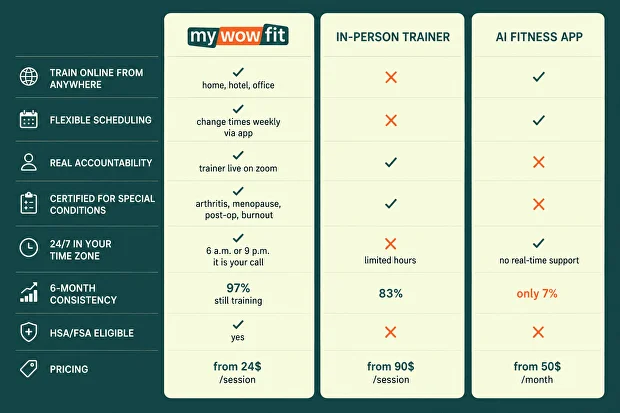
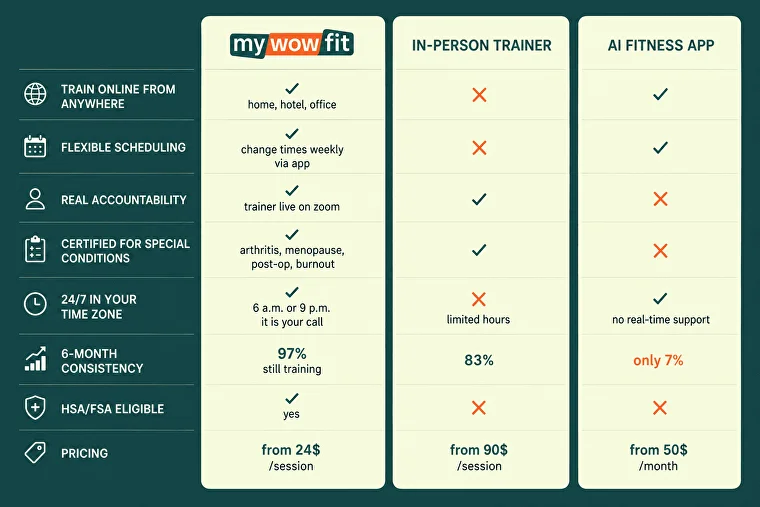
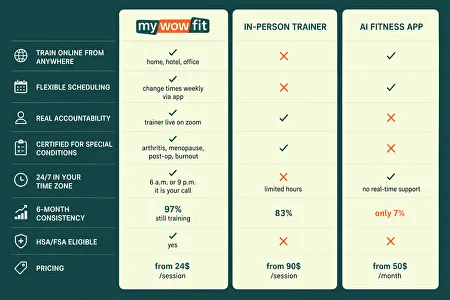
Once you’ve been cleared to exercise, having someone guide your progression can make returning to regular activity feel less overwhelming. Mywowfit offers live one-on-one training sessions over Zoom, where your trainer watches your movement throughout the workout and adjusts exercises in real time. Sessions can include general strength, balance, mobility and coordination work while gradually progressing toward your personal goals, whether that’s walking confidently, returning to hiking, running, gym training, o recreational sport. Your trainer can modify the pace, resistance, range of motion and exercise selection to match your current ability and any restrictions provided by your doctor or physical therapist. Training from home also makes it easier to stay consistent with a regular schedule.
Mywowfit is a fitness service, not medical care or physical therapy. Trainers work with clients who have already been cleared to exercise and cannot diagnose injuries, assess healing or treat ankle symptoms. Return to exercise with live one-on-one support. Tell us what activity you want to get back to, which exercises you currently feel comfortable doing and whether you’ve received any recommendations from your healthcare professional. We’ll help match you with a trainer who can support your gradual return to regular fitness. Start today!
Mywowfit is a fitness service, not medical care or physical therapy. Trainers work with clients who have already been cleared to exercise and cannot diagnose injuries, assess healing or treat ankle symptoms. Return to exercise with live one-on-one support. Tell us what activity you want to get back to, which exercises you currently feel comfortable doing and whether you’ve received any recommendations from your healthcare professional. We’ll help match you with a trainer who can support your gradual return to regular fitness. Start today!
FAQ
1. How do I return to exercise after an ankle injury?
Once you’ve been cleared to exercise by your doctor or physical therapist, start gradually. Focus on controlled movements, general leg strength, balance, mobility, and coordination before progressing to more demanding activities. Follow any restrictions provided by your healthcare professional.
2. What exercises can help rebuild ankle strength?
Exercises may include calf raises, resistance-band movements, supported squats, step-ups, and appropriate single-leg exercises. The best starting point depends on your current ability, and resistance or difficulty should increase gradually rather than all at once.
3. How can I improve my balance after an ankle injury?
Simple ankle balance exercises can include supported single-leg standing, controlled weight shifts, slow step-downs, and reaching while maintaining your balance. Start with stable support nearby and gradually increase the challenge as you become more confident.
4. When can I return to running after an ankle injury?
There is no universal timeline for returning to running. It depends on your injury, recovery, current ability, and guidance from your healthcare professional. Once cleared, a gradual return that slowly increases duration, speed, and impact is generally more appropriate than immediately returning to your previous training level.
5. Can I do ankle strengthening exercises at home?
Yes. Many general strength, balance, and mobility exercises can be performed at home with limited equipment. However, this article is intended for people who have already been assessed and cleared to exercise after an ankle injury.
6. When should I go back to my doctor or physical therapist?
Seek professional guidance if you develop new or worsening symptoms, have difficulty progressing safely or notice your ankle feels significantly different from when you were cleared to exercise. A personal trainer can support your return to fitness, but cannot diagnose an injury, assess healing or replace medical care.
Once you’ve been cleared to exercise by your doctor or physical therapist, start gradually. Focus on controlled movements, general leg strength, balance, mobility, and coordination before progressing to more demanding activities. Follow any restrictions provided by your healthcare professional.
2. What exercises can help rebuild ankle strength?
Exercises may include calf raises, resistance-band movements, supported squats, step-ups, and appropriate single-leg exercises. The best starting point depends on your current ability, and resistance or difficulty should increase gradually rather than all at once.
3. How can I improve my balance after an ankle injury?
Simple ankle balance exercises can include supported single-leg standing, controlled weight shifts, slow step-downs, and reaching while maintaining your balance. Start with stable support nearby and gradually increase the challenge as you become more confident.
4. When can I return to running after an ankle injury?
There is no universal timeline for returning to running. It depends on your injury, recovery, current ability, and guidance from your healthcare professional. Once cleared, a gradual return that slowly increases duration, speed, and impact is generally more appropriate than immediately returning to your previous training level.
5. Can I do ankle strengthening exercises at home?
Yes. Many general strength, balance, and mobility exercises can be performed at home with limited equipment. However, this article is intended for people who have already been assessed and cleared to exercise after an ankle injury.
6. When should I go back to my doctor or physical therapist?
Seek professional guidance if you develop new or worsening symptoms, have difficulty progressing safely or notice your ankle feels significantly different from when you were cleared to exercise. A personal trainer can support your return to fitness, but cannot diagnose an injury, assess healing or replace medical care.
Responses (2)
Alisha
Slowly getting back
Mark
This helps me so much!
You may also be interested
Meet some of our trainers

© 2021-2025 Together with Online Fitness Technologies Inc.
All rights reserved
All rights reserved


About
How it Works
Trainers
Pricing
Blog
FAQ
Gift Certificate
Referral Program
Work with Us
Affiliate Program
How it Works
Trainers
Pricing
Blog
FAQ
Gift Certificate
Referral Program
Work with Us
Affiliate Program
Useful Links
Privacy Policy
Terms of Service
Code of Conduct
Disclaimer of Medical Advice
Cancellation, Refund, Referral Policy
Terms of Service
Code of Conduct
Disclaimer of Medical Advice
Cancellation, Refund, Referral Policy
Documentation


Contact Us
Headquarters:
USA, 1111B S Governors Ave #6047 Dover, DE 19904, Online Fitness Technologies INC
USA, 1111B S Governors Ave #6047 Dover, DE 19904, Online Fitness Technologies INC
Locations
Headquarters:
EU and UK: MYWOWFIT OU, Estonia, Harju maakond, Tallinn, Kesklinna linnaosa, Tornimäe tn 3 // 5 // 7, 10145
EU and UK: MYWOWFIT OU, Estonia, Harju maakond, Tallinn, Kesklinna linnaosa, Tornimäe tn 3 // 5 // 7, 10145





5.0
4.9
Share via