
How to Help Your Aging Parents Stay Active, Strong, and Independent
2

Last updated: 04/06/2026
Author: Zoe Patler
Medically reviewed by Maria Vasquez, NASM Certified Personal Trainer and Sports Nutrition Coach with expertise in Functional Training and Running Coaching. CPR/AED certified for safe, effective workouts. Dedicated to helping you achieve strength, endurance, and optimal health.
You’ve suggested going for walks together. You’ve bought an exercise bike, shared YouTube workouts or even offered to pay for a gym membership. Your parent seemed interested at first, but after a few days or weeks, the routine quietly disappeared. If this sounds familiar, you’re not alone. Many adult children worry about watching a parent become less active while feeling unsure how to help. It can be especially difficult if you live in another city or only see them occasionally. You know that staying active is important, but you also don’t want every conversation to become another reminder to exercise. But a lack of consistency doesn’t necessarily mean your parent is unmotivated or doesn’t care about their health. For many older adults, the biggest barriers aren’t a lack of information, they’re uncertainty about what is safe, fear of getting injured, joint discomfort, low confidence or simply not having a routine that fits their daily life. Some people also find it difficult to accept exercise advice from their adult children, even when it’s well intentioned.
The goal isn’t to pressure your parent into exercising. Instead, it’s to make movement feel more approachable, enjoyable and realistic. This article will explain why activity often decreases with age, which types of exercise can best support strength and mobility, and how you can encourage healthy habits without turning into their coach.
The goal isn’t to pressure your parent into exercising. Instead, it’s to make movement feel more approachable, enjoyable and realistic. This article will explain why activity often decreases with age, which types of exercise can best support strength and mobility, and how you can encourage healthy habits without turning into their coach.
table of contents
Why Older Parents Often Stop Exercising
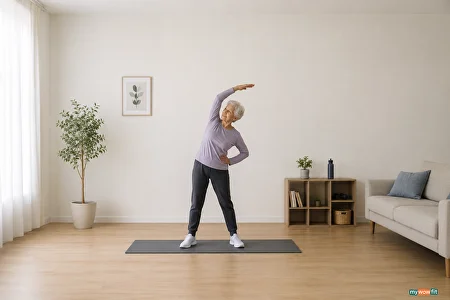
As people get older, daily life often changes in ways that naturally reduce movement. Retirement may remove the regular routine of commuting, walking around the workplace or climbing stairs throughout the day. Activities that once kept someone active happen less often, and it’s easy for a more sedentary lifestyle to develop without anyone noticing. Starting an exercise routine can also feel overwhelming after a long break. Driving to a gym may seem like more effort than the workout itself.
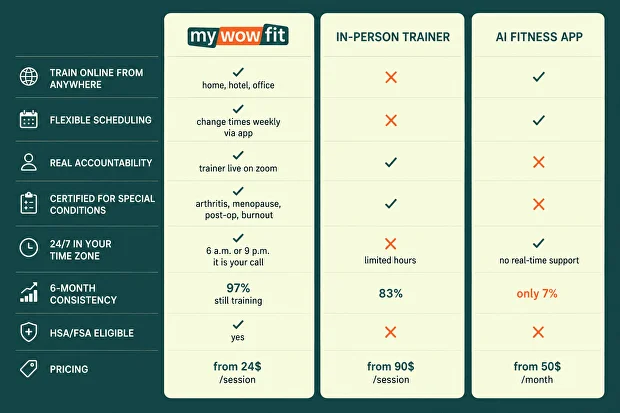
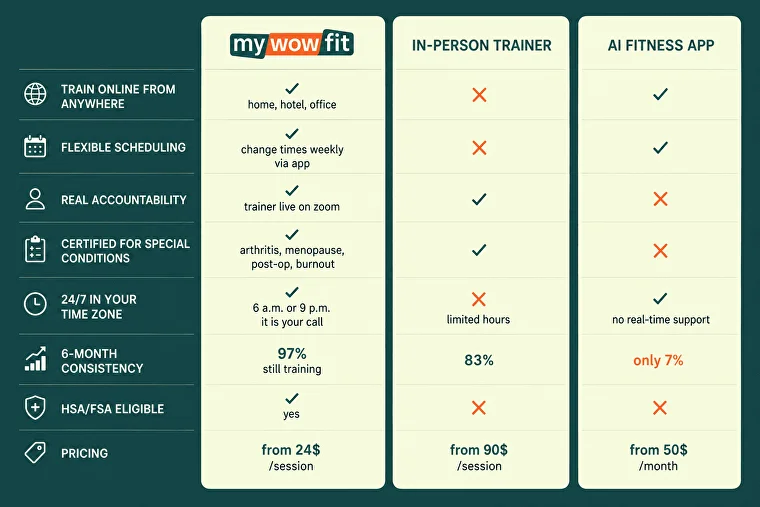
Generic fitness programs often feel too difficult or aren’t designed with older beginners in mind. Exercise equipment can end up collecting dust because buying it doesn’t create a habit, while apps and workout videos can’t adjust exercises, answer questions or notice when sessions are skipped. Pain, stiffness or fatigue can make someone hesitant to keep exercising, especially if they’re unsure which movements are safe. At the same time, repeated reminders from family members, even when they come from a place of love, can sometimes feel like pressure instead of encouragement. These challenges don’t mean an older adult can’t become more active. They simply highlight the importance of finding an approach that feels manageable, supportive and suited to their current abilities.
Generic fitness programs often feel too difficult or aren’t designed with older beginners in mind. Exercise equipment can end up collecting dust because buying it doesn’t create a habit, while apps and workout videos can’t adjust exercises, answer questions or notice when sessions are skipped. Pain, stiffness or fatigue can make someone hesitant to keep exercising, especially if they’re unsure which movements are safe. At the same time, repeated reminders from family members, even when they come from a place of love, can sometimes feel like pressure instead of encouragement. These challenges don’t mean an older adult can’t become more active. They simply highlight the importance of finding an approach that feels manageable, supportive and suited to their current abilities.
Why Exercise Matters as We Age
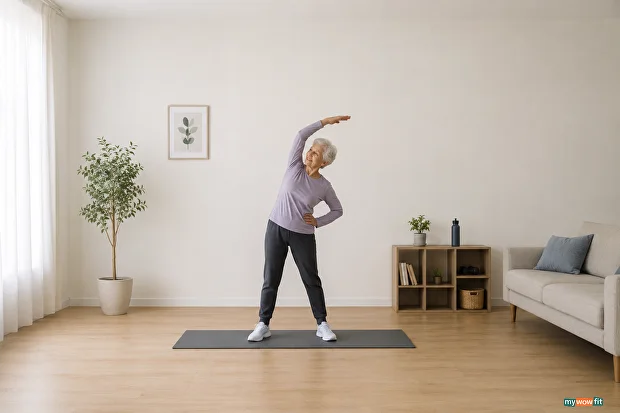
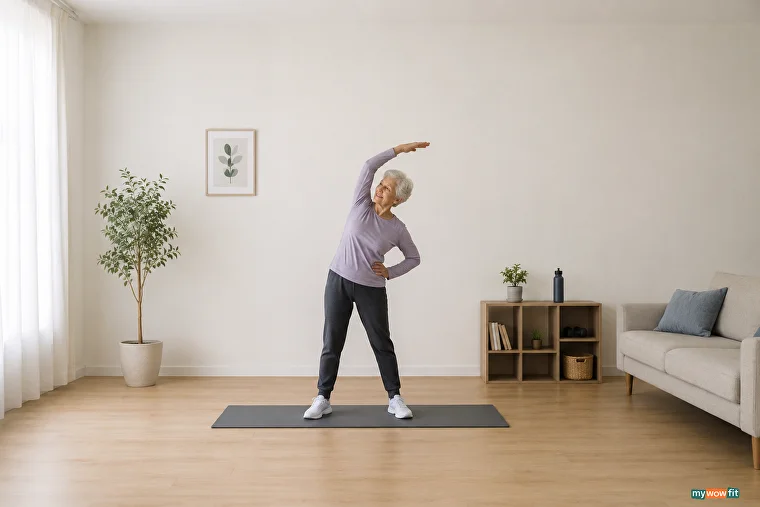
Regular physical activity can support many of the abilities that make everyday life easier. Strength training helps maintain muscle, making tasks like standing up from a chair, carrying groceries or climbing stairs feel less demanding. Balance exercises may improve stability and confidence, while mobility work helps keep everyday movements comfortable and efficient. Cardiovascular activities such as walking, cycling, swimming or dancing also support heart health and endurance, making it easier to stay active throughout the day.
Although some muscle loss naturally occurs with age, staying active can help older adults maintain strength, mobility, and confidence for longer. The goal isn’t to train like an athlete, it’s to build the physical capacity needed for everyday life and to support long-term independence through consistent, appropriate exercise.
Although some muscle loss naturally occurs with age, staying active can help older adults maintain strength, mobility, and confidence for longer. The goal isn’t to train like an athlete, it’s to build the physical capacity needed for everyday life and to support long-term independence through consistent, appropriate exercise.
Best Types of Exercise for Older Adults
A balanced exercise routine does more than improve fitness, as it can support the strength, balance and mobility needed for everyday life. Rather than focusing on one type of activity, most older adults benefit from combining strength training, balance exercises, mobility work and cardiovascular activity. The exact program should always reflect the person’s current fitness level, health and any recommendations from their healthcare professional.
1-on-1 Workouts & Custom Fitness Plans with Online Personal Trainer
★★★★★ 4.8 out of 5 across 600+ reviews
Strength Training
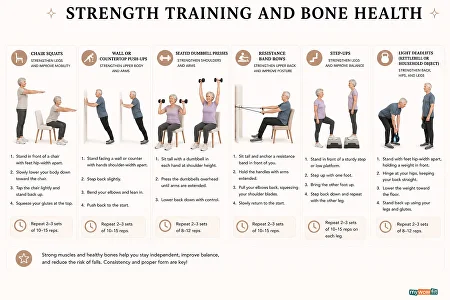
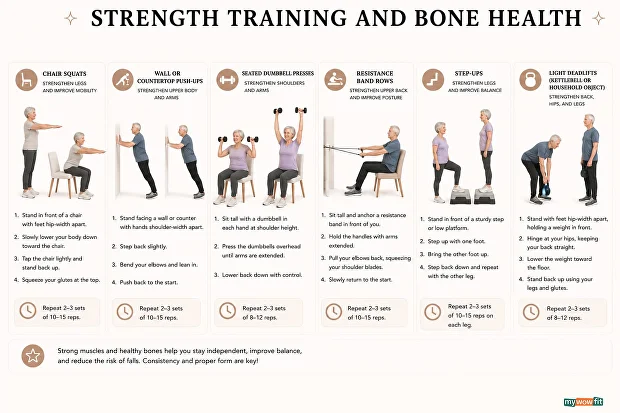
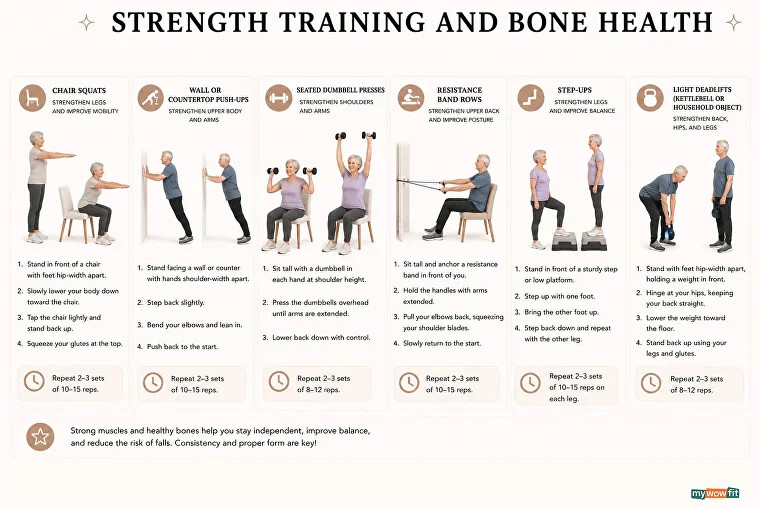
Strength training helps maintain muscle and makes everyday movements feel easier. The goal isn’t to lift the heaviest weights possible but to perform exercises that are challenging enough to build strength while remaining safe and manageable.
Good beginner exercises include sit-to-stands from a chair, supported squats, wall or elevated push-ups, resistance-band rows, step-ups, calf raises, hip-strengthening exercises and light carries with household items or dumbbells. As confidence and strength improve, the exercises or resistance can be adjusted gradually. Slow, steady progress is far more important than an intense workout that feels overwhelming.
Good beginner exercises include sit-to-stands from a chair, supported squats, wall or elevated push-ups, resistance-band rows, step-ups, calf raises, hip-strengthening exercises and light carries with household items or dumbbells. As confidence and strength improve, the exercises or resistance can be adjusted gradually. Slow, steady progress is far more important than an intense workout that feels overwhelming.
Balance, Mobility and Everyday Movement
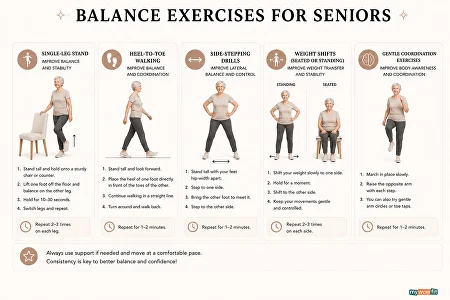
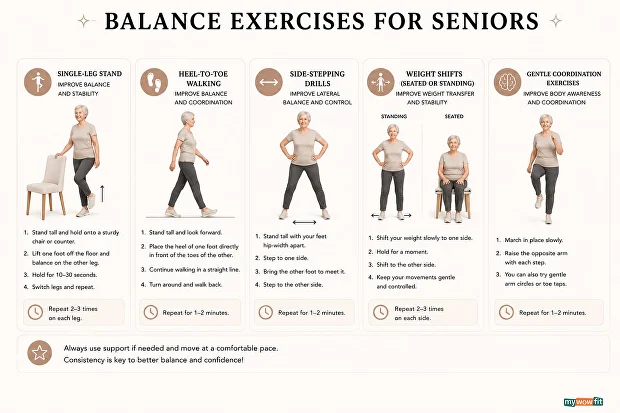
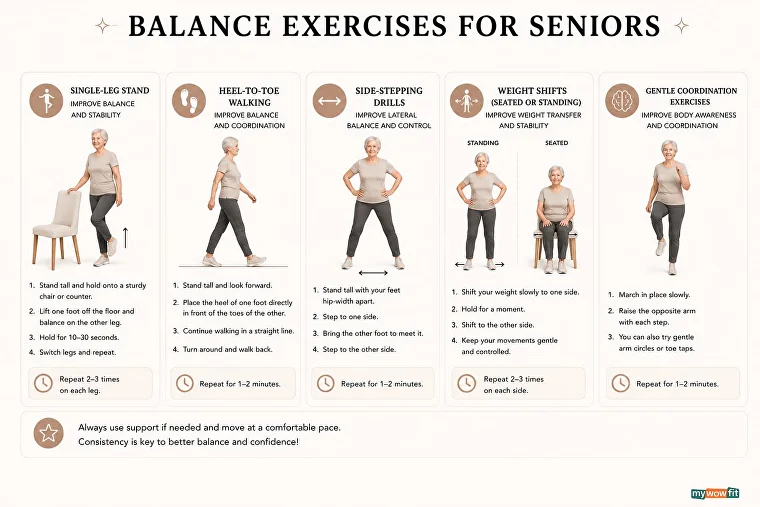
Balance is another important part of staying active as we age. Exercises such as standing with your feet closer together, heel-to-toe walking, supported single-leg balance, controlled weight shifts and step practice can help improve stability and confidence. When balance exercises are new, it’s always a good idea to have a sturdy chair or another stable support nearby.
Mobility and functional exercises focus on the movements people perform every day. Reaching overhead, bending to pick something up, getting in and out of a chair, climbing stairs and carrying groceries all require a combination of strength, coordination and flexibility. Practicing these movements in a controlled environment can make everyday activities feel easier and more comfortable.
Cardiovascular exercise also plays an important role. Walking, stationary cycling, swimming, dancing and other low-impact activities help support heart health and endurance. Walking is an excellent habit for many older adults, but combining it with strength and balance training creates a more complete routine that supports overall function.
Mobility and functional exercises focus on the movements people perform every day. Reaching overhead, bending to pick something up, getting in and out of a chair, climbing stairs and carrying groceries all require a combination of strength, coordination and flexibility. Practicing these movements in a controlled environment can make everyday activities feel easier and more comfortable.
Cardiovascular exercise also plays an important role. Walking, stationary cycling, swimming, dancing and other low-impact activities help support heart health and endurance. Walking is an excellent habit for many older adults, but combining it with strength and balance training creates a more complete routine that supports overall function.
How to Help Without Nagging
One of the most helpful things you can do is shift the conversation away from exercise itself and toward what matters most to your parent. Instead of asking, “Why don’t you work out?” ask what they’d like to keep doing comfortably, whether that’s gardening, traveling, walking with grandchildren, carrying shopping bags or climbing stairs without feeling exhausted. Offering choices often works better than giving instructions. Your parent may prefer walking with a friend, joining a small class or working with a trainer from home. Giving them ownership over the decision helps preserve their independence while making it more likely they’ll stick with the routine.
Keep the first goal small and realistic. A couple of short sessions each week can feel much less intimidating than committing to daily workouts. Most importantly, remember that your role is to support, not to supervise. Separating the family relationship from the coaching relationship often reduces tension and allows exercise to become something your parent chooses for themselves rather than something they feel pressured to do.
Keep the first goal small and realistic. A couple of short sessions each week can feel much less intimidating than committing to daily workouts. Most importantly, remember that your role is to support, not to supervise. Separating the family relationship from the coaching relationship often reduces tension and allows exercise to become something your parent chooses for themselves rather than something they feel pressured to do.
How to Start Safely
If your parent hasn’t exercised in a long time, the best place to start is below their maximum ability and not at it. Simple, familiar movements performed with good technique are often more effective than jumping into a demanding workout. The goal is to build confidence first, then gradually increase the challenge as strength and fitness improve. Encourage them to exercise in a clear, uncluttered space with supportive footwear where appropriate. Sessions should be adapted to how they feel that day, especially if they’re recovering from illness or experiencing more fatigue than usual. It’s also important to pay attention to warning signs such as pain, dizziness, unusual shortness of breath, or significant loss of balance. These symptoms shouldn’t be ignored.
Older adults should speak with a doctor or physical therapist before beginning a new exercise program if they have recently fallen, are recovering from surgery or an injury, experience unexplained chest pain or dizziness, have significant balance problems, or have medical conditions that affect their ability to exercise safely.
Older adults should speak with a doctor or physical therapist before beginning a new exercise program if they have recently fallen, are recovering from surgery or an injury, experience unexplained chest pain or dizziness, have significant balance problems, or have medical conditions that affect their ability to exercise safely.
1-on-1 Workouts & Custom Fitness Plans with Online Personal Trainer
★★★★★ 4.8 out of 5 across 600+ reviews
Common Approaches That Don’t Always Work
Many well-intentioned solutions fail because they don’t create a routine. Buying exercise equipment, sending workout videos or sharing articles can be helpful, but they don’t provide accountability or personal guidance. Without a regular schedule, it’s easy for good intentions to fade. Another common mistake is starting with a program that’s too difficult. Feeling sore or overwhelmed after the first week can make someone less likely to continue. The same can happen when family members rely on fear as motivation by focusing on falls, frailty or losing independence. These approaches aren’t necessarily bad, they simply work best when combined with realistic goals, gradual progression, and ongoing support.

Lina, Pilates, Mywowfit
The best exercise program isn’t the hardest one, it’s the one an older adult feels confident doing consistently. We often begin with simple movements that relate directly to everyday life, such as standing from a chair, stepping safely, carrying light objects and improving balance. Every session is adapted to the client’s mobility, energy level, confidence, and any exercise restrictions they’ve received from their healthcare team. If someone needs medical assessment or physical therapy before starting, that’s always the first step.
What to Do When You Live Far Away
Living in a different city doesn’t mean you can’t help your parent become more active. Often, your role is to make getting started easier rather than trying to manage every workout yourself. You can help arrange an initial consultation, make sure your parent is comfortable using Zoom or another video platform and check that they have a safe space to exercise. With your parent’s permission, you can also share any exercise restrictions or recommendations provided by their doctor or physical therapist. After that, it’s often helpful to step back. Instead of asking whether they completed every workout, ask how they’re feeling and whether they’re enjoying the sessions. Giving your parent ownership of the process while allowing the trainer to provide regular accountability can reduce pressure on your relationship.
Live One-on-One Training for Your Parent
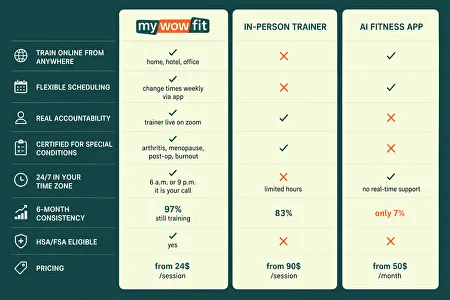
Sometimes the missing piece isn’t knowledge, it’s having someone there consistently. Mywowfit offers live one-on-one training sessions over Zoom, giving older adults a dedicated trainer who guides each workout in real time.
The trainer watches every movement, adjusts exercises to match mobility, fitness level, available equipment and stated medical restrictions, and can change the pace if your parent is having a lower-energy day. Sessions may include strength, balance, mobility and functional exercises designed to support everyday movement without requiring a trip to the gym. Perhaps most importantly, your parent builds their own relationship with the trainer. Instead of relying on reminders from family members, they have a recurring appointment with someone focused on helping them progress at a comfortable pace.
Mywowfit is a fitness service, not medical treatment, rehabilitation or physical therapy. People with recent falls, significant balance limitations, acute injuries or complex medical conditions may need medical assessment or in-person care before beginning online training. Help your parent start moving with live one-on-one support. Tell us about their current activity level, goals, available equipment, and any exercise restrictions and we’ll help match them with a trainer who fits their needs. Book a consultation for your parent now!
The trainer watches every movement, adjusts exercises to match mobility, fitness level, available equipment and stated medical restrictions, and can change the pace if your parent is having a lower-energy day. Sessions may include strength, balance, mobility and functional exercises designed to support everyday movement without requiring a trip to the gym. Perhaps most importantly, your parent builds their own relationship with the trainer. Instead of relying on reminders from family members, they have a recurring appointment with someone focused on helping them progress at a comfortable pace.
Mywowfit is a fitness service, not medical treatment, rehabilitation or physical therapy. People with recent falls, significant balance limitations, acute injuries or complex medical conditions may need medical assessment or in-person care before beginning online training. Help your parent start moving with live one-on-one support. Tell us about their current activity level, goals, available equipment, and any exercise restrictions and we’ll help match them with a trainer who fits their needs. Book a consultation for your parent now!
FAQ
1. What exercises are best for older adults?
A balanced routine typically includes strength, balance, mobility, and cardiovascular exercise. Sit-to-stands, supported squats, resistance-band rows, step-ups, walking, and simple balance exercises can all be useful depending on the person’s current ability and health.
2. Is walking enough exercise for seniors?
Walking is an excellent form of physical activity that supports cardiovascular health, endurance, and everyday mobility. However, many older adults can also benefit from adding strength and balance exercises to support muscles, stability, and everyday activities such as climbing stairs or getting up from a chair.
3. How can I encourage my aging parent to exercise without nagging?
Focus on what matters to your parent rather than repeatedly telling them they need to exercise. Ask which activities they want to keep doing comfortably, offer several exercise options, and allow them to choose the schedule and format. A trainer can also provide accountability without making you responsible for managing every workout.
4. Is strength training safe for people over 70?
Strength training can be appropriate for many adults over 70 when exercises and resistance are adapted to their current abilities. Beginners should start gradually and focus on controlled technique. People with recent falls, injuries, significant balance problems, or relevant medical conditions may need guidance from a doctor or physical therapist before starting.
5. Can older adults exercise at home without equipment?
Yes. Many senior exercises at home can use body weight or simple household items. Sit-to-stands, supported balance exercises, calf raises, and some mobility movements require little or no equipment. Resistance bands or light weights can be introduced when appropriate.
6. Is online personal training suitable for seniors?
It can be a convenient option for older adults who can exercise safely at home and are comfortable using video calls. A live online personal trainer for seniors can observe movement, adjust exercises in real time, and provide a regular appointment that makes consistency easier. Online fitness training is not a replacement for medical care or physical therapy.
7. When should an older adult speak with a doctor before exercising?Medical guidance is particularly important after a recent fall, surgery, or injury, or when someone experiences unexplained chest pain, dizziness, significant balance problems, or has medical restrictions that may affect exercise. A healthcare professional can help determine whether additional assessment or specific exercise precautions are needed.
A balanced routine typically includes strength, balance, mobility, and cardiovascular exercise. Sit-to-stands, supported squats, resistance-band rows, step-ups, walking, and simple balance exercises can all be useful depending on the person’s current ability and health.
2. Is walking enough exercise for seniors?
Walking is an excellent form of physical activity that supports cardiovascular health, endurance, and everyday mobility. However, many older adults can also benefit from adding strength and balance exercises to support muscles, stability, and everyday activities such as climbing stairs or getting up from a chair.
3. How can I encourage my aging parent to exercise without nagging?
Focus on what matters to your parent rather than repeatedly telling them they need to exercise. Ask which activities they want to keep doing comfortably, offer several exercise options, and allow them to choose the schedule and format. A trainer can also provide accountability without making you responsible for managing every workout.
4. Is strength training safe for people over 70?
Strength training can be appropriate for many adults over 70 when exercises and resistance are adapted to their current abilities. Beginners should start gradually and focus on controlled technique. People with recent falls, injuries, significant balance problems, or relevant medical conditions may need guidance from a doctor or physical therapist before starting.
5. Can older adults exercise at home without equipment?
Yes. Many senior exercises at home can use body weight or simple household items. Sit-to-stands, supported balance exercises, calf raises, and some mobility movements require little or no equipment. Resistance bands or light weights can be introduced when appropriate.
6. Is online personal training suitable for seniors?
It can be a convenient option for older adults who can exercise safely at home and are comfortable using video calls. A live online personal trainer for seniors can observe movement, adjust exercises in real time, and provide a regular appointment that makes consistency easier. Online fitness training is not a replacement for medical care or physical therapy.
7. When should an older adult speak with a doctor before exercising?Medical guidance is particularly important after a recent fall, surgery, or injury, or when someone experiences unexplained chest pain, dizziness, significant balance problems, or has medical restrictions that may affect exercise. A healthcare professional can help determine whether additional assessment or specific exercise precautions are needed.
Responses (2)
kate
online training helped my mom a lot
Alex
Thank you for the information!
You may also be interested
Seniors
Seniors
Meet some of our trainers

© 2021-2025 Together with Online Fitness Technologies Inc.
All rights reserved
All rights reserved


About
How it Works
Trainers
Pricing
Blog
FAQ
Gift Certificate
Referral Program
Work with Us
Affiliate Program
How it Works
Trainers
Pricing
Blog
FAQ
Gift Certificate
Referral Program
Work with Us
Affiliate Program
Useful Links
Privacy Policy
Terms of Service
Code of Conduct
Disclaimer of Medical Advice
Cancellation, Refund, Referral Policy
Terms of Service
Code of Conduct
Disclaimer of Medical Advice
Cancellation, Refund, Referral Policy
Documentation


Contact Us
Headquarters:
USA, 1111B S Governors Ave #6047 Dover, DE 19904, Online Fitness Technologies INC
USA, 1111B S Governors Ave #6047 Dover, DE 19904, Online Fitness Technologies INC
Locations
Headquarters:
EU and UK: MYWOWFIT OU, Estonia, Harju maakond, Tallinn, Kesklinna linnaosa, Tornimäe tn 3 // 5 // 7, 10145
EU and UK: MYWOWFIT OU, Estonia, Harju maakond, Tallinn, Kesklinna linnaosa, Tornimäe tn 3 // 5 // 7, 10145





5.0
4.9
Share via